I hope they are able to bring back the American Chestnut too.
That tree isn't completely dead -- some stumps and shoots remain -- but adult trees never survive, due to a fungus that didn't used to exist in North America.
There are now two programs to bring it back. One, by hybridizing with Japanese Chestnut and breeding to (hopefully) keep not much more than the Japanese tree's blight resistance. And another -- more controversially but maybe actually better -- that adds to the American Chestnut genome a single gene, from wheat, that confers resistance to the fungus. These latter trees would be even more like the originals.
The hybrid program has some test sites now in the wild. The GMO version has not been approved, but I hope it will be.
The Wikipedia article suggests there are not just a few, but many known living examples of the American Chestnut. Not to say it doesn't need saving, but this seems better than just some stumps and shoots.
It is quite common to see American Chestnuts in the northeast US, in the Hudson Valley, for example. Growing up in that area, I saw many with their big beautiful serrated leaves. The problem is that they never grow very tall or big before being attacked and killed by the blight. I believe some can even bear fruit though I do not personally recall this. There have been a number of really good articles in publications like the nytimes on bringing back the American chestnut to health via parallel tracks of cross-hybridization and GMO. I don't have the references right now, but a quick Internet search will reveal them.
I'm a bit late to this conversation but I wanted to drop in and support this comment. I live in North Carolina and have personally seen dozens of adolescent American Chestnut trees in the Appalachians in the western part of the state. They love the high ridge lines out there. Most of the chestnuts I've seen look like shrubs due to how they develop and can easily be missed of you're not looking carefully for them. From what I've read elsewhere most American Chestnuts only make it to 5-10 years old before the blight gets them. I've only seen a couple of trees taller than 10-15' tall in the wild (and have seen several infected with the blight).
The American Chestnut is "functionally extinct", because despite the fact that they are somewhat prominent throughout their native habitat as adolescents, they rarely (if ever) are able reach maturity and develop fruit (and therefore can't reproduce).
Here are a few pics of some adolescent chestnuts if anyone is curious:
Beautiful pictures. Thanks for sharing. I am really fond of the shape of the leaves. Since this is HackerNews, I believe there is also an entrepreneurial angle for the reemergence of American Chestnuts for carbon offset markets and to produce food (roasted chestnuts are delicious!). If the GMO version of the American Chestnut is approved by the US government, it will be the first GMO tree.
Some do still bear fruit even inside blight range. I live in NJ and have a survivor that's stressed but able to produce. Got a few handfuls out last year and was able to try some for the first time. This yield is compared to the few truckloads I get off the 2 chinese chestnuts here, but it's something.
Basically, there's 2 ways to bring these trees back to blight range (or something approximating them). Method 1 is hybridization route with Chinese chestnut, method 2 is genetically modified route using a single wheat protein gene to confer resistance. Method 2 needs approval and there was a request for comment open a couple years about it.
I watched this video from a guy named Mark Shepard who's approach is hybridization and natural selection. It sounds like he has American-Chinese chestnut hybrids in his farm: https://m.youtube.com/watch?v=RePJ3rJa1Wg
Releasing GMO chestnuts will contaminant the gene pool forever, it's a bad idea.
Two things about the American chestnut are relevant:
1) the percentage of forest it occupied is widely overstated, seemingly due to exageration thru retelling of the story. It was usually a top ten tree at most sites, far from the numbers you usually see in articles. The these numbers are from ideal sites for its colonization or areas where it was planted by humans. This is widely known and studied, but people who write about it to lay audiences tend to use exaggerated figures out of context.
2) many specimens survived the blight due to partial resistance, not all were wiped out.
All we need to do is wait and they'll do just fine. Even a traditional breeding program would work in a few generations, there's really no good reason to rush this stuff.
I dont know why the poster is being downvoted, I have heard the same about the Chestnut coming back from foresters and others in the know for a decent amount of time.
American Chestnuts that have gained resistance to blight via selective breeding, hybridization with a different species, or insertion of a different gene are all genetically modified. The only difference is the source of the modification. Starting a comment with the inflammatory statement "Releasing GMO chestnuts will contaminant the gene pool forever, it's a bad idea" doesn't serve the discussion well.
Humans are really good at throwing environmental pressure (logging) after environmental pressure (chestnut blight) after environmental pressure (urban air pollution) after environmental pressure (global warming) at species. The speed with which these pressures arise is faster than natural selection can deal with for most species, and are leading to an extinction event rather than species just learning to adapt. If we can make minor direct genetic modifications to help species cope, I think it's an unqualified win.
Right. "contaminant " or even "contaminate" is a "press the emotional button" kind of word. The kind of disgust-trigger than inhibits rational thought.
Stripped of that, it says "the new gene will be in the tree's the gene pool forever, so it's a bad idea" which is a non-sequitur. Putting the gene in permanently, for permanent fungus resistance, is the point, isn't it?
The emotional appeal is the entire argument. It seems to imply that gene editing is always "bad and dirty". There might be a case to be made that putting this particular gene in this tree is a bad idea, but this sentence is really not it (1). I think that I had an emotional reaction against it ;)
IMHO Gene editing is too broad a category to judge like that. Comments on the internet - good, bad or useless? It depends on what you write, and where.
If someone is going to ask for "comment with evidence", then do not reverse the burden of proof (1) and put that on "downvoters", instead ask for "sources" that all gene editing is "contamination", rather than giving a free pass to sneaking in the conclusion via loaded language, without supporting evidence.
I think that I gave this topic more in-depth examination than it deserved, but there you go.
1. Resistance genes are already in the genome, but they have so far proven inadequate. Experiments in interbreeding and crossbreeding have been going on for 60 years from the USDA, the American Chestnut Foundation, the American Chestnut Cooperators Foundation, etc - and none of them have declared "victory" yet. There's no reason to assume there'll be blight-resistant chestnut seedlings available anytime soon. Or anytime late, to be honest.
2. If you read the wikipedia article [1], it has an entire section on why it's controversial. It also has links to an article on genetic rescue[2], which I think is more relevant.
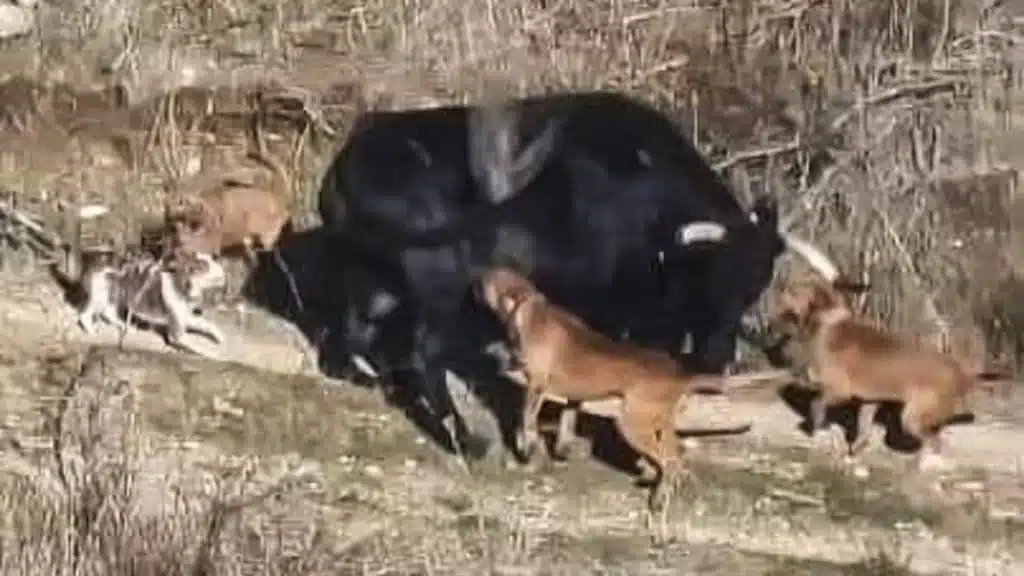
Bovine-led biodiversity: For millions of years, European land has been grazed – by wild herbivores, and, far more recently, by domestic cattle. This grazing has kept parts of the land free from forest, providing open habitats that support a wide range of plants and animals.
But today a decline in animal husbandry across Europe means these habitats, and their biodiversity, are in danger of disappearing. This is where the auroch, or its descendant – the so-called “Tauros” – comes in. Through selective breeding, Rewilding Europe and its partners want Tauros to occupy the niche the auroch once filled, keeping Europe’s rich mosaic of open landscapes flourishing through natural grazing.
These are cow ancestors that went extinct in 1627 and had as little 0.12% genetic distance from current cow breeds. This sounds reminiscent of bison/wolf reintroduction or the more dramatic goal of bringing mammoths back to the tundra. I'm pretty near 100% supportive of all these efforts. The holocene has been an absolute catastrophe for megafauna and we're increasingly realizing this has had dramatically negative downstream consequences for other species and even landscape and climate.
I find it really unserious the people comparing this to like, bringing back velociraptors and t-rex. They're being back-bred via existing cows, there's not even any "genetic engineering" as such. As far as I know no one's planning to reintroduce Smilodon to the Appalachian Trail - beyond maybe a few exceptions, I say bring back the megafauna.
I've heard them a few times and it's definitely hair-raising. Smilodon and friends were up to 6 times more massive, which is a very sobering thought. By comparison, cougars are cute little kitty friends.
>>I find it really unserious the people comparing this to like, bringing back velociraptors and t-rex
Every joke has some truth in it: we have a chicken - a very viable candidate to back-bred dino. Well, either that or we can have a giant chicken, that might strike fear in everybody. Though, cassowaries also are frightening enough.
> beyond maybe a few exceptions, I say bring back the megafauna.
For what it's worth, there is something way easier than trying to breed back extinct species - bring back wolves [1]. Sadly though, outside of national parks farmers don't like apex predators like wolves because they like to snack on farm animals... and farmers don't like to invest into herd protection either with humans or with animals, because the profit margins don't allow that.
I know there is no reason languages have to be standardized and anyway I am not a native English speaker but Google translate renders different pronunciations (at least in my ears) for Oryx and Aurochs.
Do English (and derivatives) natives agree that both words sound the same?
Depends on accent. In my NZ accent, "oryx" doesn't sound much like "are-ricks" at all. To me oryx and aurochs sound similar enough I can imagine people confusing one unfamiliar hoofed animal for the other.
For me "oryx" does sound like "are-ricks," but "our-ox" is basically indistinguishable from "are-rocks." Only the one slight vowel sound of difference.
>“The distance from the aurochs to the Pajuna cattle from Spain is just 0.12 percent, so there is more than a 98 percent overlap.”
Is that a math error? 100%-0.12% = 99.88%. Should it have said "more than a 99% overlap" or "more than a 99.8% overlap"? I guess more than 98% overlap is still technically true.
Looking up "genetic distance" it seems there are many different measures, all seemingly expressing something more sophisticated than raw overlap. Perhaps the .12% is referring to something like https://en.m.wikipedia.org/wiki/Fixation_index
You are assuming you know what “distance” means in this context, and appear to have decided it means the same as mathematical subtraction. You are likely mistaken.
Fun fact: Some people think the aurochs is the animal mistranslated as "unicorn" a few times in the King James Bible. Most newer translations just say "wild oxen" instead.
I'm not sure if "mistranslated" really captures the thought process that went into the King James Bible translation. While aurochs had died out in Britain thousands of years earlier, the legend of the unicorn (probably from Greek knowledge of the Indian rhinoceros) was alive and well throughout the Middle Ages, with distinctly religious symbolism attached.
So, when faced with an unclear Hebrew word for an animal that no English speaker would have ever seen or heard of, and one that represented a wild, horned quadruped, the translators seemingly took the sensible choice of recycling a word that readers and listeners would be familiar with, at the expense of a taxonomic accuracy that was not available to them.
>In common with most other translations of the period, the New Testament was translated from Greek, the Old Testament from Hebrew and Aramaic, and the Apocrypha from Greek and Latin.
>The word “unicorn” appears in the King James Version nine times – in Numbers 23:22 and 24:8, Deuteronomy 33:17, Job 39:9,10, Psalms 22:21, 29:6 and 92:10 and in Isaiah 34:7.
I believe it was from a mix of Greek, Hebrew and a couple of others, mostly depending on which section. I couldn't say which bits these references would have been from. Yeah there's a _lot_ of room for mistranslations or just doing the best they could.
> Also noticeably absent in the Auerrind Project’s stock are Heck cattle, the striking, aggressive breed created in the 1920s by two German zoo directors, Heinz and Lutz Heck. Despite the lack of modern-day knowledge of genetics, the Heck brothers both claimed to have recreated aurochs through back-breeding. Heinz even wrote, “The wild bull, the aurochs, lives again.” Disturbingly, these early attempts at creating aurochs dovetailed with the fascist politics of the time. Lutz in particular, who was a member of the Nazi Party, convinced Hermann Göring that the return of ancient European beasts like aurochs and tarpan, or wild horses, fit with the the National Socialist Party’s ideological push to recreate an imagined European past.
At least some of this is the background for the excellent movie “The Zookeeper’s Wife” starring Jessica Chastain
There is at least one large elk herd here in the Seattle suburbs. Elk are so big close up that they feel like an alien species. And these would be much larger. Nothing wrong with a dose of humility here and there.
Have you ever been near a moose? I almost hit one when it charged out of the bush while I was diving a backroad.
It swerved at the last minute and ran alongside my car for about 10s. All I could see out the side window was its legs, felt like being next to a dinosaur.
You meet elk in the woods here in Norway occasionally. You don't even need to be far from the centre town.
I was walking in the hills above Drammen one midsummer night and found myself suddenly about two metres from one, not sure which of us was the most surprised; we stared at each other for a few moments and then it lumbered off through the woods.
> You meet elk in the woods here in Norway occasionally.
Those are moose not elk, the Norwegian word elg translates to moose in english. Elk is a species of large North-American deer (hjort). https://en.wikipedia.org/wiki/Elk
The Irish elk, now extinct, was quite an impressive sight, with antlers wider that it was tall.
The Irish elk stood about 2.1 m (6 ft 11 in) tall at the shoulders and carried the largest antlers of any known deer, a maximum of 3.65 m (12.0 ft) from tip to tip and 40 kg (88 lb) in weight. For body size, at about 450–600 kg (990–1,300 lb) and up to 700 kg (1,500 lb) or more, the Irish elk was the heaviest known cervine ("Old World deer"); and tied with the extant Alaska moose (Alces alces gigas) as the third largest known deer, after the extinct Cervalces latifrons and Cervalces scotti.
It was not just native to Ireland, but many skeletons were found preserved in Irish peat bogs. The Irish elk had a far-reaching range, extending from the Atlantic Ocean in the West to Lake Baikal in the East.
Yes, in Anchorage, Alaska, just sauntering around like it owned the place. And they are indeed much larger than elk. Now that you mention it, I’m not sure even Australia has anything as crazy as moose.
Reminds me of the conflict between German farmers and the Goverment over whether or not wolves should be a protected species. Plenty of city-dwellers support all forms of biodiversity, as long as somebody else has to deal with the mess.
One sheep rancher I knew back in college was a huge fan of wolf reintroduction. According to him, the wolves killed a few sheep and almost all the coyotes, which meant he wasn't losing any sheep to coyotes. Which worked out to a major net decrease in "sheep lost to predators". That was twenty years ago, so maybe things have changed in intervening decades.
There're a fair number of Africans who laugh at how Europeans react to lions. Lions pose the same problems to Africans that wolves do to Europeans: they mainly take livestock and only rarely human life. In large part, any harm to humans caused by a lion is economic or secondary (e.g., starvation). In fact, lions know that if they eat a human, the human's tribe will hunt them down and retaliate (must've made for a very interesting day in Simba's circle-of-life training!), so only a sick or injured lion with few other choices for meat will attempt to eat a human.
Now the hippopotamus... that is an animal widely feared in Africa. They may look fat and silly and eat plants, but they give no fucks, and will charge and trample you without a second thought.
> When I turned on the news and discovered that the messages were about a lion killed by an American dentist, the village boy inside me instinctively cheered: One lion fewer to menace families like mine.
> My excitement was doused when I realized that the lion killer was being painted as the villain.
> In my village in Zimbabwe, surrounded by wildlife conservation areas, no lion has ever been beloved, or granted an affectionate nickname. They are objects of terror.
> When I was 9 years old, a solitary lion prowled villages near my home. After it killed a few chickens, some goats and finally a cow, we were warned to walk to school in groups and stop playing outside. My sisters no longer went alone to the river to collect water or wash dishes; my mother waited for my father and older brothers, armed with machetes, axes and spears, to escort her into the bush to collect firewood.
> The lion sucked the life out of the village: No one socialized by fires at night; no one dared stroll over to a neighbor’s homestead.
> When the lion was finally killed, no one cared whether its murderer was a local person or a white trophy hunter, whether it was poached or killed legally. We danced and sang about the vanquishing of the fearsome beast and our escape from serious harm.
> And please, don’t offer me condolences about Cecil unless you’re also willing to offer me condolences for villagers killed or left hungry by his brethren
The reason that most harm inflicted by lions is economic or secondary is that people go well out of their way to avoid meeting lions. That doesn't represent a small problem; it represents a gigantic problem.
I saw that, but many other places cite numbers such as 3,000. Having lived on that continent for many years, I’d expect many would go unreported in official tallies.
You definitely have more interesting conversations than I have. I have known many people from Poland, many people from China, many from Mexico, and many people from Japan. Yet I was never smart enough to survey them systematically about their reactions to another country’s views on wolves.
All it takes is having lunch with fellow exchange students, or expat coworkers after graduating and deciding to stay in your country of study. Nothing complicated - although obviously not really a thing in the last few years.
I live in Sweden. The topic of a wolf crossing borders with Norway where the conservation laws are different comes up every few years. The attitude of people in different countries to wolves (or any topic of the day really) gets discussed.
In Spain there is like a 3% of cattle affected by canine (wolf+dog) attacks, and those loses are covered by the government. We talk about animals that are basically left alone in the nature without protection for weeks and months. In many cases we talk about foals or old and sick cattle and often in a reduced group of farmers that claim to lose 600 animals year after year, but don't even buy a dog, that is a little suspicious if we think about it.
So, maybe is not the bloodbath that many people assume
Sensible rewilding schemes include compensation. I am not trying to minimise how hard this is, but there's an economic solution. Also, wild dogs probably cause as much damage as wolves do.
Is always used as a deprecating term in this case. And insulting the same people that are taxed so the farmers can be heavily subsidized, is very unfair.
My brother got compensated, tractor sank into a beavers lodge, broke the axle, got 50 €. Was in the newspaper the day after that.
Now that the beaver has destroyed the road foundation several times and the public had to pay for it, over and over, the mood of the sub-urban dwellers is slowly shifting. Turns out wildlife is not so cute, if you have to pay out of pocket for it.
Rewilded European beavers are responsible for significant improvement in water retention in upland areas reducing flooding, soil loss, and damage to crops. It's not about "cute" its about the long term qui bono.
Maybe the road has to move. It's going to cost money to repair come what may, so maybe shifting it is the answer. I don't know, I just want to point out you're making huge assumptions about what the right answer IS, and also using "my specific therefore defines the general as wrong" arguments. Sure. Your brother had a bad beaver experience. European farmers who lost land to water runoff from bare hills are taking a different view.
It’s not about being cute. It’s about the biodiversity that reintroducing a lot of these predators creates. This is well-documented by the reintroduction of wolves in Yellowstone National Park in the USA which occurred in the 1990s.
Please don't post in the flamewar style to HN. The thread was noticeably degrading already, but your comment here was a big step in the wrong direction.
In the case of Northern Europe, in some countries the wolf was already extinct and is now making a sporadic return. Example: the Netherlands.
This is a country almost entirely urbanized with hardly any wild habitat for the wolf to hunt in. So they do a lot of hunting in people's backyard. Killing sheep and dogs. They hunt frequently so damage is large.
Even a single case is very impactful. I recently saw footage of 3 wolves tearing apart somebody's dog. To the owner, that is devastating. Next, this is spread on Facebook, and soon the town is outraged. Surely you understand this won't last very long, somebody is going to take care of that wolf if it happens a few more times.
I love wolves, I want them to come back and want them to thrive. But at least for the Netherlands, it just doesn't work. We don't have the natural habitat.
Wolves are very risk averse and generally only attack pets or livestock ( as long as they are not roaming alone in the mountains unprotected ) if they have no other choice (i.e. their natural habitat was destroyed). The last thing wolves want to do is to roam around the countryside looking for pets or cattle because that greatly increases their chance of encountering humans.
And in any case most attacks on pets and humans are by wolf-dog hybrid which are much more aggressive (and less fearful of humans) than wolves.
I don't see the coyote quote you're referring to, but coyotes are pretty adept at urban life. They even make it into NYC, weirdly. They like the rat and cat populations there and have been seen in Central Park with somewhat regularity. There's no need to fret about the population of coyotes.
Fun fact, trying to cull coyotes can actually cause the population to boom. They're remarkably adaptable creatures and very smart, to boot.
> The country with the most extensive historical records is France, where nearly 7,600 fatal attacks were documented from 1200 to 1920.[1][2] There are few historical records or modern cases of wolf attacks in North America. In the half-century up to 2002, there were eight fatal attacks in Europe and Russia, three in North America, and more than 200 in south Asia.[3]
Wolf attacks are a nearly irrelevant problem. Older generations are irrationally/disproportionately afraid of wolf attacks.
Even in the presence of so-called historical records of wolf attacks, it can be very difficult to assess how many of them are true.
There are indeed many known cases when rabid wolves have attacked humans, but obviously there are far less such cases than the attacks due to rabid dogs or even rabid foxes, because there are much more dogs than wolves.
In the past, there have also been many cases when humans have died due to other causes, mainly due to cold, then wolves have eaten the dead bodies and when they were found the death has been wrongly attributed to wolves.
I have grown in an Eastern European country, with much more wolves than in any Western European country.
Nevertheless, at least during the last century, there has been known absolutely no case of a human attacked by wolves, with the exception of attacks due to solitary rabid wolves, which could be fatal when not treated immediately.
Of course there were a very large number of cases of sheep or other domestic animals which were eaten by wolves.
On the other hand, bears or wild boars will not hesitate to attack humans in certain circumstances, so they belong to a completely different group of animals from this point of view.
I'm sure you have good reason to feel strongly about this, but attacking another user is not allowed here, and we ban accounts that do it, so please don't post like this again. Also, please just don't post in the flamewar style to begin with. We want curious conversation here—not commenters at one another's throats.
> imagine you love animals so much you decide to dedicate your life to breeding sheeps ... Every morning you wake up to the mutilated corpses of your little sheeps.
Nice melodrama.
I will say it again knowing that people don't want the truth and is not ready for the truth:
By feral or by domestic dogs. The only responsible of this attacks is the shepherd, that don't feed their dogs and allow them to roam free to attack the cattle of other people. This common offenders include the Patou also. And we all pay for their loses.
It’s unsurprising that dog attacks outnumber wolf attacks after wolves have been exterminated. That doesn’t really tell us anything about the danger prevalent wolves would present.
The wolf population in Italy is relatively large (compared to other similar countries) and quite spread geographically yet there hasn’t been a single recorded attack on people since at least WW2.
Edit: I was wrong, there has actually been one attack in January this year (the person was able to escape unharmed ), however the likelihood still seems to be extremely low.
Would you please stop posting in the flamewar style to HN? You've included a snarky swipe in several different comments you posted to this thread. Regardless of how you feel about wolves, that's not what this site is for, and it destroys what it is for.
The Iberian wolf has been extirpated from most of Spain. Of course it’s not responsible for many attacks anymore. You may not be stupid, but this is a question of history, not biology. The present rate of attacks by the survivors of a nearly exterminated population tells us absolutely nothing about the historical rate of attacks that motivated the depopulation. Likewise it tells us nothing about what the rate of attacks would be if wolves were permitted to breed without interference.
As for your second point, of course when government pays for something it gets more of it.
The older generation was also "irrationally" afraid of pandemics. Turns out- they were right.
wulvs are no threat in the summer when they can easy migrate onwards into deer rich territory.
Story changes, when all the easily hunted deer is gone and a harsh winter comes. Once the hunt success without retaliation is there - it all goes south fast.
In at least some countries in Europe where wolves or bears have been reintroduced there are compensation schemes for loss of cattle. This can actually lead to fraud: one of your sheep died in the mountain? Another victim of a wolf...
Yes. Did anybody else cheer at this point in the theater?
I mean, come on. At last your nerd skills enable you to save the day in an action motion picture. Get to your feet and cheer for the Unix prompt on a Connection Machine.
I should explain I didn’t mean literally that you used the Connection Machine interactively. Supercomputers generally were treated as batch mode, with other machines scheduling jobs.
I think you are right about the SGI workstation being used with the CM in the background.
But still, I was disappointed that I was the only person in the theater that was stoked about Unix at the time.
All of the CMs before the CM-5 were more accelerators than full systems of their own. They sort of look like 90s style GPUs to their host systems. Those host systems were either SunOS, Ultrix, or a Lisp machine.
The CM-5 simply ran it's own Unix called CMost, and you'd generally rlogin into it from another Unix machine.
In all these cases you could submit batch jobs with NQS (a unix batch system), but you could partition the machine and interactively access it as well, and at the same time as other users or batch jobs.
Hmmm, I don't know how to express this without sounding threatening, and I really don't want that or to imagine that bad things were to happen to you.
Your statement (which is a rather incomplete picture of you, granted), suggests that you don't see much of a connection between yourself and the rest of the living world. Easy enough trap to fall into, the connection is usually not conscious and few people pay attention to it.
But when one does realize that one is in fact part of the world, the loss of a species is as tragic as a personal loss. Because it is.
So, by analogy, say you had lost 2/3rds of your possessions due to some human-mediated act, and someone were to say to you "They are gone, leave them be, no need to restore them"...
or, since possessions usually can be restored, say 1/4 of your closest friends and relatives were, oh, let's just say 'put into prison', to imply that they could be brought back, would the answer be "They are gone, leave them be. No need to have my friends and family back"?
Or if that is still too removed, we could start talking about body parts.
again, my apologies, I wish only good things for you and your loved ones. The thought of bad things happening to them is abhorrent.
And so is the mass extinction that we are all participating in, myself included.
Well, I'm very connected to the living world, I go out of my way to be. To draw that conclusion from a simple question is a bit of a stretch. It couldn't be farther from the truth.
It would be one thing to try to restore a species that went extinct recently, something that maybe played a crucial role in a dying ecosystem. But something that's been extinct for so long that it's only documentation is in ancient text, something which has living descendants right now by the billions, and in a place where the landscape has long since adapted to the current biodiversity and is already largely a human influenced landscape, it doesn't make sense to me. Bringing back extinct rhino species, or bird species, or reptile species in places where they flourished recently enough that their presence is missed by the biome, that makes a lot of sense. To me this is like bringing back the wooly mammoth, it's rationalized with practicality but in reality it's just a novelty.
It makes sense to bring back extinct species, to have the technological capability to do so, to get some practice in, but something that's been dead so long the environment in which it flourished has since adapted, that's what I don't get.
Should we bring back every single species that has ever gone extinct? Or only every one that existed while humans are in the fossil record?
What I think it comes down to is humans don't handle change well, but trying to make the earth stand still is a fools errand.
> Cow and chicken, that do not move much, tend to be tender, and fat-rich
They only don't move much because of intensive farming practices that pack them into small places to prevent movement (partly for cost efficiency, but also because Westerners have become accustomed to this mild flavour profile).
If you let your cows and chickens range free and don't supplement their feed, they tend to be lean, heavily muscled, strongly flavoured, and often pretty damn tough.
All bovines for meat production have to be free range during pasture season in Sweden. I believe the same is true for Ireland.
Anyway, grass fed pasture beef is a bit leaner, does have a strong flavour, but the tender cuts are still tender. It's not close to grass fed lamb w.r.t. gaminess.
Old egg laying hens are tougher and have thicker skin, yes. Just put them in a stew.
Might be referring to gaminess, I think it tends to put off people who are used to modern beef or lamb. It's still present in venison as they are less domesticated / more active than domestic cattle or sheep. I like it but it's definitely not to everyones taste (pun intended).


That tree isn't completely dead -- some stumps and shoots remain -- but adult trees never survive, due to a fungus that didn't used to exist in North America.
There are now two programs to bring it back. One, by hybridizing with Japanese Chestnut and breeding to (hopefully) keep not much more than the Japanese tree's blight resistance. And another -- more controversially but maybe actually better -- that adds to the American Chestnut genome a single gene, from wheat, that confers resistance to the fungus. These latter trees would be even more like the originals.
The hybrid program has some test sites now in the wild. The GMO version has not been approved, but I hope it will be.