Considering how rampant racism is in law enforcement (not even just in the US) as well as recent events in the US, I would actually say yes. It's "righteous punishment" for not submitting to the law (where law generally means whatever cops want you to do) and cops seem to enjoy that sort of thing.
> Now, I still think police should carry tasers because they're effective on a large spectrum of intermediate / gray area in the use of force continuum and it's much safer for police than many alternatives. But my point is that it's really bad to just think "less than lethal" is a cure-all. "Less lethal" can be lethal (or in this case, permanently disabling). There should still be a high threshold for deploying it.
I don't necessarily think that these kinds of non-lethal weapons can't be used in a "safe" or situationally appropriate way. The problem is that all of these non-lethal weapons have safety guidelines that need to be followed or else they're actually quite dangerous and have high rates of injury (even severe injury). As US law enforcement has shown repeatedly over recent weeks, they're not following any of these guidelines. People are being blinded because they're shooting rubber bullets at people's heads (against guidelines). They can't be trusted with these tools.
I don't think it's solely a US problem either. French police is incredibly eager to liberally apply pepper spray to defenseless protesters (who've committed the heinous crime of exercising their right to free speech and their right to assemble). People are also injured whenever German police use water cannons.
Absolutely agree. I've taken and helped run many, many courses on civilian self-defense, concealed weapon licensing, etc. And questions about carrying asp batons, or using bean bag rounds in a shotgun often come up. The prevailing wisdom is that civilians have no business using these things. Pepper spray seems to be an exception.
But the thinking is that if you use things against someone using deadly force on you, that's a bad strategy and you might die. If you use these things against someone not using deadly force on you, you're escalating, risking their life, and you're risking assault charges yourself. You need to be completely peaceful, de-escalate (and in some states, retreat), and then when it's time to use force, you make it deadly.
Now police officers are in a different situation but I think the continuum of force here needs to be at least a little more similar than it is. The way they're reacting to these protests is like they're trying to illustrate the protester's point for them. And one may say they're reacting to the riots and the looting, but for the most part they're not immediately present for all that anyway. There is no reason (except to simply submit a general population into not resisting them overall - and honestly that's exactly what they're doing) for you to be using "less-lethal" projectiles out of a firearm against crowds of unarmed people.
Guys, guys, it's fine. According to everybody on HN who's so eagerly embraced Zoom and continued to use it even after the security issues, the only thing that matters is that Zoom is the best UX experience for video conferencing. Forget about the human rights, suppression of free speech or the fact that the company is wholly subservient to the CCP (not like anybody could've ever foreseen anything like this ever happening). Just focus on what's important: Zoom is a great product, far better than all the US NSA-ridden ones. So everybody should keep using it, no matter what Zoom or the CCP does.
The UX is actually not that good. The layout is bad, features are hidden all over the place. It’s not logical or intuitive.
It does have a lot of features though, I think that is what people like.
I mostly agree with what you are trying to say, but being snarky is against the hn guidelines. Edit: “against” is too strong a word - it isn’t a hard rule but I often see the hn community react negatively to sarcasm and snarkiness even though the content may be worthwhile.
I thought the the word “guidelines” usually implied something more flexible. Thank you for the clarification (I certainly appreciate the limited snarkyness and toxic sarcasm within the hn community).
"I got your hard rule right here" would have been a perfectly fine reply, I think, so your initial impression is probably not that far off the mark in practice.
After seeing plenty of discussions on HN where people expressed how they'd rather keep using Zoom despite 1) clear security issues and 2) the development teams living in China, I didn't feel there was any other way to express the issue (and the discrepancy in values). There seems to be a blindness to geopolitical realities in the tech world, and this occurrence is the perfect example.
This matters to me and might be enough to get me to switch away (as a former zoom defender). On the other hand, for the average person using Zoom for video calling their families, or for companies forced into WFH that finally set up a Zoom subscription and would have to go through self-imposed bureaucratic hell to swap platforms? I think the usability of the platform and simple convenience far outweighs any desire to switch right now. I wonder how sticky their consumer base actually is.
China stealing IP was a concerning issue in the past 2 decades and it's still an ongoing issue. Yet now we have companies willingly handing over data to a CCP-controlled entity. I'm not sure whether to cry or to laugh.
Is that relevant to Zoom? In this situation Zoom is competing an open market, and I find it interesting to see multiple world-class apps be innovated in China that compete worldwide. I also find the common over-reaction to being beaten in a “fair“ competition leads to some odd rationalisations from many in the US.
As a software developer in New Zealand, I find the IP laws relating to software within the US and the attempts at projecting those laws worldwide to be rent seeking behaviour at a national level. The US had an analogous issue a while back with the British.
Forget software, think about every other industry where IP is important to protect R&D. Car manufacturers, machinery, trains, planes, etc. And it's not just the US being hit, it's the EU too. Anywhere where significant and important R&D is being done. Of course Zoom is relevant when Western businesses are using Zoom for all their video conferencing. It doesn't matter whether it's an open market. Businesses are being lured in with a good product while not being aware of the fact that the product is essentially run by people in China who are subject to CCP influence and it makes them vulnerable to a completely different threat model.
People here simply do not care about the threat that the CCP poses to Western companies. The people here simply have no concept of geopolitical issues. It's incredibly depressing and dangerous. Even now I'm being downvoted again everywhere for pointing this out, because I don't know, they think I'm racist? Overblowing the issue? As if none of them have ever read anything about China or Chinese ambition (re: the CCP) or the CCP's behaviour in the past 20 years.
I moved to awesomewm a few years back and I absolutely love it. I can open half a dozen terminals at once and they'll all automatically be ordered in a way that's immediately useful to me, where all the terminals are visible and (largely, depending on the automatic layout set) equally sized. And if I want another layout, I just press one combination to cycle through all the layouts I've configured. tmux doesn't give me that kind of flexibility. It doesn't feel anywhere as fluid or seamless to switch between half a dozen (or more) terminals.
It means I can have an overview of a bunch of different things and keep terminals context-specific (1 terminal for htop, 1 for docker, 1 for whatever remote test environment, 1 for project A, 1 for project B, 1 for some other remote host I need for some reason, etc.) If I want to do a new task unrelated to anything I'm doing before, I don't need to break the context of an existing terminal, I just press Alt+Enter, it's automatically slotted into a place where it's completely visible and usable and I can do that task quickly. When I'm done, I can close it, again, without disturbing the context of all the other terminals. It's just incredibly freeing to have that and I feel it frees a lot of cognitive load by being able to go back to a terminal for a certain task and immediately see exactly where I was and what I did last.
Also, much like the other comments, I use task-specific virtual desktops all the time. First desktop is for all the terminals. Second is for browser/communication. Third is for project A. Fourth is documentation related to projA. Fifth is projB. Sixth can be more documentation. I often have 10 virtual desktops for different things. I don't want to imagine what it'd look like if I had it all on one desktop.
Sorry to hijack your comment, but do you know of resources I can read to write my own custom layouts using awesomewm? I have a 21:9 monitor, and would like to write a layout where I can have a game running in 1080p + some windows on the side. Currently I do this just fine with floating windows, but surely there must be a way to use the tiling system.
Hah, it's probably possible, but awesomewm's documentation for this kind of thing isn't great. I've looked into it but was put off by the complexity since I don't have that much time to spend on that kind of thing. I did find a couple of links that might be helpful as a jumping off point?
I'm not sure why people always jump to such extremes. When I see "defunding", I see something more like Camden, where they fired all the police officers and hired non-union to form a new police department.
"After Camden, New Jersey, “disbanded” its police department seven years ago, as Keeanga-Yamahtta Taylor writes in From #blacklivesmatter to Black Liberation, the footprint of the police force expanded, firing 250 officers and hiring 411 new ones, along with 120 “civilian clerks.” In its first year, excessive force complaints still topped those of any other police department in the state. “Broken windows” policing escalated, with disorderly conduct summonses increasing by 43 percent."
> By the department’s account, reports of excessive force complaints in Camden have dropped 95% since 2014.
I can't find many sources about the number of excessive force complaints in Camden after 2014.
Assuming the numbers are accurate, I'd say the lesson is that it isn't a magic bullet. You might end up hiring a bunch of sadistic assholes again anyway. But without a union obstructing everything you do, it does give you a lot of power over regulating conduct and implementing guidelines for how officers apply (or don't apply) force, how they handle potentially dangerous situations, how they handle people in general, whether they prefer de-escalation over seeing citizens purely as dangers to be dealt with. There's actually a chance at accountability without a union obstructing every attempt to improve behaviour. If you have somebody in charge who cares about improving the policing environment (and the appropriate political, judicial and public oversight), these seem to be very good things to me.
> It never shipped. A lot of beautiful code and proven concepts, and it just got tossed in the dustbin.
It doesn't sound it was ever planned to be shipped? It was for experimentation, research and development. And some of that work made its way into Windows. Seems like a success to me.
edit:
> Midori was the code name for a managed code operating system being developed by Microsoft with joint effort of Microsoft Research. It had been reported[2][3] to be a possible commercial implementation of the Singularity operating system, a research project started in 2003 to build a highly dependable operating system in which the kernel, device drivers, and applications are all written in managed code. It was designed for concurrency, and could run a program spread across multiple nodes at once.[4] It also featured a security model that sandboxes applications for increased security.[5] Microsoft had mapped out several possible migration paths from Windows to Midori.[6] The operating system was discontinued some time in 2015, though many of its concepts were rolled into other Microsoft projects.
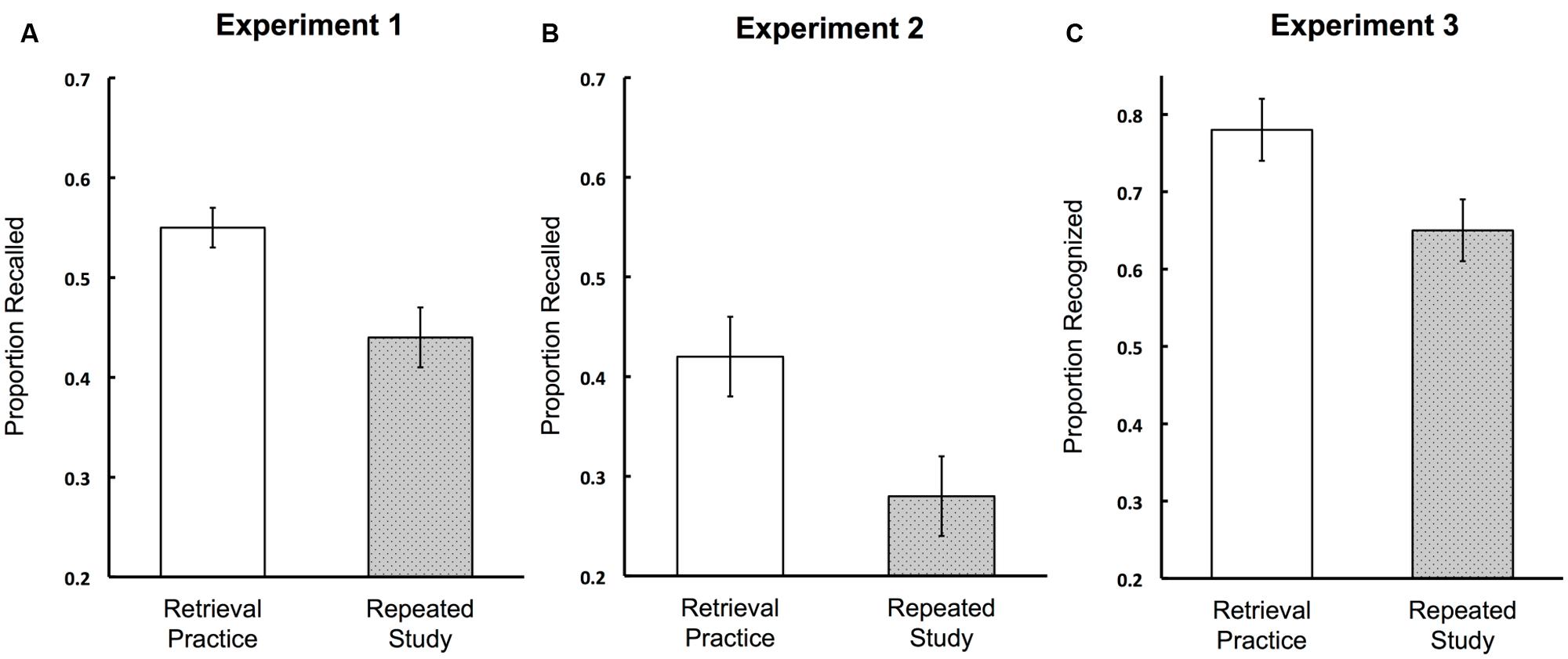
It's not necessarily a question of "will this work at all?" but rather a question of effectiveness. Numerous studies have shown that retrieval practice is generally more effective. I'm not sure I've seen a study yet which shows any other result.
Experiment 2 is free recall (blank piece of paper trying to recall as many words as they studied in the prior phase).
Experiment 3 is recognition (given a randomly sorted list of all the studied words and a bunch of other words that weren't in the list).
I'd also suggest it limits the usefulness of your memory. By only learning by comparing coins, you might successfully get everything correct on a quiz that entirely consists of comparing coins. But if you're ever faced with a different situation, say you don't have a coin at all but you have to reproduce it in some way, it's likely your knowledge won't transfer.
I've been in plenty of situations, and I'm sure others have too, where I've "learned something" and I'm able to answer a multiple choice, but faced with an open-ended question with a free-form answer, I'm screwed because I can't actually recall the information. I've only trained recognition when possible candidates are placed before me.
I'm not sure you read the article with good faith.
After the penny example, he goes on to talk about how important retrieval and exertion is to solidifying memories.
> Quizzing/testing/assessing one’s knowledge via answering recognition or recall questions, for example, is more difficult than simply rereading notes.
He then quotes:
> “Effortful retrieval makes for stronger learning and retention. We’re easily seduced into believing that learning is better when it’s easier, but the research shows the opposite: when the mind has to work, learning sticks better.” (5)
Going by what he says, I would suggest that his preferred learning strategy would be to, if you know you're going to be quizzed on what a penny looks like, try to recall what it looks like from memory. Then compare it to the actual penny, note what you got wrong, then try to recall it again. That's the kind of repetition and retrieval practice he's recommending in the article.
> Repetition can be incredibly useful. I can't imagine memorizing vocabulary or simple facts (when was FOO born?) without repetition. Of course, actually using the facts (or vocab) makes them stick better. But use is also repetition.
What exactly do you mean by repetition? If I'm memorizing vocabulary, repetition to me means recalling and writing the words down in some way (often according to some prompt or quiz). The repetition with this method works because of 1) recall strengthens the memory and 2) muscle memory of writing helps solidify it. But repetition by repeatedly reading? That simply doesn't work for me (and going by studies, it's a very poor strategy compared to retrieval/recall practice). Nobody who recommends retrieval practice says repetition by recall and producing it on paper (or however else) is a bad idea. Spaced repetition is also just a form of repetition. He doesn't demonize these forms of repetition.
Let's go back to what he said:
> One of these false beliefs is that repetition is the key to remembering; the more someone encounters material, the better the likelihood of retaining the information long-term. I can still remember, after receiving a test grade that I wasn’t thrilled with, believing that I would’ve done better if I’d just gone over the material more times.
Key words are "the more someone encounters material" (note the passiveness) and he emphasizes it with his own experience of thinking how he should've "gone over the material more often". It's really not that uncommon. I knew plenty of people in school and even in university whose only conception of learning was reading, re-reading and highlighting and maybe making notes. It was sub-optimal in so many ways. So to pretend that nobody does it ("Does anyone actually ever just read a thing over and over again hoping that it sticks?") seems a bit ignorant to me of how many people simply never learn good studying strategies.
> An emphasis on getting knowledge in memory shows up on surveys of students' learning strategies. In one survey (Karpicke, Butler & Roediger, 2009), college students were asked to list the strategies they use while studying and to rank-order the strategies. The results, shown in Figure 2, indicate that students' most frequent study strategy, by far, is repetitive reading of notes or textbooks. Active retrieval practice lagged far behind repetitive reading and other strategies (for a review of several learning strategies, see Dunlosky, Rawson, Marsh, Nathan & Willingham, 2013). A wealth of research has shown that passive repetitive reading produces little or no benefit for learning (Callender & McDaniel, 2009). Yet not only was repetitive reading the most frequently listed strategy, it was also the strategy most often listed as students' number one choice, by a large margin.