“So, yesterday I wake up, and I’m barely awake, you know? So I head to the bistro and order a coffee before work. The coffee is HOT, so naturally my clumsy ass spills the entire thing in my lap as soon as I sit down.”
Ordinary people in natural conversation will use the present tense to tell stories set in the past. So, “the coffee is hot” can sometimes mean that the coffee WAS hot.
It’s not something that we ordinarily notice or talk about, it just happens in ordinary conversation. So if we want to understand what “present tense” means, we have to take care to avoid being confused by the name, “present tense”. “Present tense” is just the name of a tense, but there are several different ways that it is used.
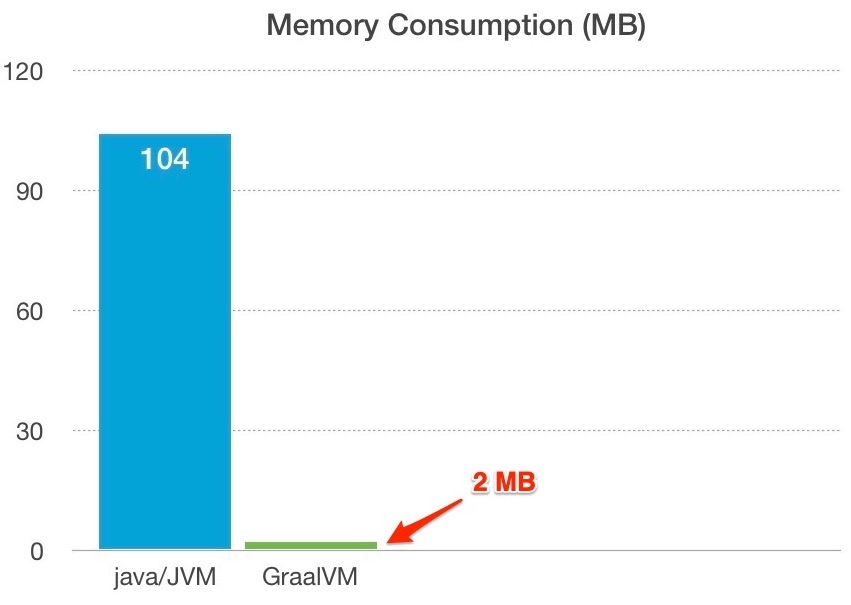
I think the problem is because of the virtual machine, instead of being compiled to an executable. I mean GraalVM is great - but why did it take so long to develop? I mean Sun could still be alive if developers and users had instant startup times, could have easily deployed Java to servers and clients, and that it was not only faster but used way less memory.
The virtual machine is (was?) the whole point. You can run the same binaries on your dev box or your server, whatever flavour of server that happens to be.
Startup times are not an issue on servers as processes are typically long-lived anyway. It is a bit of an issue on serverless (lambda etc.) but that’s a relatively new thing. High memory usage is generally poor tuning - if you give the JVM 1gb it will use it and avoid GC until it needs to. Sometimes it’s poor coding too, I’ve seen web APIs accepting files as base64 encoded json strings which is horrific server side.
Graal is very clever, but that memory example is nonsense. I just tried the Find example they give and whether the graal version beats the java version is completely dependent on Xmx.
Obviously I don't have their dataset, so it's not exactly the same test.
edit: In fact the numbers in the blog are so far off mine they may accidently have been testing /usr/bin/find.
It didn’t take too long, there was AOT compilers available two decades ago as well.
There was just not much interest in it, because performance gets worth, and startup time is seldom interesting. (Pretty much only command line tools would require faster startup, and recent serverless)
And memory usage is a tradeoff. Though most of the time java could run with almost half of the currently used memory, it is unnecessary work to GC if memory is available.
> I think the problem is because of the virtual machine, instead of being compiled to an executable.
I learned Java on gcj (gcc support for Java), and it generated executables. I've no idea why they killed it. Maybe someone more in the know can explain.
Mostly, yes. But it’s not just tags, it’s the whole notion of a machine instruction set designed for post-von Neumann-architecture programming. I.e. the instruction set knows that there are such things as functions, objects, processes, users, etc. instead of the OS having to emulate all these things on top of an agnostic and uncaring machine code running on raw RAM.


You got coffee at a bistro. "The coffee is hot" - nonsense "The coffee was hot" - makes sense
You SAW a woman at the beach. "That woman is beautiful" - sense? "That woman was beautiful" - potential insult?