Rebuilding and replacing tools doesn't sound that big of an issue to be honest.
I'm starting from the assumption the vast majority of people won't want a robot in their home, even just on principle. Then most people will not need it to do every possible action an human does.
For the remaining people in the target, having adapted/compatible cabinets or furniture is probably less of an issue. If someone requires assistance for instance, they'll probably also don't want hard to access shelves or crazy weird stairs.
The same way people have started choosing furniture that can accommodate a roomba(RIP irobot), we'll adjust our newer homes to whatever makes sense when we get the next wave of home robots.
Why wouldn't everyone want a robot that does all your chores, given that it is affordable? Everyone I know uses a washing machine. Do you wash your clothes by hand?
For better or worse, there is a fundamental difference between a tool that does a specific task under command (e.g. a washing machine), nothing else, never by itself, and a general purpose machine with some autonomy (a "robot") .
Many people will want full control over what happens in their house, and potentially feel unsafe having things that move on their own. Where's the line is for "full control" will be personal.
That’s a flawed assumption. Everyone wants a live-in bangmaid. They’re just normally too expensive. If you could buy one for 30k, they would fly off the shelves.
While Hollywood may portray the whole fuckable-robot thing as a male-dominate field, reality suggests the reverse. It's mostly not males that the current generation of powertool-like sextoys are marketed to...
> You can't accidentally build a web scraper operating off a residential proxy network
Unless I'm missing something, most of the time you ask an agent to do any type of comparison or analysis between mtiple options offered online, scrapping will be involved at some point.
Anything that doesn't have a well-known and very public, free API will be a prime target for scrapping.
That's an additional device, additional financing potentially on a different life cycle, potentially a different account to manage.
For a dedicated iOS dev that's worth the hassle, for someone managing a team of devs or employees only needing apps to run without requiring a full dev env, it's quite convenient and potentially cheaper.
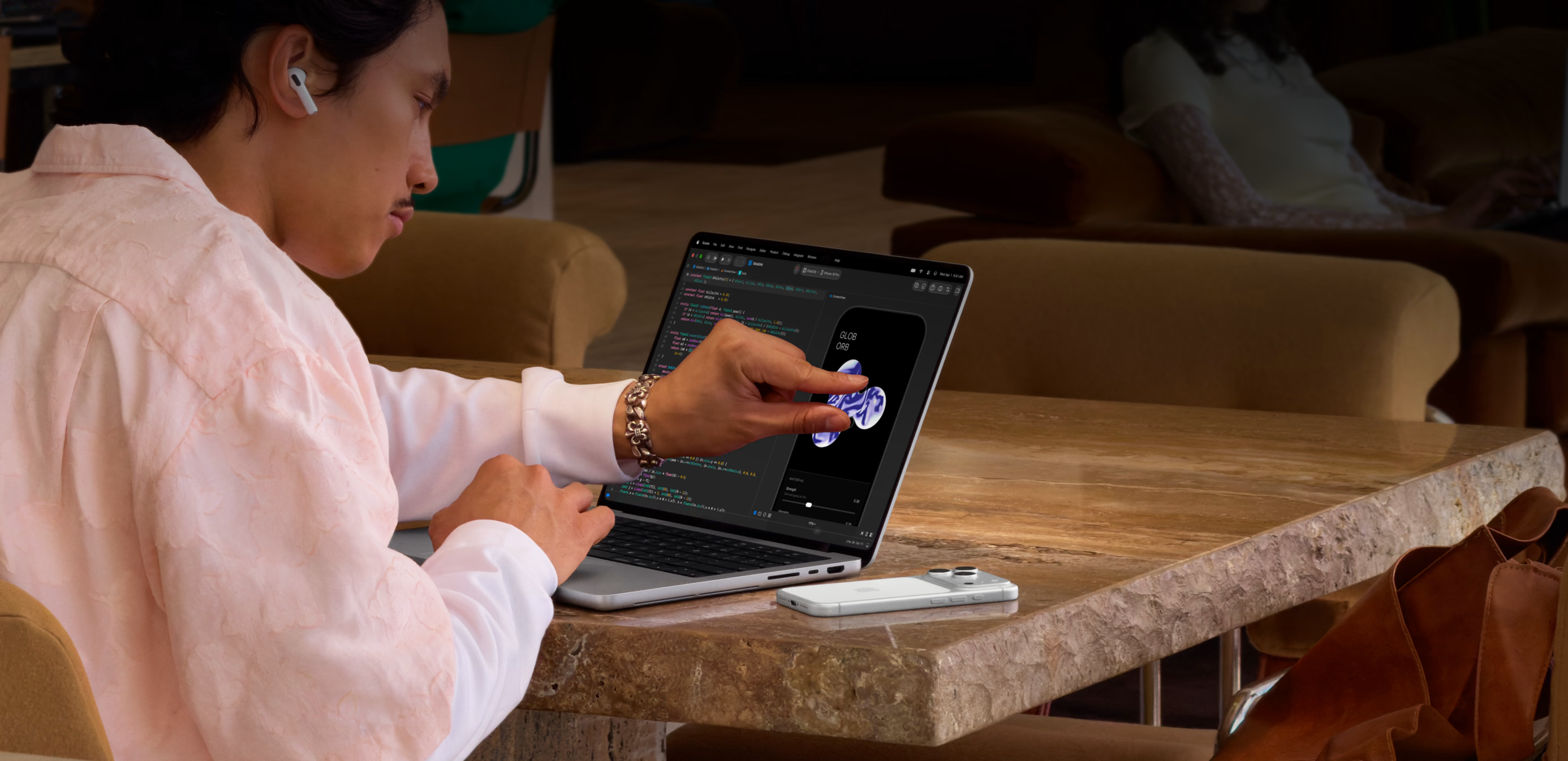
Check the apple promo material photo of guy doing UI development on touch mac. Theres iphone on the table possible even closer to him that the screen that he's touching :)
Getting rid of the fixed keyboard helps a lot (my preferred form factor), but even in the classic laptop form factor is makes a ton of sense IMHO.
There's a lot of small niceties that pile up into a better experience, the sister comments cover a bunch of those, so I'll focus on a macos specific nice point:
iPad and iPhone apps can now get direct touch when running on a laptop, instead of the mouse mode. With this, there is now a perfect platform able to run Mac, iOS and iPad apps outside of the ill-fated Vision Pro.
That's too little to late for me, but I think many will appreciate the benefits.
I've been trying to brainstorm a helpful use case this would bring but I can't think of anything.
I mean just imagine how jarring it is to go from touching the macbook screen to mess with your app to needing to input text. Whether you use the macbook keyboard, or the on screen keyboard, it's just kinda rough.
It depends what you value in macos. If it's the rails preventing the edge cases, and couldn't stand Windows and Linux for their laxitude, yes it's rough.
Otherwise the iPad already has to deal with it, it's not much different.
I can't believe I'm nitpicking proverbs, but making a sound with one hand isn't witchcraft.
To the core message of it, if we really need to stick to one liners, "go alone to go fast, go together to go far" would be an easier philosophy to adhere to perhaps.
Parent's point is IMHO that birdwatching involves a lot more attention, skill and experience than just plainly looking at a screen.
As sister comments point out, this could be reproduced with a lot more technology (VR with high precision controllers ?), which could bring it on par with playing Counter Strike in some ways perhaps ?
To expand on bird watching, people usually don't mindlessly choose a wood cabin and just sit there. They'll know which bird should be where depending on the season, where they tend to hide depending on the time of the day, their bird calls etc. and eventually trek to wherever the birds will be. It's also not so far from fishing.
Maybe I misunderstood, or took their argument too literally. I understood it to be damning screens specifically.
Seems like we're all generally in agreement, then. Probably nothing to do with the literal act of seeing birds, but all of the cognitive work that goes into it. Birdwatching is just an easy-to-digest hobby that demands the right sorts of cognitive activity. This can be akin to a 'Bird Spotting: the Video-game' with whatever flavor and skin, be it a shooter or racing sim or sports game.... but does not seem to cross over into 'TikTok' style less-cognitive activities behind a screen
Only Apple can properly replace these screens and pair the parts (FaceId etc),
so setting the standard repair cost high enough helps push people toward Apple Care eligible new devices, handicapping the second hand market.
That has been the case basically since Apple Care existed IMHO.
You're right, the self-service repair program exists. It doesn't clear neither the pairing issue nor parent's hurdles though, as Apple parts are still required , you can't get any similar enough screen you'd want, and they'll be priced the same as in Apple Stores.
As far as I remember, the self-repair kits only make sense in very niche cases (I think repair shop get a different contract ?) and won't work around any limitations Apple puts on parts or repairs.
I did not call Apple, this was a local "fix my iPad" shop.
It was funny, the guy was narrating as he is searching saying "Whoa, this is the most I've ever seen... Wow, oh man... Hold on..."
I knew it was not going to be good.
I asked if there were any DIY options for me.
He said I could possibly find a used iPad online and swap that screen. But, given the insane prices of the replacement screen, I assume the secondary market for a salvageable iPad that works is really tough.
At this point it makes sense to just buy another used iPad.


I'm starting from the assumption the vast majority of people won't want a robot in their home, even just on principle. Then most people will not need it to do every possible action an human does.
For the remaining people in the target, having adapted/compatible cabinets or furniture is probably less of an issue. If someone requires assistance for instance, they'll probably also don't want hard to access shelves or crazy weird stairs.
The same way people have started choosing furniture that can accommodate a roomba(RIP irobot), we'll adjust our newer homes to whatever makes sense when we get the next wave of home robots.
reply