We are slowly getting there, the used EV market takes time to build up a stockpile of good and fast charging cars. Also for total cost of driving you need to factor in cheaper charging than fueling on average, lower maintenance and maybe reduced (road) taxes depending on the country.
And you can buy them and use them right now, as i can go and shop some solar panels, inverters, batteries, some cables put them about anywhere and just have free electricity after the initial expense?
Solar panels etc. will last decades and can and will be recycled afterwards. Further, most materials needed for renewable energy infrastructure (iron, lithium) are highly abundant on earth. Most of the suppliers work to use cheaper (=more abundant) materials in their products, replacing lithium with sodium in batteries and silver with copper in solar panels. Wind turbine blades are produced now using re-solvable resins.
Not only are older solar panels recyclable, but efficiency gains in panel construction mean that multiple newer panels can be created with the resources from older panels.
Wind turbines are not recyclable[1]. Besides, the foundations use a massive amount of concrete (nowadays often extracted from the seabed, with all the problematic ecological consequences involved), that stays forever in the ground.
Existing wind turbines turbines are not recyclable - new wind turbines are.
Except, that's not even true. Some existing wind turbines are not recyclable.
Except that's not entirely true either! The tower portion of the turbine is usually steel, and easily recyclable! The nacelle, too. It's the base and the blades that can't be recycled.
Except that's not entirely true either! Existing turbine blades are made (mostly) of fibreglass, which is made of the fibre and the resin. The fibres aren't reliably as strong when recycled (which makes them not-very-useful when recycled), but the resin is just fine. And of course, if the blade is e.g. carbon fibre, then you can either re-use it or just burn it.
So, you statement should be that some (components of) existing wind turbines cannot be profitably recycled with current technology.
The wind turbine's concrete base doesn't need to be smashed up or ignored, incidentally - it can be re-used. Concrete is much sturdier than the e.g. gearbox.
None of this is economically profitable, which is why right now it ends up in massive landfils. The concrete base is reinforced with steel beams and weights so much that you can't move it.
Also sorry but I would require a citation for "new wind turbines are recyclable". That the tech exists doesn't mean that all installed turbines have it.
Concrete recycling is actually a pretty big deal. For most of building history here the standard material to put behind basement walls, retaining walls, and so on, for drainage was crushed scoria. Now it's crushed concrete. Some amount of effort but you're recycling existing stuff, and they recover the reinforcing steel as well.
Who cares? Those blades and that concrete are totally inert and just sit in the ground after their useful life. The ground already has lots of rocks in it.
The problem is that those power sources are marketed as "renewable" (they aren't as they quickly end in landfills), are intermittent, require fossil fuels for when the wind doesn't blow, and are not profitable.
One could also say that they change heavily natural landscapes, but this is a matter of taste.
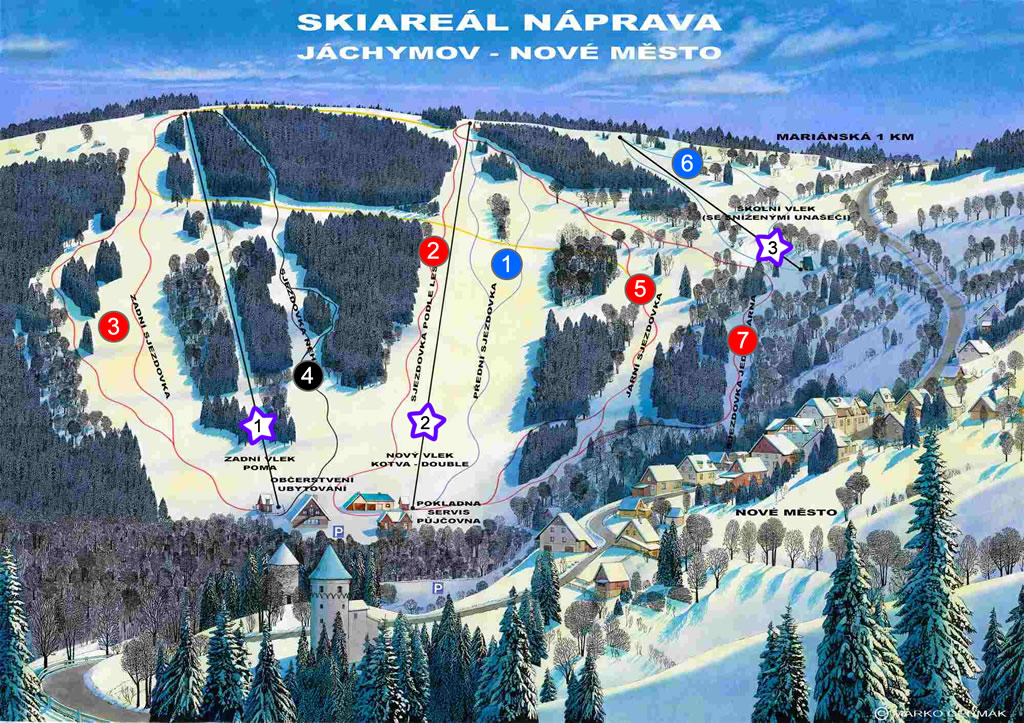
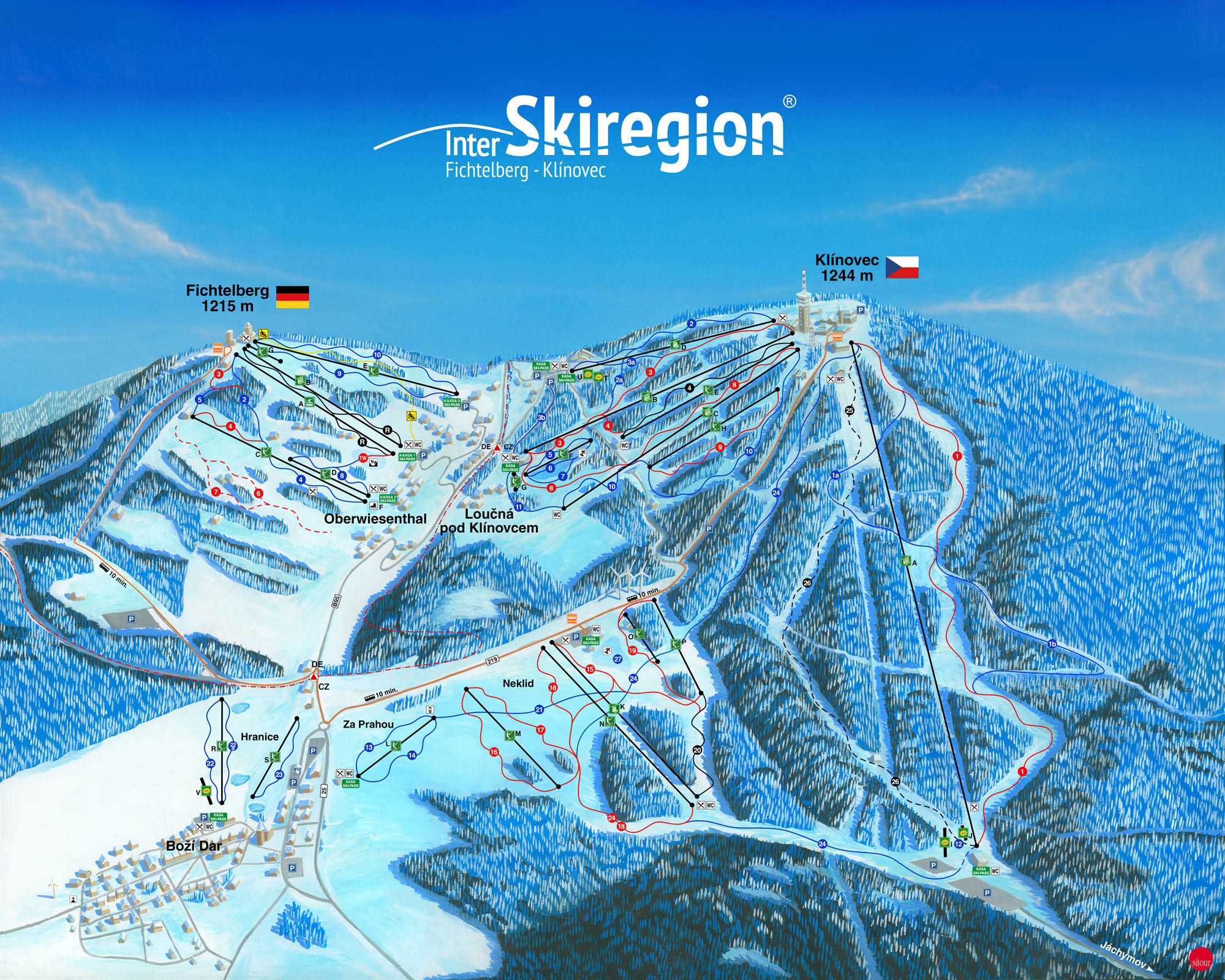
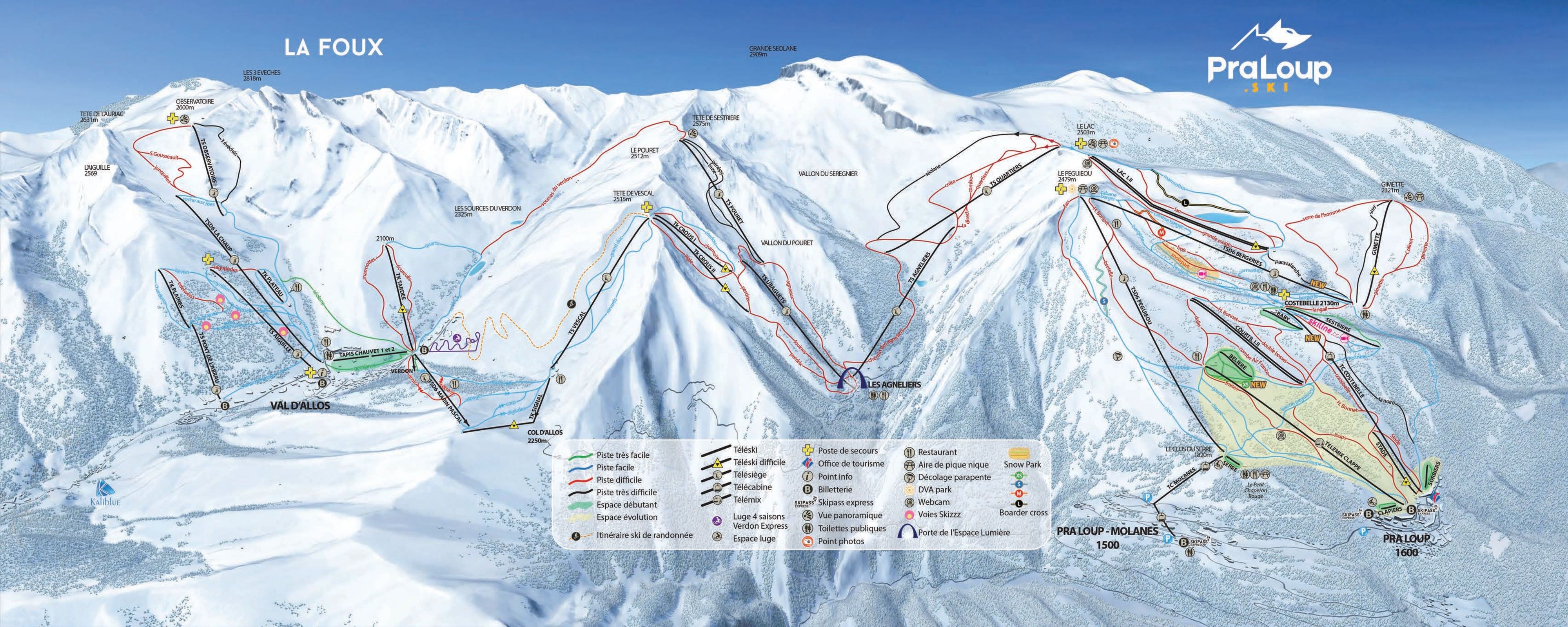
Being used to European style ski maps, I don’t really understand why you would paint a ski map. A ski map is a map and should convey all the information you need without being overwhelming. I don’t get it why it would show different trees or why the colors need to be natural. A map is a man made thing, nature is outdoors. There is no need to reflect it on the mapy
You mean the automatic normalization HN does when you submit the title? Yeah, it's still quite basic compared to the real HN. I want to validate it properly before investing in lots of features :)
Imho it’s a good thing to not block other countries approach to clean power from a german perspective.
However, there is just no way new nuclear power makes any sense for German grid. Just last week we had negative prices for _every_ day during peak demand (yes, peak demand is usually around noon, it’s just not visible because there is so much solar self-consumption)
https://www.energy-charts.info/charts/power/chart.htm?l=en&c...
What‘s really needed is more batteries. At lot more batteries soon.
>What‘s really needed is more batteries. At lot more batteries soon.
Germany would have one of the biggest batteries on the continent if they controlled Lake Geneva @ ~341bn liters of water.
Pumped hydro storage is infinitely superior to Li-ion battery storage where it is available. Batteries are good for instantaneous response but lack the stability of water turning a large mass.
Solar creates a difficult environment for base load generators such as hydro, nuclear and nat gas. When it's sunny they nuke the price down to zero or negative but produce nothing when it is not sunny. As evidenced by Spain's recent blackouts you need a healthy mix of generation because renewables are seasonal in nature and not very stable compared to a large mass spinning at the correct frequency.
fyi, the root cause of the Spain blackout (not blackout) is not yet known.
I won't deny that solar and wind make things harder, but linking the recent blackout to renewables without the facts is only done by fossil/nuclear propaganda orgs and their useful idiots.
The Spanish network had much wilder days before and did not break down. First insights point to possible design flaws in the network.
"healthy mix of generation" is quite funny to read, thinking about nuclear and coal which are not too healthy for the people living close to the plants :-D
You're likely not an electrical engineer by training so I will assume you don't know much about power generation and distribution. (It's worth noting my training in this field is nearly 2 decades old so I'm a bit rusty but I still follow several publications in the field) Engineers have been warning about inertia and voltage control being neglected as renewable penetration has soared. These aren't normally of much concern when you are spinning a large mass to generate AC power.
> fyi, the root cause of the Spain blackout (not blackout) is not yet known.
While the final official reports may not be out initial data has been released and indicates frequency and/or voltage oscillations got out of hand causing generation disconnection and cascading blackouts. Renewable penetration in that area of the grid likely contributed to the brittleness especially in voltage control and inertia management.
"Inertia management is increasingly critical for grids with high renewable penetration. Many such systems now implement inertia floors to limit the maximum rate of change of frequency during disturbances. While inertia is often considered primarily for frequency stability, it also plays a crucial role in preventing loss of synchronism between different parts of the grid. As conventional synchronous generation decreases, careful monitoring and management of system inertia becomes essential to maintain stability during disturbances."
[1]
>"healthy mix of generation" is quite funny to read, thinking about nuclear and coal which are not too healthy for the people living close to the plants :-D
I'll give you coal as unhealthy but natural gas is much cleaner and nuclear is entirely clean, save waste management which is a solved problem.
How does nuclear effect residents living nearby? I'm not aware of any reporting of systemic illness near any of Europe's nuclear plants but, I may just be ignorant of the latest research. Care to provide a link?
Regarding the nuclear risk - it is driven by incidents. If the plant had not incidents, there would be no risk.
E.g. the childhood leukemia risk is double inside a 5km radius, and there is no good explanation for this (except the occasional release of radioactive exhaust in case of incidents). (https://www.bfs.de/DE/bfs/wissenschaft-forschung/wirkung-ris..., link is in German, sorry)
Same is true for the nuclear plant workers. Their cancer risk grows linearly with their exposure - which I assume is also an effect of minor incidents, especially if you exclude lung cancer (smoking was quite popular in the 20th century...). See e.g. https://www.aerztezeitung.de/Medizin/Krebsrisiko-im-Kernkraf...
The childhood Leukemia link is something I didn't know. Very interesting.
On the worker front it makes sense that there is some linear correlation. I wonder how radiation exposure for workers compares to say a fighter jet pilot with 10,000 hours. In a fighter jet you have very little if any protection from radiation present at higher altitudes.
In the context of interia and frequency syncing, I'm guessing nuclear has pretty high capacity, given that the physical-thermal generation side is decoupled from the electricity generation side.
I.e. you can control the amount of thermal you're feeding your turbines, to get the electrical output characteristics you want?
You're correct, nuclear power plants have high inertia and significant flexibility in managing their output due to the decoupling of the thermal generation from the electrical generation.
12:03 – 12:07 CEST – first period of oscillations in the grid detected and mitigated.
12:19 – 12:21 CEST – second period of oscillations in the grid detected and mitigated. Since then the grid appeared stable, with no oscillations detected.
12:32:57 – 12:33:17 CEST – a series of generation trips in southern Spain, the first near Granada, the second near Badajoz and the third near Seville causes a loss of 2200 MW in generation capacity. Frequency decreased and voltage increased.
12:33:18 – 12:33:21 CEST – grid frequency of the Iberian Peninsula drops below 48.0Hz. Automatic load shedding is activated.
Looks like the first few oscillations were successfully mitigated. I'm not sure what type of generation got cutoff that led to the cascade. Not sure how reliable this infrastructure map is but that area seems to have a pretty good mix of Natural Gas, Hydro Storage and Solar. https://openinframap.org/#9.14/37.4625/-5.8656
Exactly, and as a consequence of the automatic load shedding, the fission reactors shut down for safety reasons, and had to be cooled using their Diesel generators, which wasn't nice to watch: https://www.lavanguardia.com/vida/20250428/10625069/nucleare...
Which unfortunately meant they were unable to support the "reboot" of the network. That was started in the evening to avoid working hours (we were lucky and hat our electricity back at 18:30, while some people had to wait quite a bit longer). The reboot used mostly hydro, gas, and as much electricity as possible from France and Marocco. (well summed up in https://en.wikipedia.org/wiki/2025_Iberian_Peninsula_blackou...)
I wonder whether there could be a safe mode during load shedding that would not require a complete reactor shutdown. If that were the case, nuclear could have a stabilizing effect same as gas or hydro.
I am quite eager to learn about what really went wrong. We enjoy really cheap consumer prices for electricity (we use it to heat and cool, like in the US), thanks to solar and wind. I hope investing in batteries and network reliability will be enough to mitigate the problems.
>Exactly, and as a consequence of the automatic load shedding, the fission reactors shut down for safety reasons, and had to be cooled using their Diesel generators, which wasn't nice to watch
The shutdown is due to an abundance of caution and is regulatory (in the US). When the grid falls below a certain threshold of stability the reactors are programmatically shutdown. (At least that's how it worked 20 years ago.) They have significant inertia but that only goes so far, as you mentioned until we see the final report we won't know for sure if the shutdown was manual or programmatic.
Depending on how long the Reactors were shutdown down Xeon poisoning could have also been why they took longer to start back up. Xeon poisoning is one of the attributes of our current fission technology that makes Nuclear less able to cope with instability compared to combustion generation.
>I am quite eager to learn about what really went wrong. We enjoy really cheap consumer prices for electricity (we use it to heat and cool, like in the US)
Air conditioning is a great application of Solar especially in the sunbelt. It just makes so much sense. When it is daylight and the Sun is unobstructed A/C draws a lot of power likewise Solar is at peak efficiency. I've never been to Spain but, if you all believe in A/C I may have to stop by next time I'm sailing the Med.
To be clear I'm not at all opposed to grid scale battery storage if it can be built out safely and economically. But let's not pretend that it's safer than nuclear power. Modern nuclear plant designs with proper containment and backup systems have an excellent safety record.
Good point about the flammability, wasn't aware of that.
The safety mechanisms are part of why nuclear is so ridiculously expensive. I think every major power needs nuclear infrastructure for their nuclear weapons, but I don't think it is economically viable anymore as a power source, whatever the propaganda says. Maybe for the US, China, and Russia who have enough empty wastelands to dump the nuclear waste at low cost. Finland and Sweden their granite. Everyone else has to do sth. expensive.
Germany is old, and paying its pensions from however the taxed economy is currently running. And its addicted economically to russian gas.
The piggybank is spent, the "make belief can come true by the power of surplus money" philosophy ran out of steam as idealistic projects have to be payed for by holding back on the pensioner feeding trough. The generation that bend it all to their will finally ran out.
The Pixie dust is called China. BNEF is tracking 7.9 TWh of annual battery manufacturing capacity for the end of 2025 [1]. Chinese manufacturers' all-in costs for BESS are now down to $66/kWh and still dropping [2]. We (or at least China) have crossed the "knee" of the exponential for battery production, and loads of people don't seem to realize this.
> the cheapest additional nuclear capacity costs more than the most expensive grid scale batteries.
Nuclear capacity and grid batteries do different things, so the word capacity is rather too imprecise. Otherwise one could argue that a lightning rod has higher capacity and is cheaper than a battery.
Lets compare the $36.9B [1] spent on Vogtle with the same money spent on renewables and storage:
Batteries:
- $63/kWh [2] installed and serviced for 20 years = $0.063B per GWh
Large-scale solar:
- A range of $850-$1400/kW [3] = $0.85B - $1.4B per GW
- Capacity factor of 15-30%
Say $1B per GW and 20% for easy round numbers.
Large-scale onshore wind:
- $1300 - $1900/kW [3] = $1.3B - $1.9B per GW
- Capacity factor 30-55%
So say $1.5B/GW and a capacity factor of 40%.
Nuclear power has a capacity factor of ~85% so to match Vogtle's new reactors we need to get to 2.234 GW * 0.85 = 1.9 GW
Solar power:
- 1.9/0.2 = 9.5 GW solar power = $9.5B
Wind power:
- 1.9/0.4 = 4.75 GW wind power = $9B
Compared to Vogtle's $37B we have $28B left to spend on batteries.
- $28B/$0.063B = 444 GWh
444 GWh is the equivalent to running Vogtle for.... 444 GWh/1.9 GW = 233 hours or 9.8 days.
This even ignores nuclear powers O&M costs which are quite substantial. By not having to pay the O&M costs and instead saving them each year after about 20 years we have enough to rebuild the renewable plant.
Thank you for providing numbers that guide your thinking.
> - $63/kWh [2] installed and serviced for 20 years = $0.063B per GWh
The Lazard source does provide costs for storage on page 44, ranging from about 3x to 6x the cost of that Chinese tender process. Using these numbers gives a rather different picture with storage of between 3.25 days and 1.6 days, insufficient to make solar really work. Alternatively the fair comparison would be within China.
Another data-point would be the UAE's attempt to firm solar; $6B for 1GW effective baseload output with 18GWh of storage [1]. So the cost of Vogtle could buy 6 of these, providing perhaps 3 or 4 days worth of storage.
Inflexible generation getting fined for inflexibility leads to innovations like running two shifts of coal generation. The UK pioneered it in their now totally shut down coal plants and Australia is now implementing it.
I‘m currently visiting Paris for the second time in my life after 2008. I can tell you it’s much cleaner now than it has been back then. There are many electric (cargo) bikes, scooters, cars and buses. The city is much quieter and there is way less crazy traffic. There are few cars parked on the side of the street. However these parking spots were cleared for bike lanes and bike sharing parking. Biggest polluter are the garage trucks, which are still diesel and noisy. If they manage to replace them by electric ones, many parts of the city will be really quiet.
Right, there is no measurements involved and most decisions are gut-based. In the end most systems will work somehow, it’s just that the pain points in development are different.
The older I get the more I feel like this is a feature, not a bug. I have spent too much time over engineering systems that end up being canned because leadership decides to go in a different direction. These days I am much more concerned with striking a balance between perfect and good enough.
Get something out into production, start generating some revenue and finding the stuff people like about it, then see what is giving you the most problems and fix that. That’s going to be a much more successful path than never shipping anything because of endless polishing and optimizing.
If I ever find myself spending a long time debating some technical decision (aka bike shedding), I have learned to hit pause and say let’s just pick a path and go with it. As an aside this also works for deciding what restaurant to go to or what kind of pizza to order.
Completely agree. I'm personally inclined to be more toward the "good enough" end of the spectrum than the "perfect" end of the spectrum - but it's still a judgement call. Ultimately, one needs to turn out a product, make money, and fix it up where there are gaps or deficiencies. It is a feature; a good one. Anything else is just hubris and vanity.
If you feel you need micro-services to force an organizational change, don't equivocate, just lead with that, and get back to business.
Even if there is measurement, it’s pretty easy to cherry pick stats or question the existing stats. I’ve seen it time and time again often “data driven” only matters if the data agrees with the leader/devs preconceived beliefs.


reply