> Mr. Musk faces competition from another billionaire. Blue Origin, a rocket company founded by Jeff Bezos, the chief executive of Amazon, aims to send tourists and supplies into space.
Is that line even close to true? Last I heard Blue Origin was years away from revenue and far behind SpaceX in terms of capability and manufacturing.
T̶h̶e̶ ̶f̶i̶r̶s̶t̶ ̶p̶i̶c̶t̶u̶r̶e̶ ̶i̶s̶ ̶k̶i̶n̶d̶ ̶o̶f̶ ̶m̶i̶s̶l̶e̶a̶d̶i̶n̶g̶.̶ ̶F̶a̶l̶c̶o̶n̶'̶s̶ ̶b̶o̶o̶s̶t̶e̶r̶ ̶d̶o̶e̶s̶n̶'̶t̶ ̶u̶s̶u̶a̶l̶l̶y̶ ̶r̶e̶a̶c̶h̶ ̶t̶h̶e̶ ̶K̶á̶r̶m̶á̶n̶ ̶l̶i̶n̶e̶.̶ However, as it is apparent from the size in the second picture, Falcon needs much, much more thrust to help put things to orbit. Going to space is kind of easy, the hard part is staying there.
Having played several hundred hours of KSP I can confirm you shouldn't underestimate momentum. It's amazing that it's even possible. I think the number I've heard is if the earth's gravity was something like 10% stronger this wouldn't be feasible.
If gravity was 10% stronger rockets might be much more powerful and been reusable much sooner. Having the military need to produce nuclear powered rockets for effective ICBMs would have produced a very different nuclear power development path than the one on this Earth.
With a modest increase in Earth's gravity, none of the rockets we have ever built would have been able to put even a small payload into even low earth orbit. Even a Saturn V wouldn't be able to launch Sputnik. Increase gravity a little more and no chemical rocket we could feasibly construct given known materials and methods would be able to do the job.
It's not about the amount of thrust. It's about being able to carry enough fuel to sustain that thrust long enough, without the weight of the fuel making the rocket too heavy to lift high enough to reach orbit.
Possibly not able to carry enough chemical fuel to lift the fuel into space and return and do a controlled landing without refueling? That seems more plausible.
Fuel is heavy, and most of it is spent on... lifting fuel.
But the way the rocket works is creating a continuous explosion behind it. The propellant explodes, pushing the rocket. It's not just the rocket equation, but the explosion from a central point BEHIND the rocket that pushes it further.
Having a nuclear explosion for example behind the rocket would surely be enough to push it into space... even on Jupiter.
Yes, this is what I was referring to. Though there's probably another percentage that makes most rocket fuel also insufficient for anything more than LEO.
Maybe not right now, but I wouldn't ever underestimate Bezos.
Musk and Bezos are both people I wouldn't bet against, but they're so drastically different in their styles. Musk is flashy, but gets shit done. Bezos knows how to get shit done quietly... and suddenly he's dominated and bought everything around you.
Amazon has a load of terrible products. Even their store is getting worse and worse. The fire phone was a complete flop. Amazon cloud drive and music are not at all at the same level as their competitors. Google Home is looking as though it's going to surpass the Echo.
Amazon is successful because they are fine with taking losses, only just recently making a small amount of profit compared to their scale.
Amazon can fail a lot because money for private companies is a lot more expensive and harder to get than for public companies. Musk is playing on hard mode because he wants to retain control.
Musk claims he won't take SpaceX public because public investors have short attention spans and would require profit/return too soon. Because he wants goals set out further than the next quarter, he has kept the company in the hands of like minded investors.
That may just be bloviating on his part, but it does seem at least sensible on the surface.
It means the shareholders decide who is control. This is not about having control now, it's about retaining control.
Musk doesn't want to be beholden to shareholders because their interests (profit) might not align with his objectives (Mars). Presumably Bezos does not fear any such misalignment of interests between himself and his shareholders.
You need both. A visionary alone needs the discipline that comes from having to choose which vision of many and finish it. A financial focused manager will never bet on any but the most obvious ideas and thus lose when someone else makes something work.
Ideas are easy. Implementation is hard. The least creative person has enough ideas to bankrupt even the biggest company if you start a team to implement them all as the idea occurs (a car obviously takes more people than a paper notepad, but you should expect to have all those ideas)
A visionary who never thinks about money will eventually run out, or worse bounce between ideas and never finish one. The person who only thinks about money will not invest in the things required to continue making money.
I've heard it stated that you need a visionary CEO and a close second who is a financial realist. The visionary has lots of great ideas, the financial realist reigns them in and forces the visionary to choose which vision(s) to focus on and finish; and let the others go. This works great until the visionary CEO steps down (dies, retires...), when you put the realist second in charge all the visionary projects are stopped, for a couple quarters the company makes more money, but there are no visionary things in the pipe so the company dies a slow death.
I think more failures than successes can be interpreted as a healthy appetite for product experimentation. The other option in todays world would be not to innovate except through purchases of established product families from other companies and acquisitions.
So yes the phone failed, but how about the 50 services they offer on AWS? Failures on their part are heavily publicized, but successes move along silently.
What you describe is exactly how you come to dominate retail business and become monopoly power online.
Amazon's reference point is Wal-Mart. They are in ever expanding price cutting small margin business.
Another good comparison in Microsoft in 80's and 90's. MS dominated over IBM, Apple and others several decades with sup-par product everybody hated by attacking and destroying potential competitors, not by improving products.
> They are in ever expanding price cutting small margin business.
If you sink all of your profits into expansion, then on the books you made zero profit. If you made zero profit, you pay zero taxes. This is a common tactic with farmers. They use this year's returns to buy next year's supplies. If amazon stopped growing and suddenly reaped their profits, there would be a big tax bill to go with it.
There's a middle ground: don't grow as much, and pay some taxes. Not saying it's optimal (for any party, or on any axis), but it's not like there's just this binary choice of "growth consumes all profit" and "don't grow at all."
This isn't how accounting works. You can't just buy a warehouse and expense it in year one. You have to depreciate it overtime. You can look at their FCF its about 10 billion. Their market is 50x of that. For comparison walmart is ~20 billion and they are worth half of Amazon.
That doesn't align with the actual history at all. One of the extremely well known, defining characteristics of Microsoft in the 1980s and 1990s, was releasing a weak product that they then improved substantially over several versions. Your premise is they didn't improve products as a means to conquer, when that's exactly how Windows took its market share after a horrible initial release that flopped: it got a lot better; ditto for plenty of other examples such as IE vs Netscape.
It applies to at least: MSDOS, Windows, Office and most of its products, Internet Explorer, SQL Server
In fact it was so well known that's how things worked, it was a saying that they only finally got things right by version three.
MS-NET, LAN Manager and MS/IBM joint effort with OS/2 LAN Server were all inferior to Netware. MS battled decades against Novell with inferior products and shady market practices eating their profits. Finally Novell was taken down and crumbled when networking became a core system component in PC operating systems.
Throwing money against to superior product from smaller competitor until you can eat their lunch is proven tactic.
The guy who does 100 things and wins at 10 still comes out above the guy who does 2 things and wins at 2. This is despite the previous guy having a failure rate of 90% and latter guy having a success rate of 100%.
Well, he also has his stock in a company with a P/E ratio of 257.38, that's one very large bet. Cranking up earnings is clearly possible, but Amazon is also showing signs of imploding as for example people simply don't trust fulfilled by Amazon to mean anything.
The Kindle is good and Echo is great. Every other hardware product they've ever made has been complete dogshit, which is why the packaging for most of them advises buyers to set them on fire.
The newer kindles are kinda shitty for the consumer, much better for Amazon no doubt.
The switch to touch screen and adverts all over your library & store is really jarring. So much so that my tech friends now just buy second hand kindle 4s when their old ones break.
It's possible that library lock in will stop them migrating away from kindles when the supply of kindle v4s runs out but not I think certain.
If so, point them to Calibre. While I currently use the Kindle app to read my books, I have made it my "policy" to on each purchase ensure that I am still able to break the DRM and store a backup copy in a non-DRM'd format. The moment that changes, I'll stop buying Kindle books.
Some purists would prefer to avoid buying DRM'd products in the first place (and I do when I have an alternative), but this is "second best" to me - I'll tolerate easily breakable DRM, but not one I can't remove.
The upside is reduced lock-in - it may affect usability (the Kindle app is still the best reader app I've used for Android as well - if anyone has recommendations for any actually usable ebook reader Android apps I'm all ears) but I know I can read all my books on any device, using free/open apps.
Calibre, as I mentioned [1]. I don't know if I should link directly to DRM removal tools here, but if you search for DRM plugins for Calibre they're readily available.
A while back I stopped using kindle and migrated my library to epubs. Apple's ibooks reader is much better and I didn't find much benefit out of eink devices. With ibooks you can sideload your own epubs, so it isn't much of an issue. Adobe reader also has a good reader mode for pdfs. Also I have iCloud library for my sideloaded books, so it's all cloud synced.
The only real benefit of kindle is the library selection and prices. The ereader software itself is mediocre.
I agree with that last point. Beyond that the reader and the store could be better integrated. It's surprisingly difficult to, say, find out if any of my ten favorite authors has released a book since the last one I read.
I don't mind the touch screen. I very much do mind ads, but you can pay $20 more to not have any. If anyone says they don't like ads but isn't willing to pay slightly more money to not have any, then I have to question their sense of priorities.
>Amazon is successful because they are fine with taking losses, only just recently making a small amount of profit compared to their scale.
I thought this tired narrative was almost over? For decades Amazon chose to invest in infrastructure and logistics.
Now they're "making a small amount of profit compared to their scale"? Who's at that same scale setting the bar for profit? Remember that "scale" doesn't equal revenue.
I think Amazon cloud is a mixed bag of excellent and terrible.
I love EC2 but not a big fan of their other more advanced services. I tried Azure, Digital Ocean, GCE... for IaaS and they just didn't have the same richness of features and flexibility as EC2.
The vast majority of SpaceX's current success is attributable to government funded research and experiments (the entire space program for the last several decades) and government funding (currently) that Musk is taking advantage of. They don't have more mishaps because the innovations they're undertaking are small relative to the existing body of research and experiment, and built on a solid foundation that already exists.
It's popular in some circles (not directed to your comment, here) to lionize Musk as some exemplar of how the government sucks and to promote privatized space exploration but that's just not in line with reality as it actually is.
The vast majority of government research for space launches was done by the Nazis. Everyone has access to that and NASAs research, yet...
SpaceX is currently launching space shuttle sized payloads for a price that is over 40 times less than the shuttle, and less than half the cost of other private competitors, and at a cadence none of them have ever achieved.
Re-use is the key launch technology of the future and its greatest and only commercial application has been done by SpaceX.
> The vast majority of government research for space launches was done by the Nazis
The extreme majority of government research for space launches has occurred since 1950. The extraordinary resources put into the US space program, including the research necessary, makes the Nazi efforts look hilariously trivial by comparison.
They're a private company the same way any company that is effectively funded by government contract is. Technically it's true, but they haven't demonstrated actual viability in the private market (much less profitability). And the achievements you note have little or nothing to do with their status as a private company and almost everything to do with taking advantage of government research from the past half-century.
> the achievements you note have little or nothing to do with their status as a private company and almost everything to do with taking advantage of government research from the past half-century
I'm generally for private enterprise, and It seems rather questionable to me to say that everyone who takes any Government money under any circumstances is equivalent. Musk has indeed taken a lot of Government money, and more importantly IMHO hired a bunch of people who got their experience in space and rocketry at NASA, but does that make him more or less private than, say, Lockheed-Martin or the other usual contractors?
I would say that the aerospace companies doing cost-plus contracting for loosely defined projects with fuzzy requirements and no prospect for sustainable private operations are in a very different business than companies that do fixed-price contracts with the Government for specific services with an eye towards capturing a private market in the future. The cost-plus guys are IMHO government agencies in all but name, plus some fat paychecks and kickbacks going to a few connected people. The fixed-price guys are IMHO normal private companies that happen to contract with the Government for their normal profitable services sometimes. I don't think it makes much difference if the first business that funded initial development was all government contracts - the private market for launch services is real, and SpaceX has a plan for making a profit in it and is progressing towards capturing a solid market share in it.
You are quite right that the space launch industry and the technology it uses wouldn't exist without government research and funding. That's perfectly true.
But it's also true that without Musk there would currently be no prospect of significant rocket component reuse for another generation. Rocket launch costs would be double or triple what they currently are. It also seems very likely now that within my lifetime we will see launch costs to orbit close to 100th what they were just a few years ago. Some of us think that's a good thing.
A graph of the improvement in rocket technology from 1945 to now would look like a hockey stick early on, levelling off more or less flat for the last 40 years. Musk has bent that curve back up into a hockey stick shape again.
I'd argue that Musk, using the facade of "Private Market Hero", has made government spending on research in this area palatable enough (again) to make progress. Sure, he's a key personality, but it's not like he's accomplishing these things outside of the context of being heavily funded and guided by the government.
So what? Do none of the achievements of the engineers that drove the US space programme through the last century 'count' because they were government funded? What a bizarre world view.
As it happens none of the re-usability programme (Grasshopper, the drone ships, etc) was actually funded by the government. That came from around a billion dollars of private capital investment. Musk talked about this in a TED talk.
Most kinks of space travel were worked out in the '60s and spacex is pushing for reliability specifically, not for payload capacity - coincidentally that's where they're pushing the envelope and getting most of the failures.
Not really. In the 60s we basically verified that certain rocket and engine designs work and that we could go beyond earth orbit. Creating a reliable, long lasting and reusable space rocket/vehicle is, in my opinion, orders of magnitude more difficult. Just look at the Space Shuttle failure as an example of trying to do space on the cheap. Also, remember it took about 5% of the US GDP in the 60s to put men on the moon. I believe in Musk but trying to make space cheap is just simply a difficult problem and one I wished we funded more.
A reliable, long use rocket is not exactly new either. Delta II first launched in 1989, 153 launches, 151 successes. There will be another launching this fall for JPSS-1.
SpaceX also operates at a seemingly breakneck speed because they've taken a lot of production in-house. A lot of places contract out in order to get things manufactured, and that takes a lot of time and money because you're going back and forth instead of being able to directly take a design and go to a technician for manufacturing.
I thought amazon was also a bubble of some kind, relying on aggressive growth to swallow the market and then change it's policies because it's unsustainable ?
Musk seems a little more down to earth (sic) here.
Amazon didn't turn a profit for years because they were heavily reinvesting in more/better infrastructure (their "fulfillment centers") and services. One of the biggest services out of this reinvestment is AWS, which AMZN built for AMZN, and then realized it was such a good product they started selling it to others (also part of Bezos' ethos and their large initial costs: if you can't sell your internal tools to other people, you shouldn't be using it)
However, Amazon is making a profit these days, and is still growing, so I think it's sustainable.
Uber, meanwhile, is/has been subsidizing many/most rides with VC money in order to get market share, which is an entirely different thing and more in line with your perception.
I'm a big fan of both companies, but having watched them grow I think the answer to whether or not it is true that Blue Origin is a competitor is, "No, yes, maybe?"
If SpaceX can get Falcon Heavy to work then no, so much of the oxygen will be sucked out of the launch services market that Blue Origin will be hard pressed to compete. At that point. I see them much more likely as a ULA acquisition to insure engine supply rather than a continual drain on Jeff Bezo's net worth.
If on the other hand Falcon Heavy continues to slip, or if their early attempts at launching them are unsuccessful, or they are unable to recover the three boosters (which I think is 'baked in' to the market expectations) then Blue seems to be in a position to take some of the heavy launch business, except that there isn't nearly as much of that business as there is the small/medium launch business.
Finally the dark horse here is the 'previously unexploited used for heavy things in space' which is to say some business or process that is tremendously more competitive in space than it is on Earth which grows the heavy launch business faster than SpaceX can scale up.
I believe I read about a month or so ago that Bezos plans on selling ~$1 billion worth of stock annually to fund BO, I could be misremembering the exact figures though. Even at that burn rate, assuming Amazon continues to do well, I don't think it will be too much of a drain on his wealth. Plus, he seems like a pretty long term thinker so I don't think he'll throw in the towel even in FH captures a big chunk of heavy lift. BO is currently investing around $200 million in a new production facility in Huntsville. I'd say it's more likely that Boeing/LockMart try to rid themselves of ULA than ULA acquiring BO.
Well, at a net worth of approximately 90 billion and assuming a 5% return rate, he can sped 4.5 billion dollars every year forever on the blue origin and never lose a penny.
Bezos started BO around the same time as SpaceX, and has spent just as much money if not more, and accomplished next to nothing. He will need to pour many additional billions in to even make a race of it, the way the BO turtle moves.
Maybe he's hired the rocket guys who can't take SpaceX's speed and like to actually spend evenings at home with their family :)? Only half kidding here.
Just for the sake of argument it's feasible a person can be mentally flexible enough to apply different management standards to retail and rocket science.
Or maybe Bezos didn’t understand orbital mechanics and picked the wrong approach: They went into space and landed again, but they did not go into orbit yet (as far as I know) and landed again. De-orbiting and landing is different from just going straight up and returning to the launch site that is below your feet.
Absurd in the orbital mechanics portion but not the rest. It seems that spacex has chosen the waffle cone, ice cream scoop and add sprinkles later approach whereas BO has focused solely on the sprinkles.
They do it more step by step. But with the BE-4 and BE-3/BE-3U they have developed two fantastic engines that they can both potentially sell for use in orbital rockets.
They are also already far into the development and production of a orbital rocket themselves.
They focus on the cone, and slowly build up. By 2021 they will fly the third biggest rocket in the world with some unique capability.
Musk recently said, while discussing Falcon Heavy difficulties, that he'll be happy if Falcon Heavy clears the tower before exploding[1]. I personally believe orbital tourism will be the next big thing (dark horse as you say).
I worked for SpaceX but now I work for Bezos. I definitely think BO is years away... but not a decade. I don't think they'll compete for the same payloads at first but eventually they will. Bezos has significantly more money to dump into this problem than Elon.
There are plenty of other reasons, beyond the money, I don't think it will be that long before BO really starts to compete.
They are the only direct competitor on technology development. In 10 years, BO aims to be flying reusable rockets larger than the Falcon 9. You can't say that about and other company (except for SpaceX).
They are more directly a competitor for talent. Rocket engineering is a small world.
The BE-4 is an impressive engine [1], at 550,000 lbs of thrust it's about 1/3 of a Saturn F1[2], and it's stage combustion lox/methane. Blue Origin is building some impressive hardware.
What's interesting to me is the dichotomy between Musk and Bezos vision for humanity in the Solar System. Musk is Mars focused almost exclusively. Bezos has talked about space habitats (O'neil cylinders for example [3]) as how he thinks things will play out. Certainly room for both.
Bezos isn't playing, he's going all in, selling $1 billion of shares a year to fund Blue Origin [4]. One way to look at this situation is Musk and Bezos competing to be king of transportation infrastructure for the Solar System. High stakes indeed.
>> Bezos isn't playing, he's going all in, selling $1 billion of shares a year to fund Blue Origin [4]. One way to look at this situation is Musk and Bezos competing to be king of transportation infrastructure for the Solar System. High stakes indeed.
I used to wonder what could happen if the guys with billions decided to do something interesting with all their money. This is some of the most interesting stuff I've ever seen. Some guys buy sports teams, some buy hookers, some just fucking blow me away with their ambition.
Charles Foster Kane: You're right, I did lose a million dollars last year. I expect to lose a million dollars this year. I expect to lose a million dollars next year. You know, Mr. Thatcher, at the rate of a million dollars a year, I'll have to close this place in... 60 years.
Early on in their life as a company, they had 3 back-to-back failures. They were a laughing stock of the industry for the most part. The idea that this little (by comparison to NASA or some of the established private players) company could take on rockets and make them reusable was a joke.
But Elon (and IIRC Peter Thiel) poured more money into it in spite of this, and they were finally able to get moving and are now (at least in my mind) at the forefront of the industry in many areas.
Well, at a net worth of approximately 90 billion and assuming a 5% return rate, he can spend 4.5 billion dollars every year forever on the blue origin and never lose a pennY.
This is play money for him when you are that rich.
It's not behind the Raptor in development. The Raptor has test fired but only a sub-scale. BE-4 design is finished and should not change anymore. We don't know if it has been test fired or not, they are in the middle of the testing campaign and Blue Origin does not share that information.
The first BE-4 will be done long before Raptor, and it will fly before.
The BE-4 blew up on the test stand a couple months ago when they tried to test it. It's not complete because they are likely redesigning to fix that. We know it hasn't had a successful test or they and especially ULA would be trumpeting it.
The subscale Raptor was successfully tested nearly a year ago and is twice the power of anything BO has ever made.
Sorry that is wrong, the BE-4 did not blow up. A test of a component failed, problems like that are normal and they are still within the planed time line.
The idea that if the had success they would 'trumpet it' is simply wrong, this has not been true in the past for Blue Origin and nothing has changed.
Raptor might be further along now but we don't have the information.
Of course Musk is still Mars focused. That is the goal of what he and the people working at SpaceX are doing. If you watch the source video[1] for the Wired piece (journalists aren't selected for truth telling), you can see Musk controlling the impulse to call NASA a do-nothing, scaredy pants organization. He explicitly states that people going to Mars will not be "safety first" people (implying NASA people are). Musk would love to use rockets to land the Dragons back on Earth but getting them to pass NASA safety tests is too difficult to be worth it with his current understanding of propulsive landing. He and his team have recently determined that there is not as much overlap in the design of a rocket landing Dragon that would land on Earth and the ones they would use for Mars as they originally thought. As Earth Dragon development does not support much of the Mars efforts, they will just go with parachuted Dragon for NASA approved Earth landing and design Red Dragon with more customization for Mars only landing (and liftoff?).
ULA has one foot outside the launch business already. The BE-4 won't be ready for years. It's not inkkely ULA exits the launch business completely before it's ready, it's at a huge cost disadvantage even with the BE-4.
I doubt ULA will exit the launch business in the foreseeable future. Congress will not allow the US to be reliant on a single launcher, and they'll provide enough money to keep Atlas available.
ULA isn't out at least until BO has a few good launches under its belt, which means BE-4 or something similar is reliable.
The Vulcan might not fly in 2019 but it will fly by 2021. ULA still has money coming in and it will get more government contracts for quite a while, at least until Blue Origin New Glenn flies, so that will require BE-4 anyways.
This interview with Tom Mueller (CTO of SpaceX) suggests that competitors have had to go back to the drawing board after seeing SpaceX accomplish wrt their low cost systems.
That rocket is going to be the real game-changer. I would say that the Falcon 9 is evolutionary, you know, a reusable rocket that greatly reduces the cost of access to space. Maybe we can achieve ten reduction in cost over, you know, like what ULA or the Russians or the Chinese are doing, with the Falcon. But we want like a hundred or more reduction in costs; and that’s what the Mars rocket’s gonna do. That’s going to be the revolutionary rocket.
So once we’re flying that, all other rockets will probably be obsolete. <laughs> Likely Blue Origin is working on a fully-reusable rocket <inaudible> But we’ve really changed this industry that the other guys are really scrambling. It’s pretty funny to watch this, because when we first started the company 15 years ago, my fifteen-year anniversary was Monday, May 1st. <clapping> Thank you.
We started the company on May 1st, 2002. Well, I started there; I consider—. Elon incorporated the company I think in February, but he didn’t have any employees yet. But I consider when he had his first employees when he had his company. But anyway, over the fifteen years, we’ve gotten, you know, this far; and when I was first hiring people, you know, that’s when I heard <inaudible> money to develop this rocket. And then we built the Falcon 1, which had a single Merlin engine on it, could throw about 1k lbs into LEO; and they said, you guys, you guys were able to build a small rocket. But you’ll never be able to build an EELV-class, EELV-mission class rocket. And so we built the Falcon 9 and started flying it. And they said you’d never be able to reuse it; you’ll never be able to get to the space station. And at some point, you stop listening to it. And I think it’s great, you know, if people think what you’re doing is impossible then you must be doing the right thing. You can still find the YouTube video online where people are critiquing our recovery thing as being photoshopped or CGI’d. That’s pretty high praise, when people don’t actually believe you’re doing. <laughter>
And you know, we were ridiculed by the other big companies in the launch vehicle business. At first, they ignored us; and then they fought us; and then they— we found out; they found out that they couldn’t really win in a fair fight because we were successful and we were, you know, factors of two or three or probably even five lower costs than what they can do. So then it becomes an unfair fight, where they, you know, try to destroy you politically, and use other means. And then at some point, they figure out that they’ve got to do what you’re doing. So there’s a lot of talk at these other companies about how they’ll make reusable rockets; recover the engines, recover the stages, come up with a much lower-cost rocket so that they can compete. You know, there’s no way that they ULA would have considered buying engines from Blue Origin except for the pressure that SpaceX is putting on them. There’s no way that the French would have quickly abandoned the Ariane 5 and moved to the Ariane 6 design because— except for the pressure we’re putting on.
So we’re really changing the world. The Russians are saying they’re coming up with a rocket that can beat SpaceX, which is entertaining, <laughs> which is entertaining, because they’ve been working on their Angara rocket for 22 years, and launched it once. And suddenly they’re going to be coming up with a low-cost one.
The ULA will be able to get by for a while on their record of having gone 100+ launches without a failure. As long as SpaceX keeps innovating there's the chance they'll make a mistake. So for an expensive enough satellite you'll probably want to go with ULA. But for the majority of the launch market SpaceX is certainly the best deal.
Yes, let's just listen to one company's exec bashing his competitors... I also find it hilarious how he completely glosses over the fact that the Falcon 1 was supposed to be their product and utterly failed in the market.
He is a rocket engineer that built Merlin and is now working on Raptor. Also, I don't know why it is important that Falcon 1 failed, they used the tech to go where the real money is. That just smart business.
Bezos is the richest man in the world, and he definitely knows what he is doing. If anyone is able to compete with Musk it is Bezos... sorry for all these assorted Commies on the other side of the globe.


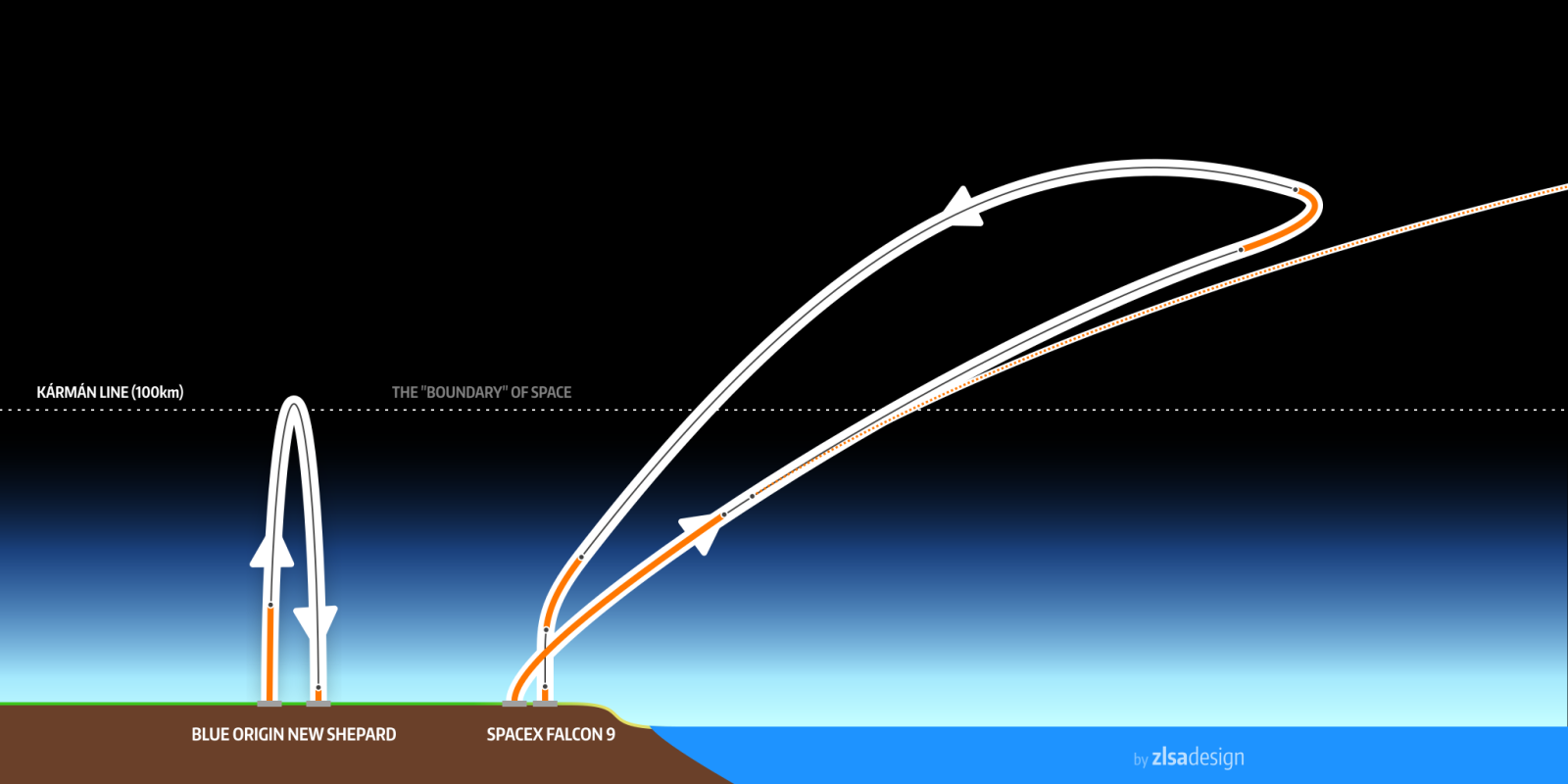


Is that line even close to true? Last I heard Blue Origin was years away from revenue and far behind SpaceX in terms of capability and manufacturing.