> In the case of jaywalking, the answer is simple. You just make it legal. Cars can slow down.
Mmmm I dunno about that. Drivers have minimum reaction times and cars have stopping distances. Giving pedestrians the right-of-way in every situation seems like a recipe for a lot of collisions.
It could work, but I think it would involve re-designing countless intersections to provide higher visibility of pedestrians for drivers--not a bad goal, but I think a pretty unfeasible one.
UK has never had jaywalking laws. Most countries don't. We have crossings too, of course, which are optional, but sensible to use when it's rush hours etc. There's no sign that our collisions or injuries are disproportionately high.
A pedestrian crosses when they feel it is safe to do so, and anywhere along the road they choose. Having started to cross they have priority over traffic. Lately some drivers are less inclined to give way to pedestrians, but the law hasn't changed, and they are still legally obliged to do so. Motorways, of course, have no pedestrians.
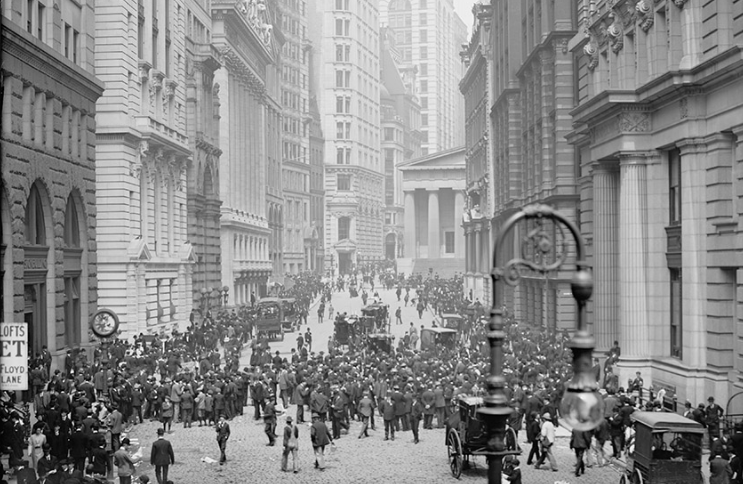
The word was originally from jay-drivers. Which was a forgotten American term of abuse for carriage drivers who did not stick to the correct side of the road! Once cars arrived the industry lobbied and jaywalking became a term of abuse for pedestrians, and eventually a law.
I googled this quickly, and I'm seeing the UK has 36 deaths per billion miles driven [1] and USA is 1.7 [2]. Can you cite your sources that the UK isn't disproportionately high? I could be reading the numbers wrong.
That disparity is unbelievable. Even allowing the 15 year difference. The UK consistently comes surprisingly well toward the safest end of global road safety stats, and has as long as I can remember. By way of sanity check, it would mean walking in the USA is safer than driving a car in the UK (1.9/bn m). That's not credible. :)
Sourced from gov.uk [0] (ods spreadsheet file), pedestrian fatalities, in 2016, are 7.1 per million population in the United Kingdom; 470 pedestrians killed, and 18.5 in the USA; 5,987 pedestrians killed, confirmed for USA by NHTSA[1].
For overall road traffic deaths, in 2015 UK 2.9 per 100k population (1,770 total deaths) 22.9% pedestrians, USA 10.6 per 100k (32,719 total deaths, approx 5x the UK population, 18x the total reported deaths) 14.1% pedestrians, source WHO, table A2 [2].
Every international comparison and US source I found prefers per 100k or million population and agrees with the above. I stopped there, so can't compare the gov.uk doc you linked, or why the US data in BMJ differs so markedly.
> UK has never had jaywalking laws. Most countries don't... A pedestrian crosses when they feel it is safe to do so, and anywhere along the road they choose. Having started to cross they have priority over traffic.
That's really interesting! I wasn't aware of that.
What happens when a driver hits a pedestrian? Is there an investigation into whether the driver could've stopped in time?
Loosely the presumption of guilt lands on the car driver for failing to stop in time, just as it would if you ran into the back of someone, or hit a cyclist.
There are of course circumstances where a driver has little chance, like a kid running from between parked cars after their ball, someone not looking, or a cyclist running a light.
The police generally investigate the scene and assess what happened, measure out distances, skid distances to assess driver speed, and seek witnesses etc if there's reason to think circumstances aren't straightforward or there's serious injury or death.
There's also some degree of marshalling on busiest roads by putting up railings in some places to encourage crossing at safer spots, or the crossing a few yards away.
Super interesting. I have to admit my bias is to say that it seems difficult to assess when the pedestrian became visible to the driver (which would affect whether they could've stopped in time), but I'm also totally willing to admit that I might be nitpicking and it's a fine system.
The point here, though, is that it doesn't matter whether the driver could've seen them, because culpability rests with the driver by default (except, as mentioned, in situations such as motorways, where pedestrians aren't allowed).
In very general terms, as a pedestrian in the UK, you have no particular right to step into the road other than at marked crossings, but as soon as you do, you have total right of way, no matter how stupid it was of you to step into the road.
There are various crimes in the vein of 'obstructing a public highway' and so forth, so you aren't completely free to be an asshole, but even if you are, it's still on drivers to avoid hitting you; in my experience, this tends to make drivers more careful and aware of nearby pedestrians, so I'm fully in favour of the status quo.
If you're driving a car and someone walks in front of the car you'll slam on the brakes.
This is independent of legality. I'd hope that it'd be the case even if laws were passed that explicitly punished braking in such a scenario.
Anyway, in the UK, it's illegal to walk down the side of a motorway. But basically anywhere else is free reign for pedestrians.
People don't generally walk out in front of (fast moving) cars because they're not suicidal.
In a place like London it's fun to watch (and take part in) the stand-off between cars and pedestrians though.
I womble through crossings all the time. The lights are advisory for pedestrians. They're designed that way; the green man exists for the elderly and children.
When I said "can", I meant by the rules, not the laws of physics. The car is morally obligated to try not to hit anyone no matter what, but that's not what I'm talking about.
And the picture I have in mind isn't someone suicidally leaping in front of a car, it's someone taking one step to order the cars to stop. This would be fine if there was a "reasonable stopping rate" clause, but it doesn't sound like there is.
So what? People don't do this deliberately very often because there's always the risk that the driver doesn't stop. If you try edging into the road you'll get honked at.
The concept of jaywalking has never made any sense to me as a Brit; it's like that joke sign meme of "Danger of death and £20 fine".
If your response to "this works but is not ideal" is "people don't abuse it very often" then I think we agree. I'm not arguing for any particular change.
That's pressure not to jump in front of cars. You don't have to jump in front of a car to trigger this rule, you just have to put one foot into the road.
Are you picturing bored teenagers doing this as a joke or something? In practice this is incredibly rare.
Such 'feral children' will be causing way worse problems elsewhere anyway.
If you're driving in London and someone gets a bit close to the edge of the footpath and looks like they might walk out, yes, you slow down and get ready to stop. If you actually think they're walking out, you brake hard.
Because you don't want to hit them.
But on a very basic level pedestrians have right of way in old world cities anyway.
There are junctions in Central London whereby cars often struggle to pass even when the light is green (Kings Cross station is a good one, taxi drivers like to "push" people out of the way by edging closer)
That's why I said I'm sure it's fine in practice in my first post.
>If you're driving in London and someone gets a bit close to the edge of the footpath and looks like they might walk out, yes, you slow down and get ready to stop. If you actually think they're walking out, you brake hard.
>Because you don't want to hit them.
You don't want to hit them.
Entirely separately from that, if they force you to slam on your brakes, when you are not being reckless, they should be chastised.
> It's unclear to me what the problem is, here.
Giving someone right of way when they're going to cross the road is fine. But it should not be absolute and instant, forcing cars to brake at 100% power.
Someone on a footpath, giving no signs of wanting to enter the road, could do so in one second. It takes longer than that for a car to stop.
To solve the problem, give cars enough slack to stop at medium braking intensity before the right of way kicks in. That's all. Lack of right of way isn't permission to hit them. It just means they're wrong to be sprinting across the street.
> it's someone taking one step to order the cars to stop. This would be fine if there was a "reasonable stopping rate" clause, but it doesn't sound like there is.
Rest assured, no car driver ever stops in this situation unless the pedestrian is at a zebra crossing.
Living in a major city myself, I can think of several intersections where one could be traveling the speed limit and paying attention but be completely unable to stop in time for a pedestrian crossing unexpectedly.
There are numerous streets and corners that are really poorly lit because of scaffolding/debris/etc.
If there was poor visibility for the driver, there's almost certainly poor visibility for the pedestrian too. Most are sensible enough to walk a little further to where they can get a bit better look at what traffic is coming.
If I did hit someone at a visibility blind spot I'd expect to be shouted at by the cop too for not slowing down to a speed suitable for the visibility, and that the speed limit is a maximum sir. In that special sarcastic voice, common to all British cops. That might be later reflected in my fine or penalty. :)
For some reason I'm imagining the worst-case scenario of a pedestrian completely oblivious to what's going on around them and just crossing without looking on a busy street, which I realize is pretty unlikely.
Yeah, that's not how it goes. If it does go that way (some people for example might have mental issues and go into the street, or be disoriented etc), it's not usually held up to the driver if they are hit, except if it's shown that they could have realistically prevented it.
At least in my country, there are two forbidden concepts in traffic law of "excessive speed": one is driving over the defined limit, another is driving at an inadequate speed for the conditions. If you get into an accident because you couldn't stop, but could have if you had been going slower, you're guilty of the latter (that's the gist, exceptions apply).
Basic Rule Of Speed: Only go so fast you can stop within visible distance. If there is not enough room for oncoming traffic, make it half the visible distance.
> It could work, but I think it would involve re-designing countless intersections to provide higher visibility of pedestrians for drivers--not a bad goal, but I think a pretty unfeasible one.
"Having started to cross they have priority over traffic"
- Not true and potentially dangerous misinformation.
Jaywalking controls are stupid because:
1. They restrict the freedom of pedestrians.
2. They encourage extra pedestrian crossings, which increases the number of hazards to drivers.
3. They move responsibility for pedestrian safety from pedestrians to drivers.
As a Briton, it always feels like living in some authoritarian, ultra-controlled future to be at a roadside in another country, with no cars within range, and not to be allowed to walk across to the other side.
Also more generally. See Road users requiring extra care, Pedestrians (205 to 210).
The onus is on both to take adequate care, and on drivers to stop in time. The presumption of fault is on the driver. Which is not the same as saying pedestrians have free reign to leap into the path of oncoming vehicles, anywhere they like, expecting traffic to stop on a sixpence. Even though that sometimes seems the done thing in London. After all, pedestrians are expected to only cross when it's safe to do so.
So I'm not quite sure what the GP is getting at, except it's often unwise trying to provide a few sentence summary of anything lengthy on HN. :)
>>In the case of jaywalking, the answer is simple. You just make it legal. Cars can slow down.
> Mmmm I dunno about that. Drivers have minimum reaction times and cars have stopping distances
Actually in many countries like the Netherlands and the UK, inside the city pedestrians have priority (right of way) over traffic everywhere. If a pedestrian crosses you stop, no jaywalking BS.
That's dangerously wrong. No, pedestrians do not have right of way over traffic everywhere inside cities in NL (though you could be forgiven to think it is that way by observing traffic).
Pedestrians do have right of way inside 'woonerven'.
Now, the fact that pedestrians do not have right of way does not mean cars are going to flatten people with impunity, of course every driver will do what they can to avoid an accident with a pedestrian. But if you step out in traffic on a busy Amsterdam street there most certainly will be an accident, even if everybody will do their best to avoid you, and you will be liable in that case, even if you're part of the mess.
Probably "right to cross" would be a better term. What I'm getting at is pedestrians can cross the road in cities, without it considered jaywalking/illegal, and cars will generally just stop for them if they see them wanting to cross.
Of course if you just jump into traffic in the last minute you'll be hit, and it will be on you.
You wouldn't except this to happen to the equivalent of the
New Jersey Turnpike, of course. So, on high speed highways, on the other hand, you're often not allowed to randomly cross, except in specific areas.
Note that this is not the case everyone in Europe necessarily. But you can cross outside zebra crossing in the UK, Netherlands, Greece, Denmark, Sweden, Finland, and Norway.
In some countries like Italy or France it is legal as long as there's no explicit zebra crossing nearby (e.g. without 50 or 100 meters).
In most of the countries, crossing the equivalent of highways or interstates is illegal (except in designated overpasses and such).
Regarding the question about what happens to drivers, here's an example for what's the case in Belgium "any physical damage to a pedestrian caused by a traffic accident shall be compensated by the insurance of the drivers involved, regardless of the responsibility of the pedestrian, except if that pedestrian is over 14 and wanted the accident and its consequences to occur."
The only issue I have with keeping it illegal is that so many people already do it. I don't commute by car but I drive a couple evenings a week through the city, and in every single intersection on my trip (5 miles) I see people jaywalking. I see people do it right in front of cops, and nobody cares.
What is the purpose of a law that few people follow, and which is never enforced? Shouldn't the laws of a republic reflect the will of the citizens?
I definitely see your point, and I have mixed feelings on it to be fair (for the very reason you noted). I think it's more about establishing right-of-way for me, more than punishing pedestrians for jaywalking.
I don't think it's smart to allow pedestrians the right-of-way at all times, but I'm also learning that other countries do this already so I'm certainly willing to admit I could be wrong here!
> I don't think it's smart to allow pedestrians the right-of-way at all times, but I'm also learning that other countries do this already
I don't think there is any country with a rule like that. I do think many people are articulating a different rule [1] badly, making it appear as-if.
[1] Pedestrians can cross roads everywhere, but only if it's safe to do so and don't obstruct traffic. During the crossing transverse traffic does not have right of way momentarily.
In Germany I think it's different. If you cross when you aren't allowed the car has the right of way. I have actually no idea why this isn't the case in Canada. Seems pretty reasonable; light shows 'walk' symbol and you cross knowing you are in the right of way, but the hand stops flashing and if a car hits you then your dead and wrong. Seems a really reliable system that will safely predict outcomes consistent with obliging behavior.
To be honest, I walk quite often and yet I'm absolutely against pedestrian rights as they are today and I believe it's totally impractical and against any common sense having the laws in favour of pedestrians as they are now, nor do I believe it makes roads safer for anyone. In fact if you apply human psychology/behavior inclusive of a person's ability to focus on multiple obstructions, notifications, etc, I'd be willing to bet that drivers are by far overwhelmed in modern cities and that it's reckless disregard for public safety that pedestrians are given absolutely no accountability for their actions beyond dead right or right.
It's because the streets were originally for pedestrians. Cars invaded the space previously used by people walking. Why does wearing a big box give you the right to own the road? By that logic I should be able to ride my bike on the footpath and blame any pedestrians I hit.
This is not historically correct. Streets exist for carts and chariots and carriages. These are drawn by horses, oxen, mules, donkeys, and stranger things.
Those were probably killing jaywalkers in ancient Rome.
Pedestrians only need paths, which may have staircases and stepping stones.
Also curious as with the other poster: What happens when a driver hits a pedestrian? Do they do an investigation into whether the driver could've stopped in time/was traveling the speed limit/etc?
Here's an article from 2010 saying they hadn't given a single ticket in Boston or Cambridge in years. To my knowledge they still don't give out the tickets. I've certainly jaywalked in front of cops in Boston, Cambridge, Somerville, and Quincy without penalty for decades. So even if it's in the state law it's not enforced around Boston.
I lived in the Seattle area for a couple years and that's the only time in my life I ever saw a person penalized for jaywalking and I was shocked to see it. One of the reasons I'm glad to be back in Boston.
>Also curious as with the other poster: What happens when a driver hits a pedestrian? Do they do an investigation into whether the driver could've stopped in time/was traveling the speed limit/etc?
Yes. And the driver has the burden of proof. They drive in a city, so they should have appropriate distance from anything in front of them, and go slow enough to stop. What if it was a kid running into the street?
> so they should have appropriate distance from anything in front of them, and go slow enough to stop
This doesn't make sense. Crossing pedestrians go across the road, so if you are driving on a lane next to the sidewalk, then you could only go in first gear hovering the brakes, because any pedestrian on the sidewalk could start to cross the road in ~one second or less and would have right of way. Basically all streets would be zebra crossings. Obviously not how it works.
Drivers have no problem avoiding other cars, which move much more quickly, are much less manoeuvreable, and have longer stopping distances. Strikes me that avoiding people on foot ought to be pretty simple.
That's true of other cars, too. They're big, change direction slowly, and are covered in bright lights. Pedestrians are small, can (and do) change direction quickly, and often wear dark colors, even at night.
Cars are also much more predictable. They have lines that show where they're going, (usually) signal before changing direction, and (IME) are much more likely to obey red lights. I rarely see cars simply ignore a red light, but I see pedestrians do it all the time.
Cars don't suddenly become visible unexpectedly unlike pedestrians, so that seems like a strange argument to me--with the notable exception perhaps of right-on-red, which isn't universal for sure (presumably for this very reason). Even then, the moving traffic has the right-of-way there.


Mmmm I dunno about that. Drivers have minimum reaction times and cars have stopping distances. Giving pedestrians the right-of-way in every situation seems like a recipe for a lot of collisions.
It could work, but I think it would involve re-designing countless intersections to provide higher visibility of pedestrians for drivers--not a bad goal, but I think a pretty unfeasible one.