Seems to work fine. Packages gets carried in bigger trucks, but still just business trucks with different branding on them. Wouldn't it have saved a lot of cost in the end?
The same reason Amazon runs its own shipping network instead of relying on UPS or Fedex. At a certain scale it is cheaper to get a custom option that specifically fits your needs rather than retro-fitting something else. The USPS bought 100,000 of the last truck and, for example, one of the requirements was long service life. Building a truck you can use for 30 years is probably much cheaper than buying multiple lower service life trucks over that period.
"Just one year after announcing the purchase of 100,000 custom electric delivery vehicles as part of The Climate Pledge, Amazon has begun testing the new vans on delivery routes."
> I wonder how they require that. Does the manufacturer have to warranty them all for 30 years? That's extraordinary!
In 1986, they road-tested the contract competitors' trucks for 24,000 miles, and the Grumman LLV (the truck that this new vehicle replaces) was the only one running at the end. Definitely not proof that they'd run for the intended 24 year lifespan, but I guess the USPS got lucky with the LLV (they even stretched it 6 years past the original retirement date!).
Amazon, UPS, and FedEx all have custom vehicles. Amazon started with off the shelf vehicles, but once you get to ordering 50,000 of something, you may as well make the design fit your needs instead of only meeting them.
Not really, CPU is still "of-the-shelf". SoC is custom. That's just because you can't buy Neoverse and drop it into the motherboard, so making a custom SoC is the only way to obtain it.
It’s a good question. I went looking for an answer. I found this article [1] which claims the long service life owes to an engine and chassis that, while not exceptionally durable, is cheap and easy to maintain.
The article also says you can learn more at llv.com.
Bonus, I learned that Grumman LLV stands for Grumman Long Life Vehicle. Maybe everyone else already knew that, but I thought it was cool.
Mail trucks have pretty drastically different requirements than a parcel delivery truck. Mail trucks are designed for a right sided driver and lots of stops on every block, so good visibility to avoid crashing into oncoming traffic or hitting pedestrians in the front is obligatory. Amazon, UPS, and friends have much more infrequent stops. USPS also needs vehicles that can last for decades with much lower maintenance costs than commercial competitors. With the Biden Admin's government fleet electrification plan, they'll also need to be easily built or converted to battery-powered.
And this is a significant difference to how mail is delivered in most of Europe, where the vast majority of last-mile delivery is done on foot or on bike, and relatively little is done by vehicle. Density undoubtedly plays a fair role here.
Yep. There are very few countries that have a huge land area with extremely remote population and a postal service with a universal service mandate for all its citizens (going so far as to run daily mule trains down the Grand Canyon to service to the Havasupi nation[1])
OK, both Amazon and Facebook (and likely Google, can't remember) order custom servers for their datacenters, instead of going with readily available Supermicro, Dell, HP, IBM offerings.
Same reasoning here: at such a scale, having a custom-built thing optimized for a bunch of your specific requirements, and made uniform, pays off.
I bet it's the opposite. Amazon delivers in densely populated places where economies of scale make it work and outsources rural delivery to the USPS, an agency with a universal delivery mandate. Yes, the net effect is Amazon "leeching" off the government, but you could also view it as a subsidy to rural Americans, and the government already has a lot of those.
The United States is a vast, sprawling area with nearly every conceivable type of geography. The road conditions and residential density covers all possible ranges. The truck is designed for the worst case scenario allowable while minimizing drivers danger.
Also, the USPS uses panel vans in denser areas. My neighborhood in Seattle has the mail delivered in a Sprinter/ProMaster/Transit thing, but weird trucks are ubiquitous elsewhere.
In the sticks they frequently outsource to authorized personally owned vehicles. Those are common all throughout Appalachia for example. They call them rural carrier associates. Here is the pitch:
"As a Postal Service™ Rural Carrier Associate (RCA), you will have a continuous, part-time job with a reliable employer. If you are retired, self-employed, an at-home parent, an educator, night student, or are employed on an evening shift schedule, this on-call position could be the ideal job for you.RCAs are responsible for the safe and efficient delivery and collection of the U.S. Mail™, working part time when regular carriers have scheduled days off or take vacation days. RCAs also sell stamps, supplies, and money orders. RCAs perform a vital function in the Postal Service, serving thousands of families and businesses in rural and suburban areas while traveling millions of miles daily. The work can be demanding—but also rewarding."
And a note about the vehicles:
"Generally, RCAs are required to use their own vehicles for mail delivery, and they receive an equipment allowance in addition to regular pay. The vehicle needs to be insured, dependable, and in good working condition. Vehicles with bucket seats or standard transmission are not recommended. Some offices may provide a Postal Service vehicle."
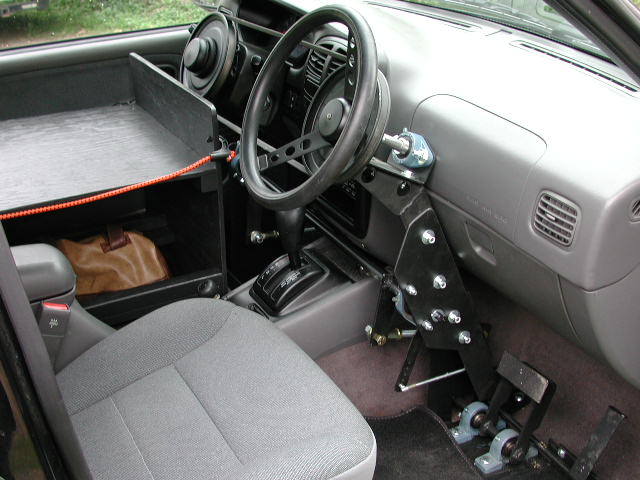
My last house was serviced by RCAs. One had a Subaru Outback with a system of gears and pullies that let it be driven from the right side without removing the factory left side drive. Another had an actual right hand drive vehicle, probably imported. There's likely a small but strong demand for right hand drive vehicles that happen to end up in the US with RCAs buying most of them.
A few simply had two people in the vehicle, one driving and the other placing mail in the mailboxes.
> The United States is a vast, sprawling area with nearly every conceivable type of geography. The road conditions and residential density covers all possible ranges. The truck is designed for the worst case scenario allowable while minimizing drivers danger.
I'm pretty sure most of the geography in the US can be found in either Spain or Sweden as well. Except jungle I guess, but don't think you have much of that over there either. Besides the point anyway.
Yeah, the cars here do drive through a lot of different geographies as well. In the denser areas like cities, the postal workers are most often on motobikes or just walking though, depending on the density of the city.
One requirement seems to be that the driver can access the mailbox without leaving the vehicle. So the equivalent in Europe would be the bikes (or, nowadays, electric scooters) that are used to deliver mail. They are typically specifically designed for the postal service.
So it might be less different than it seems at first.
I believe that this is the only correct response to this question.
In the UK, we have letterboxes in our front doors. Nobody can drive up to them (mine is up two flights of steps!). So, last-yard post delivery is done on foot, and vehicles are used to deliver the postmen (and in urban areas, postmen will travel from the delivery office by foot or bicycle). The vehicles can thus be normal vans.
In the US, they have mailboxes on posts by the kerb. Postmen can drive right up to them to deliver the post. There, it makes sense to have specialist vehicles.
I suspect Sweden and Spain are like the UK, and not the US, in this respect.
> I suspect Sweden and Spain are like the UK, and not the US, in this respect.
Not really. The country side in Sweden at least have mailboxes on the kerb for everyone, it's really common. And the mail workers still seem to manage dumping the mail into there without leaving the car, without having a specialty designed car for it.
I'm wondering- Sweden drove on the left until relatively recently (they switched in 1967), even though most cars were left-hand drive. Did this mean that the Swedish postal service was more likely to be set up for mail to be delivered without the carrier having to get out of their car- as they would probably be driving an LHD car on the left anyway?
Where I grew up, the rural mail carriers drove their own vehicles. Ours drove his (Subaru wagon I think) from the middle of the bench seat - gas and brake with the left foot.
Same with Canada Post AIUI. How often does the right-hand driver's seat thing come into play? Seems like the procurement for this kind of custom vehicle couldn't/won't be cheap.
A few years ago, exiting the vehicle on the left side to come around to the curb, he was struck by a car in a hit and run (they never caught the driver). Spent 6 months in hospital learning to walk again, and while he’s since somewhat recovered, he’s going to spend the rest of his life living in significant pain.
Not having to exit into the road, when the job involves people exiting the vehicles hundreds of thousands of times per year, matters a lot for the long-term safety of the delivery force.
TIL, thanks. Maybe it's different for rural areas, but here in (sub)urban Canada postal workers hit a few houses at a time (and you can tell because most of them wear comfortable walking shoes too). I just looked it up and it seems like their new electric vehicles aren't RHD either, would be curious to know how that decision transpired :)
It does depend on locale. In US cities where there's some density the postal worker will usually leave their truck (which is often a regular, non-custom, mid-size box truck) at the end of a street, fill up a wheeled bag, and walk to several buildings with the bag to drop things off, before returning to the truck and moving to the next location.
But in most suburbs (which is a lot of the US), at least where there are mailboxes at the curb (and not mail slots on houses), the postal worker will just drive from mailbox to mailbox, dropping mail as they go, never leaving the vehicle, only getting out of their seat when they need to add more mail to the box sitting next to them.
I heard a few years ago that Canada Post was forcing everyone to use a communal mailbox at a semi-central location close to their house, even in fairly rural areas. If that's the case, it'd also make a lot more sense to just have a normal van, IMO.
I think that plan may have been axed, as (anecdotally) the number of communal mailboxes seems to be relatively low among the few cities I've visited/lived in over the past couple of years. Also anecdotally, I'm not sure why the majority of houses (in the burbs) seem to have a mailbox by the door or a mail slot instead of box by the curb. They definitely exist, but feel like a minority outside of rural areas.
In the NY suburb I grew up in, we had a mailbox attached to our house, not at the street. The house was set back from the road about 50 feet. The mail carrier would park their car, fill up a messenger bag, and walk around to a few houses and drop off the mail. Then they'd return to their car, move down the street a bit, and repeat. It was quite a bit of walking for the postal worker.
For 165,000 vehicles that will be used for a long time, it probably doesn't matter a great deal.
I don't mean that it doesn't matter at all, the procurement process needs to make sense and not be a path for graft, but there's reasonable volume there to spread fixed costs across.
I think I remember seeing the vehicle delivering mail at my old apartment building and it wasn't a grumman whatsit but a regular van or delivery truck. So I don't think the special vehicles are universal in the US either. I also think I've seen postal jeeps although that may have been a long time ago.
While using a regular truck is likely much more cost effective than having a specific one (less investment, easier repairs, ...), each design may be optimal for some situations: some trucks have the size to load pallets, some are equipped to load big/heavy stuff, ...
Most regular vehicles are not optimised for many/small/various packages and are not optimised for high frequency in/out and searching/unloading as mail trucks would need. You'll easily see how the package/postal delivery drivers loose time searching the packages through the back and energy bending, opening/closing doors when they use such regular trucks.
One of the great things here is how they seem to look for best posture and efficiency for the driver: it's not only about speed of delivery, but likely to also prevent accidents during the trip, injuries from the work, ...
Another point is now once your train the entire work force in a specific vehicle, you can trust most everyone employed knows how to use the one vehicle you use. Easy to rotate and repair vehicles when they're all the same.
Scale, USPS deliver far more mail than others. USPS had pretty specific requirements and not a single existing truck existed or could pass an endurance test.
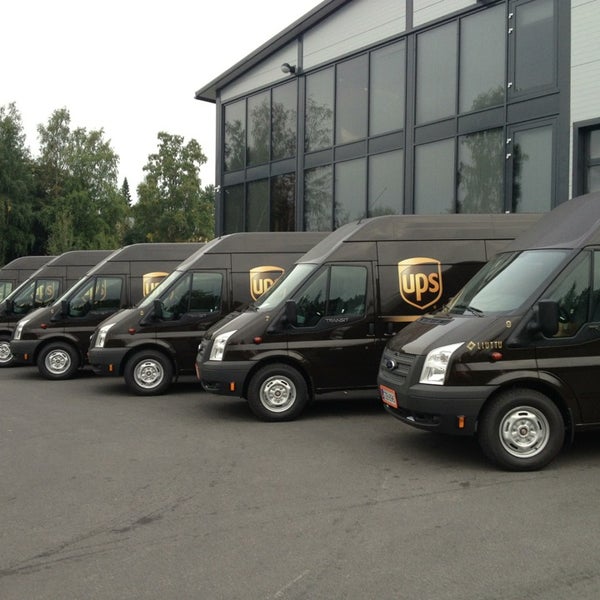
in uk all the services drive boring old Transits or whatever. At least Royal Mail have some respect for their Postman Pat legacy and paint their vans red. But there is one outstanding exception: UPS. I don't even see so many of them around, so i'm not pure why it's economical for them and why only they use custom vans, but i respect them for that.
Possibly because as a global company, it's easier for them to have shared vehicles and parts across their entire service area (most the world). They can probably just fly the vans/trucks and parts in wherever they are needed, since they run their own fleet of (very large) planes as well.
At least the majority I see around here are relatively standard European chassis-cabs (recently Mercedes-Benz Sprinter) with a custom body. While yes, that's more custom than just having a custom fitting inside a van, it's much less extreme than a custom vehicle.
US mail trucks have the driver on the right hand side (as opposed to the left), so that they can deliver mail without having to get out of the driver's seat. Which naturally means we can't just reuse trucks made for the UK or other Commonwealth markets because... China or socialism or whatever.
"The requirements dictated the step-in height, the glass height (including the low side glass), the vision angles, the internal height, and the maximum roof height," wrote Kahn in a tweet. "That was all locked in."
Other constraints included the ability to reach the mailbox while in the seated position, and the requirement to see the ground around the vehicle...
I saw that, but those constraints don't seem to be necessary for postal vehicles in other countries. The person I was responding to was wondering why other countries seem to just fine with regular looking vans that have postal branding. It's worth asking about, isn't it?
Just because those things are spec'd as they are, that doesn't mean they need to be.
Each country has their own circumstances to deal with. This design would not make sense in Europe where a lot of the last mile delivery was done by mail carriers on foot or bicycles. However it does boost efficiency considerably in the USA's vast expanse of suburbia. FWIW, mail trucks in Canada also have with right hand drive and low floor so the driver could reach into mailboxes without having to leave their seat.
My local postal service used to make delivery on bicycles but they have gradually introduced golf-cart like miniature EVs. This allow each run to cover a much larger area but probably would not for the most of US because their mail routes are too long.
> However it does boost efficiency considerably in the USA's vast expanse of suburbia.
Also it sounds like the new trucks have pretty stringent visibility requirements, which would help avoid running over playing children in a suburban setting. I can see that as a pretty serious risk for the USPS, given how frequently they stop for a few minutes. An off-the-shelf van without the unusually shaped front probably has more blind spots a kid could sneak into.
Quite a few national postal services use custom or semi-custom vehicles, e.g. Deutsche Post. For those that use more "off the shelf" vehicles they are probably still custom orders specifying an exact feature set. But at the end of the day, it just becomes a matter of cost/benefit. The USPS is enormous, and that large scale makes it financially viable for them to purchase a custom vehicle since the quantities are so great. This allows them to get exactly what they want which gains some operating efficiency.
Oshkosh is also a very well established manufacturer of vehicles for the government and holds substantial military contracts for custom vehicles such as the highly recognizable HEMTT. So the Oshkosh purchase is fairly low-risk in that Oshkosh has a proven track record of delivering vehicles for government fleets.
UPS and FedEx also make use of largely custom vehicles. They are based on off-the-shelf step vans, but to a large extent OTS step vans no longer exist in the US and nearly all of them you see are contract designs for fleets. There's a bit of a cyclical relationship here as the modern step van is basically defined by UPS and FedEx, which purchase their trucks custom to specification from body-makers like Utilimaster and formerly Grumman-Olson. Grumman popping up here again is not coincidental - the USPS and UPS formerly got their custom trucks from the same manufacturer, but Grumman-Olson is no longer nearly as important of a player as it once was.
The short answer: USPS is contracting for at least 50,000 vehicles. When you buy 50,000 of just about anything you gain a lot of leverage to customize.
And yet.....everyone manages. Houses in rural areas have mailboxes outside of the property, sure they are not the iconic american half-pipe shape, but properties all over the world have mailboxes too.
Right, everyone manages with what we have now so why change anything? I mean who cares if increased visibility reduces the number of pedestrian collisions, who cares if seat designs reduce the number of back injuries. The world is good enough as it is.
At scale it makes sense to have control of part supplies and have consistent service processes. UPS and to a lesser extent FedEx also use custom bodies.
Every country's postal system is a system with a lot of interacting parts. You change one part, and it affects the others. Our postal system makes extensive use of mail delivered by vehicles directly to mailboxes that are located at the curb, on streets that are relatively dangerous for people. [0]
[0] I couldn't quickly find any believable stats, but I think it's a reasonable guess to start with traffic deaths in general, for which there are published numbers.
The first part (mail directly to mailboxes) is the same everywhere I've seen it too here in Europe (mostly Spain and Sweden to be fair). But yeah, the second one makes a lot of sense. Would actually explain a lot of the design choices for anything American. We don't have that much to worry about, so we can spend less on armored postal vans.
There's relatively few countries in the world that are as large and sparse as the US. Sprawling metropolis's are rare. In the rural areas, houses are miles apart.
It certainly sounds reasonable to have an enclosed cargo area with sufficient head room for comfort, but saying they look like they do because there are requirements doesn't really explain it.
My rural carrier had no problem putting mail in my mailbox from a modified jeep. They would stop and get out for packages of any size (putting them by the house).
In town here, it's all walking routes. I wonder what the numbers are on curbside vs walking?
Modified jeeps are the best you can get without the leverage of being able to write 9 digit contracts. That doesn't make them ideal.
Aftermarket RHD modified vehicles have a lot of issues, like being able to see the gauges, the ability to operate all of the ancillary controls, interference with factory safety equipment, poor ergonomics, etc.
And those jeeps had generally terrible visibility. You're making a lot of statements with little to no data, nor even research on to why they would want to improve.
I made 1 statement saying that requirements aren't explanations, 1 statement that I observed a rural carrier use a jeep for years, and then a statement that jeeps are in fact commercially available.
I would certainly expect a jeep with a mirror bolted on the traffic side to have better rear and side visibility than something with no glass in the back, so go ahead and hang your hat on visibility if you want.
The article (and your comment) explains how the design conforms to the constraints but what I think they were asking was why have those specific constraints in the first place (apart from "that's how it's always been done here.")
Now, I understand that it's to prevent accidents, make it more easy to put mail into mailboxes if they're situated right next to the road, etc. Yet somehow every other country makes it work without specialized vehicles.
While USPS is not subject to "Buy America" requirements, like most quasi-governmental organizations it does have an acquisition policy of purchasing vehicles from US manufacturers rather than overseas when possible. This aligns with the general US system of preferential government purchasing, in which federal purchasing decisions are based partially on policy objectives such as promoting small businesses and US manufacturing. There could be some debate over this policy position, but at its core it could be viewed as a very light extension of New Deal principles---that the federal government should put its money where its mouth is by patronizing the types of US businesses that are the subject of so much political rhetoric.
To my knowledge, there are no right-hand-drive vehicles manufactured in the US, as RHD is limited to countries closer to extensive auto manufacturing in Europe and Asia. As a stopgap measure, the Postal Service has been making use of domestic minivans converted to RHD using a belt arrangement that does not look particularly user friendly. The driver has to lean over to see the dashboard instruments.
What surprises me us that the USPS is buying the vehicles directly from Oshkosh as a customer, rather than buying the technical design package and contracting construction out to several smaller companies.
Unit cost would be higher but it would be laying the groundwork for the next generation of vehicle, sustaining those smaller companies and encouraging innovation. As well as avoiding too much reliance on one supplier.
"Opposite-driven" postal vehicles have been common/standard in Europe for a very long time. It's not a complex thing to change, especially since many car models are made to be sold in e.g. the UK anyways.


Seems to work fine. Packages gets carried in bigger trucks, but still just business trucks with different branding on them. Wouldn't it have saved a lot of cost in the end?