I grew up in the USSR in the 80s, so my view of what a shortage actually feels like are quite different.
Since the pandemic, there are 3 shortages that were in the news that were relevant to my family: toilet paper, chips/automotive, and ammunition (my father in law and I got into target shooting during the pandemic)
I would say the max impact of all these things was: you had to work a LITTLE harder, pay a LITTLE more, and wait a LITTLE longer to get what you wanted.
For example, in USSR I remember wiping my ass with cut-up newspaper for months at a time. That's what a TP shortage / deficit is. Over the last year, the max I had to deal with was going to a second store and not being able to buy lots and lots at once.
We ended up having to buy a car this summer. Shortage manifested in two ways - some trims/models were not available. IE - you could still get a car at any point, just may not be the exact one you want. We ended up ordering one because we cared about something specific and despite warning, we picked it up in a few weeks.
In contrast, my dad had to wait something like 10 years to get his Lada Niva.
What this means to me is our supply chains are INCREDIBLY resilient. The fact that these things basically translated into mild inconveniences is quite impressive.
> For example, in USSR I remember wiping my ass with cut-up newspaper for months at a time.
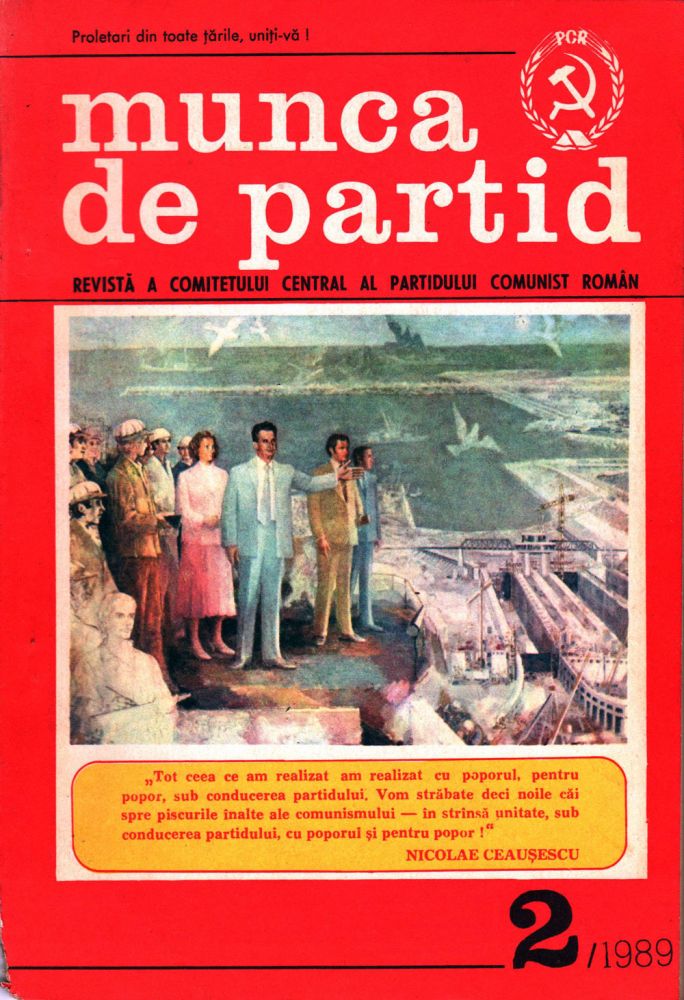
As a Romanian who grew up as a kid in the '80s and the '90s I'm sort of glad that this was a shared Eastern-European experience, it's something that people from the other side of the wall will most probably never understand completely. When I was spending the summer at my grandparents me and my brother were sometime wiping our asses off with pages taken from "Munca de Partid" (roughly translated as "Party Work"), which was the official magazine of the Romanian Communist Party's Central Committee. Our granddad had been a communist mayor in the village and he had almost the entire collection of those magazines.
In the countryside most of the times we didn't have running water at the place where we were doing our thing, it was essentially just a hole in the ground with some stuff around it. In the city usually the apartment bathrooms were too small for a bidet-like appliance to be installed, and even if the place had been there the communist authorities/institutions that had been building those apartments were regarding the bidets as too "bourgeois".
Growing up in the 90s in Bulgaria, my parents had to line up for hours or half a day to fill up gas in the car. This went on for weeks/months.
If I complain that people are complaining too much in the modern world, I would be complaining as well. So I won't, otherwise it will be an infinite loop.
Someone from North Korea could tell you that USSR people had an easy life. We don't see those stories on HN because there's only one person in NK who has internet.
"I had to get up in the morning at ten o'clock in the night, half an hour before I went to bed. … And when we got home, our dad would kill us and dance about on our graves, singing Hallelujah!"
In India I tagged along with my father when he applied for a physical phone connection when I was in class 8. By the time the application made it through the bureaucratic labyrinthine and all sorts of hurdles I was in class 10.
So now a days when I see someone rant for 2 month wait period for a car I silently laugh. The current generation though is growing up getting conditioned to instant gratification.
Listening to my favourite song for me, while growing up, meant convincing my father to give me money, walking to a cassette store, wading through their catalogue and finally get it. So for me waiting comes naturally. In a way for my generation (and earlier) waiting is second nature. Wait in line for movie tickets, at bank counter, ration stores, just to name a few.
Having grown up in a Third World country makes almost every issue people around me complain about nontrivial. But that doesn't mean that they are. Just because others had/have it harder doesn't make those issues any less valid.
Certainly, the issues are indeed valid for them and nothing to be scoffed at.
What is fascinating about India of my growing up years was that most of the scarcity was artificial, mostly due to government regulations and policies. So money didn't speed up things in a big way. But all that has changed unrecognisably now. Now, if one has money there's almost nothing that can't be gotten.
> when I see someone rant for 2 month wait period for a car I silently laugh.
Things improve, so people's expectations change. People from generations ago could "silently laugh" at someone complaining about a missed flight and a long layover when they had to travel by sea instead of air.
Not sure there ever was a real shortage in toilet paper. I mean sure the stores ran out at some point, but that's mostly because you can only realistically have so many toilet paper in the store at once, so if people buy more for whatever insane reason then it's going to run out soon. The supply didn't ever run into any issues as far as I can tell.
There might have been a short-term panic over-buying plus the fact that everybody all of a sudden was staying home (and *ahem*, going to the toilet at home more) as opposed to going to the office. That's just a hypothesis, I haven't looked at any data. But your point is essentially correct, I assume it just takes a bit of time to shift the supply from commercial/business channels (delivering to office buildings in the city) to consumer ones (delivering to stores like Costco, Walmart, etc).
> ... staying home (and ahem, going to the toilet at home more) as opposed to going to the office.
From what I understand, this was the real driver of the shortage. The toilet paper manufacturers had to retool for home-size rolls to meet demand, where they were previously making tons of office-size rolls. Highly efficient manufacturing processes don't turn on a dime.
Also, most offices buy super terrible toilet paper (like 1 ply, thinner than a tissue). I don’t know if it is to discourage pooping on the company dime or what, but I don’t know if any individuals that would be ok with buying that for their own use. So retooling in more than just roll size/length probably also needed to happen.
> I don’t know if it is to discourage pooping on the company dime or what
It's because it doesn't clog toilets as much. If you stock two ply in an office, people will do unspeakable things with their literal shit, and it's just not good times.
I worked in one place that switched briefly to more home-style twoply, and we very quickly switched back. It wasn't because of the cost. It was because of the poop. Everywhere. All the poop.
In some cases that is result of super super low flow fixtures + bad pressure.
Commercial fixtures need higher pressure than a home fixture, and sometimes the office building can not provide proper pressure, combined with wanting under a gallon of water per flush and well bad things happen
If everyone buys for a month at a time, it would be spread out over that month. With lockdowns, people bought more than usual, and everyone was trying to buy it at the same time rather than spread out. And then people heard about shortages and it just reinforced it - people who still had a month worth at home would throw another package in the care "just in case".
As I recall, even though I normally keep pretty well stocked with paper goods and other staples, I did a shopping trip right before everything went a bit crazy and definitely picked up some additional reserves just in case. It certainly wasn't prepping levels but enough to throw off stocking levels if everyone did what I did during the first month or three. I still have a 10 pound bag of flour which I would normally never buy but it's what was there of my preferred brand at one point when shelves were a bit scant.
Getting a bidet attachment for my toilet was a game-changer for me. Now I feel deprived when I go on a vacation and have to deal with regular toilets again.
One benefit is that I use a fraction of the amount of toilet paper.
A lot of people (especially in apartments), do buy a week at a time - not the weirdest or craziest thing I guess, but definitely not something I would be comfortable doing!
I shouldn't have said the driver. The initial panic-buys were definitely what kicked it off. The need for retooling is what sustained the shortage for months despite rationing by grocery stores.
Even if people bought for just the next week, they had to buy more, because now they were using their toilet at home, exclusively. Everyone buying more at once caused a real shortage.
I don't believe it's that pragmatic. There's a great sense of the unknown, as if society will totally shut down. After all, you don't see people shop the same way when they plan to be home for a while (vacations, kids not going to school during the summer, etc)
There was still supply of “toilet paper” but not of the kind that was sold in the store. Normally large amounts of commercial paper was sold but that wasn’t in grocery stores and sales stopped because of offices closing. Things got figured out eventually both as panic buying subsided and some commercial paper (single rolls, etc) was diverted to the grocery store supply chain.
Correct; there was a market shift, where all of the demand for commercial toilet paper went to consumer toilet paper. Because of that shift, there was a real shortage in consumer toilet paper. Unfortunately, the myth that this shortage was entirely an induced panic seems to have caught on. For more, see https://www.vox.com/the-goods/2020/4/3/21206942/toilet-paper...
> Unfortunately, the myth that this shortage was entirely an induced panic
People don't get that even a 25% jump in consumption is going to take quite a while to rattle through our optimized supply chains.
Everything has been optimized to the penny for exactly the consumption as it exists--and not a whit more. Inventory anywhere is seen as a dire business failing to be eradicated. As such, there is zero cushion against even small demand changes.
Serious question - how do you get your butt dry without toilet paper? I got a bidet seat too and my TP consumption hasn't gone down, but at least my butt finally feels so clean now...
> ...how do you get your butt dry without toilet paper?
Towel, or get a bidet with an air drying option (but few models have effective dryers, so shop carefully).
I have yet to find a comparison of embedded energy costs between bidet dryers and a supply of cotton towels, but I wager towels will win out when taking into account bidets breaking down. As far as I can tell, they're very repair-hostile designs, and would love to find a manufacturer that stocks all the parts for their models for a long time.
Except right at the same time the bidet seats were also out of stock everywhere. I scored one by being slightly earlier to wake up to what’s happening, but I know many friends that weren’t able to pick one up.
I'm glad I finally got one, it's an amazing improvement.
I waited for a long time because I thought I needed an outlet to plug it in (for warm water), but it turns out that cold water is totally fine. So you just attach it to the existing valve right next to the toilet. It's fairly easy and not expensive (< $100)
Having gone through that on the supply side it was a manufactured crisis. When news organizations were still waiting for the first COVID19 cases to happen in their country they would run fluff stories from other places. A very common one was the toilet paper shortage. They probably got some intern to write it sloppily so in some it wasn't even clear that the photos and examples were from a different country. That drove people to rush to stores and hoard creating a self-fulfilling phrophecy as no grocery store will keep too many days of stock of toilet paper as it has too much volume. That this then happened in more places made it even more of a story and it sort of snowballed.
The fact that people were now at home and using different types of paper than what offices use was as far as I can tell a very small factor, it was mostly panic hoarding.
> Not sure there ever was a real shortage in toilet paper.
I mean the shortage was very real and lasted a long time. Here (outskirts of Silicon Valley) I couldn't find toilet paper in any local store at any time for a few months. Later I was able to buy one (max limit) only at closing time when they started stocking shelves, at any other time of day there was none to be had. The shelves were mostly empty of paper into 2021. It's only the last ~6 months that it is reliably available again.
Most Americans have absolutely no idea what it is like to endure that sort of hardship. I mean, in the most extreme examples I know adults who act like they're going to starve because their peas were touching their potatoes.
> Most Americans have absolutely no idea what it is like to endure that sort of hardship
Which is great! Despite the flaws of capitalism, it's literally the point! As supply chains were impacted, new businesses and solutions filled the void. Given the vast amount of competition in things like toilet paper, automotive, etc, "shortages" just meant not getting your favorite brand for a few weeks.
> I know adults who act like they're going to starve because their peas were touching their potatoes.
I would take this over the horror shows of communism any day.
It's never a knock to say "your country is so good you've never had the massive hardships we have had!"
Yes, my criticism is not directed towards the effectiveness of the supply chain. It’s true that we are mostly rich with consumer goods. However there are also numerous very serious problems with how we live in the United States, such as sustainability, even distribution of resources, efficiency and waste.
My point was that people in the United States do not have experience dealing with even very minor hardships effectively. If they were presented with truly difficult physical situations similar to what people in many parts of the world deal with frequently, they would not be able to handle it effectively on a number of levels.
> My point was that people in the United States do not have experience dealing with even very minor hardships effectively
Again, yes! Due to our success! These aren't at all a knock on American's. It's what every generation of ours has fought for. An easier life for our children.
I am very very very grateful that my son does not have to deal with what people in other parts of the world deal with. I love that the idea of having no running water, defecating in the streets, surrounded by dead bodies is a completely foreign concept to him. That he wouldn't know how to deal with such a situation. And I hope his children have it even easier. That we're so wealthy we have UBI, and they can study art and music, and want for nothing.
> That we're so wealthy we have UBI, and they can study art and music, and want for nothing.
I'm not going to romanticize Communist shortages, but I think this sentence shows a fundamental misunderstanding of human nature, and highlights the primary problem with capitalism. The idea that if we have UBI, that we're suddenly going to be a nation of poets, artists and philosophers is a utopian fantasy in my opinion.
I know more than a couple trust fund kids. They literally do "want for nothing", and they are universally miserable. Anecdata, sure, but even when you look at trust fund kids that are happy, it's usually because they were instilled with a strong work ethic - they had to find how to struggle at something, even if it wasn't financial.
If you talk to what most people and find what really makes them happy (and their have been actual studies about this), it is human relationships, a sense of dignity, and pride in themselves that brings them happiness. More cheap consumer goods from China are unlikely to fill that void.
Sure, that’s all true. My concerns are somewhat unrelated to celebrating our success, though. I don’t believe Americans would have the experience, social customs, physical stamina, emotional fortitude or knowledge to survive reasonably well if conditions took a serious turn for the worse.
> I don’t believe Americans would have the experience, social customs, physical stamina, emotional fortitude or knowledge to survive reasonably well if conditions took a serious turn for the worse.
It wasn't flag football or nerf that got us to the top.... We literally dominated everyone in everything, and continue to do so. Whether it be the military, sports (we just got done dominating the Olympics), tech, whatever.
It's absurd to think that given societal collapse, it would be the American's that struggle the most, and not, you know, the people that can't even make it when times are good...
You can knock us with a bunch of made up criticisms, like "emotional fortitude". But at the end of the day, every country still bends the knee to our "physical stamina". So that doesn't really say much about the rest of you surviving if conditions took a turn for the worse.
Of course the United States has been very successful in the past, leading to our current position, which I don’t think is quite as firmly or permanently primary as you believe. The reasons for American dominance in the late 20th century are numerous. I’d point out that we weren’t the site of any major wars in the 20th century, unlike most other developed nations.
The “people who can’t make it while times are good” are already surviving under the difficult conditions we are discussing, so I’m not sure what you mean.
I do believe that emotional fortitude is a real thing that affects people’s ability to function under duress. And you’re correct, America currently maintains an incredibly expensive military dominance. I’m not sure how you think that addresses anything I said. My concerns are about the social fabric of the country not being particularly resilient and middle/upper class individuals being entirely inexperienced at dealing with actual physical hardships. That’s not something that a strong military or past success is going to fix for us.
The (very briefly touched upon) topic is what Americans would do if they had to endure conditions such as those experienced in the USSR, for any theoretical reason. Basically all I said is that many people would find it difficult, having never experienced that.
Just one (somewhat trivial but perhaps not) thing was all the entrepreneurial activity by individual and adjacent businesses to create more stylish/higher quality/etc. masks. Now perhaps one could make a rational argument that we'd be better off with just a bunch of standard N95 masks period. But people are funny and one shouldn't let the perfect be the enemy of the good.
Microchip/Atmel just gave me 50 week lead times on really common chips. My products use these common chips, so do a TON of other things. If you can’t buy a tooshbrush or a thermostat in a few months, you might not realize it’s because of chip shortage or containers.
I think things are going to get worse. Our supply chains aren’t resilient, more than they are so large it takes a lot/longer time to see effects.
I think we’re going to hit the peak of the bullwhip soon and it’s going to surprise a lot of people what shutting the world down for almost 2 years will do.
This is true. I see a lot of comments that turn this into a philosophical debate but not enough actionable talk. Earlier this summer I wanted to buy a graphics card, so I spent weeks following discord "drop" servers where people were running scripts checking inventories of every online store and sending out alerts as soon as, say, Best Buy restocks Nvidia cards. Naturally these would sell out instantly and/or websites would crash from thousands of gamers/miners/scalpers ALL trying to buy something at once.
During this experience I had the morbid thought that we're only a a natural/human disaster away from having to do the same for more necessary things. Get familiar with web scraping or buying communities of things you need while you can.
That’s not unfair. The biggest “real” one I can think of was Sandy Hook, the biggest “fake” (consumer caused and perpetuated) was the 2016 election, after Trump won, 22lr ammo was impossible to find. Gun store talk is always bad (said as a gun guy that doesn’t like gun store bullshit) but this was on a whole different level.
This latest… similar, but worse obviously. At least there is a real world event tied to it.
It’s coming down, but I feel like between inflation and commodity prices we aren’t going to see pre-panic prices ever again. Extremely skeptical I’ll be able to get 1k of 9mm delivered to my door under $250 going forward let alone the previous $160.
It’s a larger condition that there is distrust of government, the spread of bullshit at light speeds, diminishing personal freedoms, and a media cheering it all on. So I get why people are hording bullets a bit, but it’s funny that actual good defensive ammo isn’t more sought after. Just the cheap training stuff.
Ammo is a government first market, not a parallel market.
Factories generally have to fill their government orders first, then sell govt runs 2nds/rejects (in military calibers) to consumers, and then manufacture consumer specific rounds with surplus factory capacity.
Automation at factories to this point has generally resulted in lower quality products. People still want it because it's cheap, but there's a balance between price and how bad of a product people will tolerate.
As far as automation and larger throughput, the machine exist, but at the scale of the market under normal conditions, it doesn’t make sense to plan on panics. At least it didn’t traditionally.
If Federal or Sellier invest in a n% more machines now, they will be a year or two out, and who knows what the market will look like then? Under Trump, the market was fairly slow and these companies would have had too much capacity for their sales.
Normally, I’m told the ammo companies like to plan perfectly filling one shift. Then on panics being able to run 3 shifts a day (which they all are now). Being set up to run your 10 big machines for 24hr at a time is a better plan than 30 machines and 20 normally sitting idle, because in the scenario you COULD run 30 machines at 24hr, you are going to run out of components anyhow.
That is another issue, it isn’t the assembly that is the ultimate bottleneck, almost powder comes out of maybe four places in the world, same for primers. Right now as I understand, it’s really a primer shortage, but no on is sitting on mountains of spare powder either.
I’ve had 20k primers carved out on order of 200k for 9 months now. I don’t expect to see them anytime soon.
As an observation, we have become extremely accustomed to the unprecedented easy with which we can buy things, from a gigantic selection of vendors, levels of quality and design, and other (real or artificial) differentiators.
Now that this comfortable situation is starting to unravel even slightly, the reaction is one of incredulous disbelief. "Surely this can't be happening, we live in prosperous times!" seems to be the gist of a lot of people's reactions.
We have become so used to (near-)instant gratification, that maybe we need to take a step back and recalibrate our desires, demands and expectations.
I'm glad my family has always had a modest outlook and ability to comfortably live within our means, often finding creative solutions when money was a bit short.
It has ingrained in me that compromise is not a hateful thing, realistic expectations make everything more manageable. For instance, I don't hold the specific car I own• to be some essential part of my identity or image. I take the more practical view that if it performs the tasks I need and meets an acceptable level of quality and economy, I am satisfied. Then it doesn't matter if it's a Mercedes, a Toyota or a KIA. If someone looks down on me or thinks less of me because they don't agree with my choice, then that is their problem, not mine.
• I don't own one right now, but it goes for any other possession, really.
Moderation needs to come back into fashion, in a big way.
That’s because the shortages you experienced were real. The shortages we’ve had over the pandemic are greatly exaggerated by our trash tabloid media which vice is a prime offender.
Sometimes I'm happy that was born in yugoslavia, so out of all the communist countries, we had it best... there were shortages of course, long wait times for a yugo... but for us, kids, a trip once or twice a year to italy to buy jeans was a total treat... then we muddied them up, wore them over the pants we came with (or came with old pants, and threw them away), and hoped the customs won't notice or care to complicate stuff and charge import fees.
The reason there was a TP "shortage" in the US is everyone started hoarding it. There really wasn't a shortage, it was just idiots taking advantage of the situation to resell {masks, TP, lysol, sanitizer} to other people on ebay at 10x the cost.
If the government had some guts they would put their foot down, personally go to every single one of those ebay sellers' homes, throw them in jail, and then restrict sales of all of the above products to a generous and reasonable amount per person with government ID required to purchase. Problem would have been solved.
And because the government stayed out of it the poor got shafted out of basic necessities. Not a world I would like to live in.
There wasn't even an actual shortage in the manufacturing of TP, so if the government rationed it, the rations per person could be extremely generous, to the point that as long as you were using it to wipe your ass instead of an investment vehicle you wouldn't even need to think about the limits.
> There wasn't even an actual shortage in the manufacturing of TP
Yes, there was, because COVID-related closedowns of job sites and public venues shifted demand from commercial TP to consumer TP which have separate and not-easily-converted production lines (and aren't convenient direct substitutes, because they aren't made for the same fixtures and the commercial versions mostly aren't easily used without fixtures), so there was no way to spool up consumer production to meet increased demands. People were going to the bathroom just as much, and more of it was at home, but the quantity supplied of the TP for home use was constrained. That is a real shortage.
So don't convert them, sell the commercial stuff to consumers. It's TP, either home or enterprise edition is compatible with any ass.
That's exactly how I got my TP when I needed it, I ordered from commercial supply websites.
But ban the eBay hoarders who exacerbated the problem for consumers; they were literally lining up at 6am to clear out shelves out of the local supermarkets to resell on eBay to make a quick buck.
One interesting thing that happened was that Costco said you can no longer return toilet paper and bottled water. As a way of discouraging hoarding, it's better than nothing.
I have zero sympathy for the scum who can't think of anything better than to profit off draining supply and reselling things at jacked up prices, and especially during times of crisis.
Unpopular opinion but I don't feel like comparing the last ten years of a total systemic government collapse to american covid is fair at all.
The soviet union died a miserable death at the hands of nationalists, profiteers, and american intervention. Covid was a manageable health crisis that spiraled into a food shortage as well. Beans rice and bottled water simply didn't exist in some stores and with rural america largely dependent on a single Walmart there are no other stores to go to.
Our supply chains despite being touted as best in the world collapsed almost overnight.
This is true overall, but graphics cards are still basically impossible to get unless you pay 2x-2.5x MSRP. A bit more than a little worse but thankfully relegated to a non-essential product.
I was impressed that I had no trouble getting an iPhone 12 Pro within a day, and my friends had no trouble getting M1 MacBooks. If anything it’s the Apple supply chain that might be the most resilient of all.
That's important perspective. What did it look like in the early days of the shortage tho? Did it start off as minor and become more severe over time? Or did it go from plentiful to none right away?
Pretty instant. Since there was essentially no internet or nothing substantial was online (mid 90s in Bulgaria), you'd hear from people that there's shortage of something, and it's already too late.
The line is hours long and your best option is to simply line up or you're gonna be out of gas, for example. Family members sometimes would take turns waiting at the gas station for a few hours.
There were more shortages in the early 90s right after the collapse of the Soviet block, but I don't personally remember those.
If you live in a low vaccination rate state in the US, you'll probably experience a severe shortage of medical care for the next few months, especially if you need to go to a hospital. My wife is a nurse in an ICU that is at 100% capacity (the majority of which are unvaccinated COVID patients, and a few vaccinated COVID patients too).
I imagine in many other countries there will be massive shortages of medical care as delta burns through earth's population.
This is probably the worst shortage we'll experience as part of the pandemic, because staffed hospital bed shortages means people will die of conditions they normally wouldn't die from.
Capitalism is not bad per se, but capitalism without control can be disastrous. We have not yet reached the point in which corporations took over on governments; the process already started, but the complete takeover at global scale will need some time, from several decades to a couple centuries or so. When it will happen, living under socialism or capitalism won't be that different anymore for those who are not part of the elite.
Corporations are not capitalism... Corporation are fictitious legal entities created by government. With out government there can be no corporations.
Corporatism is not "capitalism without control", Corportism is the direct result of governments picking winners and loosers in the market place. It is the direct result of government putting their hands on the scale of the market.
So expecting government to solve the problem it created is foolish. I have no love for corporation, or corporatism. you want to eliminate that I am all for it. However lets stop blaming capitalism for the problems created by government
In relative terms well in east block in 80s you were not expecting to have anything on the shelves when you went to the shop. You were expecting to wipe with newspaper for rest of your life and sometimes if you are lucky get rolls of TP.
When we live nowadays, we plan that we go to the shop and we will have it.
Like a car example, your father was not planning a road trip next year because he knew he is not going to get a car.
Nowadays people might plan a road trip make arrangements and then be surprised by car shortage - who is losing more? I expect that person who made arrangements for a road trip and then got nothing because there are no ICUs to make cars.
Perhaps surprised that they can't make the trip in the car with the specifically selected Premium Leather Seats and the Piano Black trim within the next 2 weeks? :)
In all seriousness, that's not entirely true. From first person accounts I've heard, in the early 80s and throughout the 70s everything was more or less OK in the Soviet block. Of course the selection was not as great as in the West, but essential 20th century conveniences were available. In the late 80s things really started to fall apart and it became painfully obvious that their economic model is not competitive and ultimately unsustainable.
On one level I agree with you: happiness = reality - expectations.
However what I am saying is that we don't actually have real impact on our lives today. From what I can tell, nobody actually failed to get a car and had to cancel their road trip (to use your example)
“Naturally, as an experienced investigative reporter, my next move was the highly advanced research technique of Googling "Tennis Ball Shortage?" There were enough hits on Reddit and tennis forums to confirm there are, at least in some parts of the country, indeed tennis ball shortages.”
I feel like this fairly accurately sums up modern journalism.
My partner is a journalist in a specific niche (science).
Unfortunately - folks have shown time and time again they will not pay content when an alternative is available for free.
Most, if not all journalists, would prefer to be do doing investigative work over a few weeks and months - highlighting what is in the publics interests.
Publishers on the other hand, with the sales / advertising / marketing requirements & constraints, would much prefer they crunch out 10x stories a day that can drive traffic (ergo revenue).
What you are left with are tight deadlines, incredibly poor pay, and most of the experienced folks who actually care about what articles are written under their name just hanging up their pens and taking up cushy gigs in comms / marketing.
Journalism still exists, but has been dying steadily - nearly all folks in positions of wealth and power would prefer it didn't exist, and for the folks that should be reading what they write - they won't pay for it, and won't trust it.
I think investigative journalism nonprofits like ProPublica are the best point of leverage for this problem. Big newspapers like the Washington Post & NY Times do good investigative work too, but pair it with lots of duplicate stories.
Can you explain why you think this doesn't count as journalism?
A journalist who doesn't do simple Google searches on popular internet forums in order to discover what people are talking about would seem to me to not be doing their job.
Anonymous/semi-anonymous Internet forums aren’t generally a reliable source of information. Even if the people posting are being truthful (and accurate), they’re still not representative of the population.
The store I usually buy tennis balls at is showing over 1200 tubes of just one brand of balls in stock at the store near me, must be pretty localized if it is a problem.
> if tennis balls are hard to find in stores now, I will buy a case of 24 cans online
Standard panick reaction that's exacerbating the problem. People are piling up on all sorts of stuff right now. I needed new tyres for my mountain bike, largely impossible to find a few months ago. A neighbour told me "oh that's fine I can resell you a pair, I bought 6 a few weeks ago just in case" . Pair up tight supply chain and people virtually increasing the demand to stock up in case the offer runs dry, and you obtain magic.
Well, that's exactly what happened with the toilet paper, too. A few people bought more in fear of some worst-case scenario - and then everyone else noticed the supply dwindling and did the same to avoid not being able to buy any when their own, normal stock runs out.
Seems very true. When mason jars were in low supply, all it took was a quick look to Ebay to see storage lockers full of them to understand part of the problem.
for maybe ~6 weeks, i noticed dramatically reduced tofu supply in stores near me (Vancouver BC), including from local brands. There was usually something... the soft/dessert tofu being most common.
Seems to be back to normal the last couple weeks.
Tennis balls are not vital equipment, they are just for fun, so it's not a big deal. Some other shortages are more worrying as they affect more important situations like food supply, work tools, ...
I don't think modern economies and supply chains work that way. It isn't like the tennis ball supply chain is an independent entity from everything else. It is all connected in somewhat intricate and non-obvious ways.
It isn't particularly surprising to me that we are seeing all sorts of side-effects of the unpresidented shutdown of vast parts of our economy as a response to COVID.
Lucky. I went to take delivery of a new bike at a local bike shop last month and it was completely picked over. They had a few models left but easily 80% of their stock was gone. They also had 2 bike mechanics working in a crowded workspace diligently fixing what looked like a sizable backlog of bikes in need of repairs and upgrades. I asked one of the guys working there about the shortage and he also mentioned it’s related to holdup in overseas shipping.
Yeah I heard the same. Because of very low inventory and multi month delivery times, folks are opting to get their old bikes fixed and causing a backlog in the repair shop.
People's experience will vary eidely because the problem is in the supply chains, not production. In most cases, there exists plenty of X, it's getting it from Y to Z that's the problem.
I'll jump onto the dog pile and add air filters for your vehicle. Dealerships are buying them up like toilet paper so you have to call around and ask them very nicely if they'd mind shipping it to you. And during fire season too.
i had trouble with the engine air filter specifically. might have been a make/model specific thing, but i found one of the last ones in my state according to the dealers inventory system.
Shortages wouldn't be so severe if market prices could reward those who had done work to mitigate the shortage. For example, when cups are in short supply, the person who sells their reserve stock for a healthy profit.
Unfortunately anti-price-gouging laws are being enforced more strictly, which means those who can alleviate a shortage are usually not rewarded. End result is people no longer go to great lengths to come up with ways to alleviate shortages, and the shortages end up worse.
Specifically in case of tennis balls, I would argue that having them expensive is still better than not having them at all - tennis players need to practise.
Next time you’re about to complain about farm subsidies, take a moment to appreciate that the US makes more food than it needs and we don’t depend on imports from China to put food on the table.
that might be true independent of farm subsidies. we don't really know. it is pretty clear that there are government programs being used to buy votes. which is a pretty stupid way to spend public money.
You mean before we count their high environmental cost? Cities are higher net tax contributors due to population density. If we're going to fairly consider the equation, we have to include their high emissions over the decades and the price of that.
Fossil fuel based electricity & heat production is by far the worst offender, 1/3 of all emissions. To say nothing of the food requirements of cities (agriculture alone being ~11% of emissions), which are potent emissions contributors.
As such, should cities be made to pay for the vast destruction they've caused over time? Across a century, US cities were heavily utilizing cheap coal power to sustain their elevated population density. They took a very low cost, low penalty ride on helping to destroy the planet.
Global climate change didn't happen in a day. There's a fair question of distribution of cost, reparations for the fossil fuel consumption & use of cities in the form of a tax to cover their century of past sins.
A person might retort: yes, but, cities are more efficient than rural arrangements pound for pound. The issue is total emissions output, in the discussion of total cost (net tax +/- contribution equation), which is what the threat is with climate change. Low population rural areas can't destroy the planet with their resource demands, only large populations can do that.
Then a person might retort: but what else were all of those people in cities going to do? Not exist at all? Starve? Go without electricity? I'd suggest environmental reparations via taxation for the net damage the cities did cause (if we're looking at fairly balancing the net tax contribution equation, that is; if their inflated tax net gets counted courtesy of elevated population density, then we must also consider their environmental cost).
Over half of the fresh fruit and veggies at the grocery store is thrown out. I wouldn't be surprised it it was more like 95% for specific foods. I have a feeling that onions don't have this problem, but the Avocados, I see like maybe the same batch sitting for 2 days and on the 3rd you can't even pick one up because it's so ripe it's basically mush. Then salad bags, I imagine that shredded lettuce doesn't go to waste (it's popular for tacos), but pretty much the rest is probably thrown out.
What's the solution? I know that grocery stores make Guacamole that sits in the fridge and that helps it age slower, but the vast majority of the Avocados are just wasted.
Can’t really ship perishables from China. What’s the shelf life of lettuce or strawberries? One week at most? Other crops are protected by tariffs or pest quarantines like sugar, garlic, onions, citrus fruits.
On a free market, there are only very temporary shortages or surpluses. Those conditions morph quickly into equilibrium with raised or lower prices.
The spring 2020 TP shortage illustrates this. Because if the pandemic, there were "profiteering" laws in effect that made price hikes illegal, so we got empty shelves instead.
Pretty sure there are no such laws for tennis balls now. So what's going on?
My best guess is that retailers don't want to take the PR hit of raising prices for something that should be resolved quickly enough?
Just use old balls.
They may not have much hair and be a little slow but it is the same for both players.
In fact a bit more entertaining than 250km/h first serve (that nobody can see) and better for the environment.
They do make "pressureless" balls that arguably last a bit longer (which no one in the US uses it seems), but pressurized balls will go flat even if they're not being used if they're opened. Wilson has a new plastic-free ball that uses similar tech to pressureless called the Triniti, which attempts to solve the plastic part and they last about 5 sets plus.
I don't know why you're being down voted. The OPs suggestion is so silly, primarily because they don't understand that even balls from the same pack deflate at different rates. You end up with a bunch of tennis balls that all behave very differently, and you can't really have a good game. A better suggestion would be to take unpressurized tennis balls...
The post you are replying to got downvoted because "lol. No" is not a constructive response to a well-meaning suggestion.
From the Hacker News guidelines [1], "In Comments" section:
Please don't post shallow dismissals, especially of other people's work. A good critical comment teaches us something.
Likewise, re: your comment, some other guidelines also apply:
   Please don't comment about the voting on comments. It never does any good, and it makes boring reading.

   Be kind. Don't be snarky. Have curious conversation; don't cross-examine. Please don't fulminate. Please don't sneer, including at the rest of the community.
A kinder way to say what you said would be to remove this part entirely: "The OPs suggestion is so silly, primarily because they don't understand that...". You're phrasing it in a way that suggests that OP has been exposed to your knowledge already and simply came to the wrong conclusion, instead of assuming that perhaps OP simply doesn't have a lot of experience playing tennis with balls in different condition.
An example for you to try instead would be something like: "Many players prefer not to use old balls because each one behaves differently and makes the game less fun. Even balls from the same pack deflate at different rates" etc etc
I appreciate your response, however, to a serious tennis player, the OPs comment is so naive, to the point that you wonder if they're being sarcastic. They probably lack the experience of playing tennis at a reasonable level, and have come to their conclusion in a very uninformed way. Almost suggesting all other tennis players are daft to not reuse balls!
Why the heck would people spend money on a new set of balls before each match if it didn't materially impact the quality of the game?!
Also, your post attempting to educate me is rather passive aggressive. In some ways, that's meanest kind of mean on HN :(
Why should we overconsume balls like this. It's just more pointless resource waste. We need to be smarter about how we live on this planet - in the large and the small.
Tennis balls might be a small thing, but it is symbolic of the general thinking: just buy more of it, to solve whatever the problem is.
Are the unions restricting new memberships? If there's a surplus of unfulfilled jobs, the unions can just get new members during the peak times, and then when demand drops, they can give priority to senior members.
I want to be very clear that I’m a supporter of unions, but there are consequences when unchecked and I think they’re hurting themselves in the long run.
To answer your question: I don’t know for sure, because every union is different.
Which is more like what I described: The West Coast union apparently has tens of thousands of applicants for a single job, so clearly there is great demand to get in.
It may be that I mixed the two: East coast cannot handle the ships, even if it could go through the canal.
West coast, which can handle said cargo ships, has a strong union that is keeping the headcount artificially low.
Tennis balls always felt like a planned obsolescence item to me. Are we really unable to make balls that don't lose their bounce after a few matches? Or a tennis ball that can be reinflated?
I'm sure longevity will always be traded for weight and bounciness at the extremes, but for general play it's time for a reusable tennis ball.
It’s more than just the air that gets lost from a ball, the felt is delicate and even small changes in distribution affect the spin. The stresses in tennis are intense, with 100 mph common for even pretty low level amateur serves. Most players keep used balls after a match for practice hitting too, and they stay usable for months.
My aunt has been playing competition tennis for about 50 years now, and she jokes that even with all the inflation on other stuff, a can of balls cost $3 in 1970 just like it does now, so they have definitely been making some pretty big efficiency gains in the manufacturing.
I'm a former recreational tennis player and I previously thought that pickleball was lame. Now I only play pickleball (mostly singles) and sold off my tennis racquets. After two years of playing, I still can't figure out why 4.0-level pickleball is way more fun than 4.0-level tennis. If you play singles pickleball and live in the northwest Chicago suburbs, hit me up!
Although I'd imagine pickleballs are also made in Asia and thus subject to similar shipping issues, but maybe they last longer than tennis balls so you need fewer of them?
The "good" Pickleballs, Franklin and Dura, seem to last a few to several days before cracking or warping while the "bad" ones that nobody wants to use because they are softer seem to last forever. It's a bit better than tennis where people want a new can every time they play. No shortage in Pickleballs that I've seen so far.
Seriously give it a try! My uncle tried to get me to play for years and I thought it was silly. But it’s the most fun I’ve ever had and I’m in the best shape of my life.
Are there really only 2 tennis ball factories in the whole world?
I can appreciate making a high-end ball at scale is a rather precise and niche process with limited market and little room for innovation. Is cheap logistics making it completely impossible for smaller and less premium factories to be competetive elsewhere?
Does this also mean any ball you buy, whether budget or premium, is the same, produced in either of these places?
For those who are more domain knowledgeable in the logistics space, when can we expect these sporadic shortages to end?
I know that there's a supply chain whipsaw effect. Where a disruption in one component leads to a delayed downstream distortion somewhere else. But at what point can we expect these ghosts lurking in the system to finally work themselves out.
I'm an industrial engineer, more manufacturing focused than specifically logistics. From what I've seen and heard from talking with other IE's at other companies, we're probably looking at a couple years before things are "normal" again, and they'll continue to be a mess in a way that's transparent to the consumer longer than that.
As long as there are areas of the world with significant trade that are being hit hard by COVID there will be disruptions. In the last few weeks, Southeast Asia has had reduced port capacity due to a COVID surge.
Heck, even in US production it's tough to get production and warehouse employees right now! Weird times for sure, even if you're paying a strong wage.
If you're curious about general global shipping, in 2017 Flexport put out a great podcast about cargo ships. I really wish they would do an additional podcast about the current happenings, though their blog posts are quite interesting.
The pandemic in general? Trans-pacific shipping got completely blown up (on both ends) multiple times since Feb/March 2019.
Already while COVID was largely confined to China, supply problems were beginning to emerge, starting with China factories shutting down and internal networks (trucking) being disrupted by the pandemic and lockdowns. Everything just compounded from there. I remember reading daily posts on a supply chain subreddit talking about shipping indexes dropping daily in March.
Like honestly, it's pretty amazing that shortages aren't worse. Perhaps a testament to how much of our trade is in non-critical goods.
Well no, covid. It's still fallout from that. Factories in the cheap-labour countries like Taiwan closed down due to covid, and oftentimes management made conservative bets about how long covid would continue, so they didn't ramp up production or efficiency (or couldn't).
My dog won’t play with used balls. They have to be new or he’s not interested. We keep a bag of “used” balls and drop them off at the dog park after awhile and they seem to get used.
My son was waiting on a new racket from Head this spring and was told that they lost a number of shipping containers in a storm off the coast of Hawaii.
Here here. When the pandemic started i prepared for food shortages. As it turns out it's been psychologically bad but physically nothing like the disaster it could have been.
I routinely pick up tennis balls next to the court near me and throw them into the dog park. Now I know I could have made tens of dollars if I'd just hoarded them.
We use balls that are made for togs and wound t be suitable for a game of tennis. However, after 1 use he isn’t interested in the ball anymore and insists on a new ball next time.
More seriously there seems to be many parts shortages. I have a big crack in my windshield but there are no replacements available until some unknown date
I am pretty shocked that this hasn't been more of a narrative since the PPE shortages of COVID.
I guess it's expected that the people who have been pushing the free trade globalization angle wouldn't want to turn and admit that strategy has a significant downside that's been ignored. Not to say that it doesn't have upside.
The upside is shifting resources to focus on industries with less competition like software and semiconductors. No country can sustain the current quality of life of their citizens without imports.
This. I make the same argument when the question is in regards to whether a large national economy can do well in a silo. It seems to me that the U.S. is large enough to provide all types of resources, were they developed.
Investing in a country so that manufactures raise the standard of living of the population, and of course the lack of dependence on foreign countries.
If all you do is exporting raw materials and import manufactured good you're a colony. There's a reason for countries like China wanted to be the manufacturing center of the world.
I think you can come up with a more intelligent reply, unless you think this is all about tennis balls.


Since the pandemic, there are 3 shortages that were in the news that were relevant to my family: toilet paper, chips/automotive, and ammunition (my father in law and I got into target shooting during the pandemic)
I would say the max impact of all these things was: you had to work a LITTLE harder, pay a LITTLE more, and wait a LITTLE longer to get what you wanted.
For example, in USSR I remember wiping my ass with cut-up newspaper for months at a time. That's what a TP shortage / deficit is. Over the last year, the max I had to deal with was going to a second store and not being able to buy lots and lots at once.
We ended up having to buy a car this summer. Shortage manifested in two ways - some trims/models were not available. IE - you could still get a car at any point, just may not be the exact one you want. We ended up ordering one because we cared about something specific and despite warning, we picked it up in a few weeks.
In contrast, my dad had to wait something like 10 years to get his Lada Niva.
What this means to me is our supply chains are INCREDIBLY resilient. The fact that these things basically translated into mild inconveniences is quite impressive.