This is almost entirely a definitional issue, and those are typically somewhat less interesting than the heat generated by the participants who don't realize that indicate.
If economic growth is defined simply in terms of tons of refined resources pulled out of the ground, then yes, of course economic growth has a limit. Trivially so.
If economic growth is defined as providing people things they want, a definition that normally makes economics make much more sense, it becomes much fuzzier. What is the "economic value" of an SD card loaded down with the entire run of the Simpsons and Friends? What is the "economic value" of an MP3? What is the "economic value" of knowing how to run a boarding school successfully? There's no obvious upper limit to how many desires could be satiated, especially once you get away from brute material concerns like food and water. If you're willing to go sci-fi, and let machines and perhaps simulated humans have desires that the economy could satisfy it becomes even harder (and as we already let "companies" have such desires it's not really that far a journey from where we are), and it was already pretty hard.
(Note I'm not saying there are "no" limits in that case, I'm saying they become a lot harder to define, and much, much harder to defend. If there are limits, but we can't reach them by the end of a the longest lifetime a baby born today will live for, it's not particularly clear that our opinion has any meaning or force. The economy of 2132 will still have physical constraints but I wouldn't care to guess a whole lot about its nature and how "large" we would consider it to be versus today's economy. For that matter, how "large" is the 2022 economy versus 1822? It's a lot harder a question than meets the eye.)
But even within those examples, the energy use per dollar of value generated varies by large orders of magnitude.
A Simpsons SD card uses a tiny fraction of a watt hour for a half hour of entertainment (valued, in theaters and DVD rentals, at maybe $3-5). Watch the same episode on an old-style CRT TV and you're looking at 50 or so watt-hours.
A Google Search uses about 0.3 watt hours to get you the answer you want. The economic value of it varies based on topic, but if you divide estimated total yearly searches (a couple trillion) by Google's revenue ($257B), you get about $0.12. (Note that at average annual U.S. electricity prices, this electricity costs about 1/300th of a cent, showing the profit involved in turning energy into information retrieval.)
A car commuting to work for an hour consumes about 4 kWh (about 200x a laptop watching the Simpsons, and 12,000x a Google Search), but what's the economic value added? Arguably it's economic value destroyed, compared to if we could just live closer to work, because of the lost time and productivity.
That's why it doesn't really make sense to say that 'the "economy" is indistinguishable from "energy" consumption'. There are many things that generate large amounts of dollars and use very little energy, or even save energy. There are also things that destroy dollars and use lots of energy. By equating the two, you gloss over any distinction or ability to make things more efficient.
You can't ignore energy inputs to required processing components. Those servers at Google required energy to build and humans to operate. Maybe that person in the car was driving to Google to fix a server that processes 1 million queries a day. I'd say they value added to get him there was huge.
I'll just ask this:
Is it possible to create economic value with out using energy?
If it's not, then we're just haggling over efficiency.
The answer to your question is "no", but it misses the point. Of course it's not possible to create economic value without using energy, because living requires energy, and dead people don't spend money, except on cemetery plots. However, "haggling over efficiency" is the entire economy. Basically all of the interesting questions are about trade-offs needed to produce goods & services more efficiently.
Of course things take energy; this is so obvious, it’s a straw man.
The question is how closely economic value correlates with raw energy usage. The answer is: they’ve been diverging for years. A Simpsons SD card does not take any more energy to use than an SD card full of Pauly Shore movies. A Mercedes sedan uses about the same amount of energy as a Honda sedan.
> Is it possible to create economic value with out using energy?
Of course. Find a cheaper way to do something. For example, create a motor that is more efficient. It might cost you energy up front, but presumably the reduction in cost would more than make up for the cost (otherwise why would someone do it?)
I don't know. US energy consumption has stayed relatively flat over the last twenty years (down if you exclude renewables) despite economic and population growth
I disagree. I think "economy" is more closely associated with energy reduction. If you can produce something with fewer resources (e.g. energy), you're adding value. Sure you get wealthier in the process and you may to choose to consume more goods even at lower energy used per good, but the net effect is not necessarily more energy consumption
Think of the advancements in goods over the years. Most reduced the amount of energy used. From more efficient materials to cell phones replacing TV, camcorder, audio recorder, book, telephone, etc.
It's called de-materialization and its going on even today
There simply has to be limits to this though, because if there were not, the materials would eventually become (relatively) free.
Think of it this way, if the value of output grows too many magnitudes over the inputs, then essentially the input becomes free, which violates intuition, because those resources are scarce. If the resources are free to me, I will buy them all and raise the price.
Arguing otherwise to me is an indication that you think either the material in question is not actually scarce, or else you realize there is actually a limit to how much value the economy can derive from those resources, but fail to reach the logical conclusion that there is a limit to economic growth.
> Arguing otherwise to me is an indication that you think either the material in question is not actually scarce
The material in question is ingenuity and creativity. That is the real driver of economic growth, not some material
I don't think the input has to be free or even go down in price. Just create more value. For instance, consider cars. They haven't gotten cheaper despite creating a lot more value. They're just better. More efficient, safer, more reliable, faster, etc. Creating value doesn't necessarily mean pushing prices down.
I’m not suggesting you can’t add value, but that it grows asymptoticly towards a limit.
Human ingenuity is scarce and even if it wasn’t, I’m allowing for some things to be not scarce in practice, like information and maybe energy someday.
But concrete / metals / something physical will be scarce, and as long as it is, the rest of the economy cannot tend towards infinity. Otherwise, in the far enough future, this scarce thing would be essentially free.
Exactly. Whenever I see an article like this I think about what the world might be like with ubiquitous nuclear power. How long does the oil in the ground suddenly last you if you're not using it in cars, burning it, etc? How much easier is recycling anything when the power to do so is cheap? And so on and so forth.
The maximum is, of course, 100%. Much as with Amdahl's Law, this imposes a diminishing returns to efficiency over time, and long-term efficiency curves over multiple cycles of technological development exist and are well known within the field. I strongly recommend Vaclav Smil's Energy in World History and Energy and Civilization for multiple instances of these . Typically what's seen within any given technology is an asymptotic approach toward limits, punctuated by newly-introduced technologies which boost the potential efficiency to a higher level. Over time, those also asymptotically approach theoretical maxima.
For energy and motive systems, Carnot, Rankine, photovoltaic, and wind energy conversions all have well-known limits. In cases where efficiencies are high (hydroelectric and pumped hydro), the problem of limited potential sources and/or sites (for generation or storage) emerge.
There's a lot of headroom left in the efficiency of computation, and human development more generally. For example, the marginal cost of R&D is tending towards zero as modeling software enables designers to experiment with millions of potential designs with the same energy that it used to take to develop and test one.
Computation is one place where increased efficiencies seem to have only very limited impacts on other process efficiency. There's also been a tremendous tendency for gains to be eroded through additional ancillary compute tasks, as well as malevolent applications.
Where do you see computation having delivered actual real-world increased efficiencies on the same order of magnitude as the increase in compute efficiencies?
From 1960 to present we've seen 60 years of doubling every 3 years, roughly 20 doublings or a millionfold performance increase.
What compute-driven applications have seen 1-million-times efficiency gains?
What overall economic impact (GDP increases) have these created?
Yes, I like to think about something simple like sand: You can build a sand castle with it, a glass bowl, semiconductors, a fiber optic network, or a lot of other things. What we do with resources matters a lot more than the raw materials themselves. We have made tons of improvements, but our utilization of resources is still quite wasteful, and we still have quite a bit to gain.
>> If economic growth is defined simply in terms of tons of refined resources pulled out of the ground, then yes, of course economic growth has a limit. Trivially so.
Yes, this is obviously the case, but I think people over-estimate how close we are to hitting this limit. It won't happen for thousands of years. We haven't even properly mined the seafloor or the sea itself yet.
It isn't necessarily the case that all resource extraction necessitates pollution. We often end up with pollution because we don't have enough energy to implement approaches that are more energy-expensive, but pollute less. If we had more energy, perhaps due to cheap fusion, we could extract a lot more resources without necessarily polluting everything.
For instance, if we could afford to heat all discarded outputs up to plasma temperatures, we'd never have to chemically pollute anything. We could easily break the chemicals down to safer variants. Most of the elements are either fairly safe or easy to turn into something safe. But by modern standards that's an insane amount of energy. Possible much more sophisticated nano-/bio-tech could do much better.
If we had more energy and robotics, we could also do things like backfill our strip mines and put the topsoil back on top. We don't do that because it's absurdly expensive, not because mining intrinsically requires that we tear the landscape apart.
But I am aware that I'm talking about making things literally orders of magnitude more expensive than they are now. We couldn't do it now. I'm just saying that the destruction isn't intrinsic to the resource extraction. Even "fossil fuels" would be no big deal if we had tons more energy. We know how to take CO2 out of the air and turn it back into solid forms for long-term storage right now. We just don't have the energy to do it cost-effectively for any current known technique, and we especially can't do it for thermodynamic reasons by trying to use the energy from burned fossil fuels in the first place.
Well re-use and re-cycle are always good, but you would also hope that technology advanced enough to mine the floor of the pacific would be able to do it in an ecologically sensitive way.
I came to make this point, but you said it better. The only other thing I was going to mention is that it's a somewhat predictable miss when Nature takes on economics.
On desires - I would disagree on two fronts. In the first place our capacity to fulfill desires is limited by time and money. In the second, core desires are ultimately few in number, whereas creative abstractions to satisfy them are effectively limitless, but there are diminishing returns. Think overconsumption or addiction. I think where this leaves us is having a large variety of means to satisfy desire, but consumption per individual (not in terms of dollars but stimulation) falls within a range.
As for growth, I think the pandora's box that has been opened is that population (either domestic or abroad) is a necessary component, and natural resources make that possible. On the other hand, a stagnant GDP seems more a crisis for the wealthy than everyone else. The global population is projected to level off in the next 100 years; there will come a point we will have to plan for that. The valid fear is that unlike many historical periods of stagnation and high inequality, this may not be broken up (as it was by war), and ruling classes will have better tools to hold on to wealth and power.
> If economic growth is defined simply in terms of tons of refined resources pulled out of the ground, then yes, of course economic growth has a limit. Trivially so.
Once we master mining in space we will have limitless resources. I think this decade we’ll see the first attempts.
While it currently looks like the human population will plateau, there is no guarantee of this; if it returns to exponential growth, and if we are limited to the speed of light, then we get exponential demand increasing with polynomial supply.
How much this matters to you depends on if you prefer Total
Human Product or Product Per Capita.
But if you care about GDP (i.e. of a nation not of humanity as a whole or average per person), the maximum size of any plausible zone of control for any government is likely to be in the order of a solar system or less, based on the historical precedents of communication lag between empire capitals and outer colonies — exponential growth makes this happen faster than you might otherwise expect.
Limitless resources in theory, but in practice the limits will be set by logistics and therefore planning. It is of little comfort knowing there's a wheat shipment 5 light-minutes out when there's a famine right now.
There are still limits, they are crazy high limits, but still limits. Add enough Mass to the planet and you break the rocket equation (by break I mean fuel required to achieve orbit is grater than the mass of the planet), or we get crushed by the added gravity.
Near limitless chances to really badly screw up, too. If all it takes is one rock hopper to miss the orbital refineries and foundries with a nice hunk of nickel and iron, with an inhabited planet as the backstop..
There is no known engineering path to get there, where you come back with more resources than you spent. Not even if SpaceX Starship works as well as we hope.
Maybe not with Starship, but with the invention of fusion powered rockets you will be able to. Once fusion powered rockets seem possible and huge profits are able to be foretasted, lots of capital and people will be thrown at fusion tech. This is already starting to happen.
Economic growth is typically measured by gross domestic product (GDP). This composite index uses consumer spending, as well as business and government investment, to arrive at a figure for a country’s economic output. Governments have entire departments devoted to ensuring that GDP always points upwards.
This is not a definition of economic growth, this is a description of how economists derive an indicator to measure it. It’s like saying that space is defined because you can define hot to get a meter
Parent is right, when you add subjective considerations to what growth is the answer is not obviously “yes”. Or rather, it still is because eventually the universe will be devoid of subjective experience, but that’s a later point and higher bar than the physical limits of our current ecosystem
No, really, it is the definition, it is the target, and it is what drives policy and practices.
I'm not arguing that GDP is perfect, that there aren't other options, and that it captures whatever it is that we mean when we speak of overall true macroeconomic wealth.
It is, however, what is meant in economic discussion. The measurement here is the reality so far as policy and theory are concerned.
You are assuming the conclusion. If someone can desire 100 heads of lettuce a year. They can also desire (with much less marginal utility) 100,000 heads of lettuce per year if only to bury them back into the ground in which they were grown. This is what is meant by desires are unbounded.
That's begging the question. What constitutes 100% of desires, in a fully mature economy?
Who, 200 years ago, even knew how badly they wanted an OLED television? You don't even know what you might want in the economy of 2122 and succeed or fail at satisfying.
If you assume bliss is something neurons in the brain need to tell keep telling each other about so that it doesn't naturally fade, you can saturate the physical medium that transports the signal, and there comes a point where being too vigorous breaks the wires
Intuitively, there's a much lower limit to how much bliss I desire. Too much of a good thing sounds like a bad thing, I do not want that :)
What you are talking its called environmental decoupling. Studies suggest that is not possible to have absolute environmental decoupling globally.
Absolute decoupling is when emissions going down while we have economic growth, relative decoupling is when emissions diverge from economic growth. The last one os insufficient for mitigate climate change.
Beware unqualified bare nouns. They are philosophical land-mines.
Everyone says they want "progress". Progress is an unqualified _good_,
right?
Unless your doctor says you have a "progressive illness". That's not
good!
The way to understand this is as the difference between scalars and
vectors. In Newtonian reality things like mass and time are scalars.
More is just more. Later is just later.
But ideas like progress are _vectors_, with magnitude and direction.
Progress toward what?
Growth sounds like a scalar, because we are used to the common-sense
usage. Things just get bigger or smaller (in 3-dimensional volume
usually). But really it's a vector in a multi-dimensional space of
human and economic values. In that sense, GDP is a naive vestige of
19th century economics.
So the question "are there limits to growth?" is meaningless. And
Meadows knew that. Given what we really know about the universe we're
in, the answer is probably "Hell, no! To infinity and beyond..."
But the _actual_ question is more like: "Given the finite resources of
the environment, human lifespans, available knowledge.. and so on...,
at what point does economic and industrial growth in <_these specific
ways_> stop adding to overall human happiness, utility and long term
survival?"
But we've been stuck with economists and politicians for 50 years who
are basically too stupid to take such a complex question on-board.
They just wanna talk about "growth = good"
> the _actual_ question is more like: "Given the finite resources of the environment, human lifespans, available knowledge.. and so on..., at what point does economic and industrial growth in <_these specific ways_> stop adding to overall human happiness, utility and long term survival?"
Take out the industrial growth requirement and other crud and this question naturally simplifies to “given finite resources how can we keep increasing human happiness, utility and surivival?” And the answer is simple. Use fewer resources to create more happiness. Which we’re doing. Energy and material intensity of GDP is falling. We need it to fall faster. And we probably need more metrics. But fundamentally, the issue isn’t a problem of stupid people. It’s one of limited definitions of production, growth and what makes us happy.
GDP is not a measure of happiness, it is a measure of revenue.
Also GDP is meaningless when each "domestic" sovereignty can externalize its costs to poorer nations. It would make much more sense to study some globally-determined quantities, considering the completely globalized economy we have engendered.
> Energy and material intensity of GDP is falling.
Is this true globally, or just for specific economies? (My true quandary is probably evident:) Are those economies getting measurably more efficient overall, or have we just offloaded the energy and material intensive production?
> Everyone says they want "progress". Progress is an unqualified _good_, right?
"The True and Only Heaven: Progress and its critics" by Chris Lasch specifically attempts to refute the idea that humanity has always shared a notion of progress. He essentially claims that it's a relatively new idea, and has been shared only by distinct socio-economic classes.
David Graeber's "Debt: the first 5000 years" makes a fairly coherent case that the first instance of interest-accruing debt [EDIT: I had called this usury, but that implies unethical, which is tangential to the point] inevitably leads to an economic requirement for conventional economic growth.
The borrower must pay the lender more than was borrowed. The only way to accomplish this is to do something that is essentially always considered to be "growth" by economists.
I didn't accept this argument when I first heard it, but I spent at least 2 days debating it while hiking in Scotland, trying to find ways around it, and ultimately accepted that it seems completely true.
Graeber's argument is interesting but it's always bothered me a bit.
Monetary wealth is societally and legally recognised claims on wealth or production. It is ultimately a form of information, and a form of information that is specifically a relation between the individual (or other legal entity) and the societal wealth at large. There is no inherent conservation law or other limitation on this, an as recent international responses to actions have noted, that recognition can be withdrawn, to both financial wealth and property, should a society (or its oligarchical / plutocratic / autocratic ruling class) decide to do so.
The backstop to demand for money in a fiat economy is new money creation through a central bank. Should banks lose money on net on loans, it might be that the least worst is recognised as the best performer, and others liquidated or re-liquified through central bank actions. Debts themselves can be inflated away (this usually causes the least dislocation), discharged through bankruptcy, or simply defaulted on (in the case of sovereigns --- see various national debt defaults, and several state defaults in the US prior to the 1940s). Debt expires on death of persons in most modern countries. The estate may remain liable, but inheritors are not.
Inflation is the general predisposition, but not the only option.
There's a lot in "Debt" to help explain that debt itself precedes the concept of money. What Graeber discusses in relation to the connection between interest-bearing debt and economic growth doesn't have much to do with contemporary financial arrangements or institutions, but the very basic point: the borrower must return to the lender more than was borrowed. It doesn't really matter what was lent, or what is returned, and it almost doesn't matter what the notion of property is at the time, as long as it remains consistent across the life of the loan.
And on average for loans which are repaid that is true.
But the concept speaks to a "limited supply of money" theory which does not in fact exist.
There are loans which are not repaid, which are subject to default, to bankruptcy, in which the debtor dies before the loan is repaid, etc., and for which the creditor ultimately writes off the balance.
Under a growing economy, that doesn't occur at a rate which exceeds total loan revenues --- moneylending is a net-positive activity. And I will grant that virtually all post-WWII economics is premised on the notion that total wealth will and does grow, which is wired into all sorts of models, laws, policies, and practices. But it is not necessarily the case, and a fiat currency system can in fact address this directly. (Much will have to change for this to be the case, but it's not inherently impossible.)
This does create a huge vested interest in perpetual-growth ideologies. Again, I don't deny this. But again, it does not necessitate this.
Doesn’t “usury” have a predatory connotation? I think just the concept of debt is what has allowed our human economy/society to develop. Nobody would ever be able to start a business without debt. (Unless you’re already rich)
Nobody would ever just hand out their capital for free. There has to be an incentive for the lender to take on the risk of default, and so we make agreements that interest be paid to the lender. Healthy, responsible lending is truly a win-win for everyone.
Usury is like payday loans and shit credit cards targeting poor college students. Things where the lender knows the borrower will be unable to pay and thus trapped forever
It seems like a logical way of thinking about it, but I think it would be a mistake to conclude that debt causes economic growth. Because why did the borrower need to take out a loan in the first place?
I think you’re missing the OPs point. He’s saying that the ability to lend and borrow with interest is a fundamental precondition for human economies. That’s why economic growth is not optional.
Just look at the past 100 years. We have observably created tremendous value since 1922. We can make the whole pie bigger, it’s not just one set “value” pie that never changes.
Actually, the opposite point: once you lend/borrow with interest, you are locked into a cycle of "conventional economic growth" that is extremely difficult to escape from.
The argument/debate described in TFA is that we may or do need to escape from this cycle; my point was that if Graeber's argument is correct, this is made all the more difficult by the presence of interest-bearing debt.
Yes, this makes perfect sense if we assume everything has a fixed value over time. If you trade one pig now in exchange for two later, obviously more work will need to be done to raise two compared to what was originally done to raise one. However once you introduce currency into the equation the nominal value is de-coupled from actual value of goods. I think that's what GGP is getting at: doesn't inflation provide exactly the escape hatch where you can nominally charge interest but still not have true economic growth?
If there's inflation but no corresponding increase in the monetary supply, it becomes more difficult (in aggregate) to pay for things, which means that "actual economic growth" becomes necessary to pay the debt.
If there's inflation and a corresponding increase in the monetary supply (e.g. where banks just print money and prices rise, in either order), then (in theory) paying off the debt becomes easier.
If there's an increase in the monetary supply but no inflation, then (in theory) paying off the debt becomes easier.
However, all these scenarios are unusual: in general, inflation is assumed to be controlled, and roughly known, and the interest rate will already include the assumed rate of inflation. When things go upside down w.r.t. inflation, you can certainly get unusual conditions around debt. But that's not the normal situation, even when there is actual inflation.
In theory lenders are supposed to set their rates to get the desired real return. If inflation is 10% they'll add 10% to their rates to make sure they stay ahead of it. (This actually happened in the 1970s, and is a major reason why rates were so high.)
> The world needs them to focus on the greater goals of stopping catastrophic environmental destruction and improving well-being.
It would be nice to see some science fiction where people succeed at doing just that, not with futuristic tech, but with the tech and constraints we have today.
   "Alia, have you ever tasted meat?"
   "The synthetic type?"
   "Yes, of course."
   "Yes, for one birthday, my friends cooked some."
    ...
   "My grandpa is sailing to the States for a company convention, he will be back for Easter. It's so relaxing... can't imagine when one hundred years ago people had to travel in airplanes without stretching their legs for eight hours. You can stretch your legs during all the weeks you spend in the ocean, you know."
    ...
We have the technology, it's called "taxes", but nobody seems to want to use it.
I suspect that it's actually because nobody has actually find the legwork to go beyond that: how much in taxes, levied how, the money goes where, what are the penalties for non compliance?
And of course the sci-fi elements: what are the unintended consequences? How does life change? Who loses, who wins?
> I suspect that it's actually because nobody has actually find the legwork to go beyond that: how much in taxes, levied how, the money goes where, what are the penalties for non compliance?
It seems like everyone paying attention wants to use it, there are a number of proposals for exactly the issues you raise, and yet it still never happens. One might almost suspect that the people who fund the people who make policy decisions don't want it to happen. It even almost seems like they may be beholden to demands for short-term profits.
> We have the technology, it's called "taxes", but nobody seems to want to use it.
We are seeing a little bit of that now with fuel prices. Some countries are compounding the pain by having high taxes on fuel. The way it is working for me personally is that I have decided to drive electric, and I'm glad that I can afford it. But I have a salary in the high percentiles. Most people simply can't go that way.
IMO, in some cases regulation by taxation can create a lot of stress and increase inequality. Furthermore, if cars are affordable to one person out of twenty, and they happen to live in a democracy, there may be an incentive for the nineteen people to vote (directly or indirectly) for banning cars altogether.Fill in "meat", "airplanes", "crypto-currency mining-cards", etc. I think we are between the knife and a hard place, no matter what.
Are there places where fuel taxes actually exceed the amount needed to maintain the infrastructure? It doesn't seem likely anywhere in the US, but I know taxes are higher elsewhere.
I think it does in the UK. Taxes aren't hypothecated but my understanding is road, car and fuel taxes bring in about twice as much as we spend maintaining the infrastructure.
One of the books in Kim Stanley Robinsons Three California's trilogy is basically that (the other too is a post-apocalyptic Orange County and one where the sprawl and traffic just got worse and worse), including a resurgence of sail boats, if I remember correctly.
KSR has recently written Ministry for the Future, which is basically the most realistic story you could conceive, knowing what we know today, for how the world can mitigate the worst possible climate outcomes (while still not choosing to act meaningfully until millions die in heatwaves around the world)
Old communist propaganda worked a lot like that. The sci-fi of the era described a future deeply permeated by their ideology. The nice part was that is was universally optimistic - no dystopias allowed in the red future. The bad part was that is was ridiculous: they were talking about astronauts and colonizing far away planets while we were starving in food lines.
Still, as a child behind the iron curtain lacking access to western writings, I read and enjoyed quite a lot of it. Not sure if you can find it anymore though.
Some while back, I found myself sitting next to an accomplished economics professor at a dinner event. Shortly after pleasantries, I said to him, “economic growth cannot continue indefinitely,” just to see where things would go. It was a lively and informative conversation. I was somewhat alarmed by the disconnect between economic theory and physical constraints—not for the first time, but here it was up-close and personal. Though my memory is not keen enough to recount our conversation verbatim, I thought I would at least try to capture the key points and convey the essence of the tennis match—with some entertainment value thrown in.
This argument doesn't seem to be particularly strong, and to be honest the overconfidence comes off a bit embarrassing for physicists. It basically amounts to:
1) Energy use must keep increasing for utility to increase. This is empirically false-- energy consumption in the developed world has already been decreasing for some time. And population growth is below replacement rate in much of it, so even if per capita energy use were to increase again, total energy use may not.
2) The physicist rejects utility from new technology (Not me. I suspect many would prefer the smell of real flowers—complete with aphids and sneezing;). How is this different from the Amish? Some will reject all new technologies, others will embrace the ones they like and gain new utility from them.
Maybe economists should rebuild their theories from the ground up, starting with concepts like 'conservation of mass' and 'conservation of energy'? More precise definition of terms is also desirable.
For example, plant growth results in accumulation of biomass, and plants have been steadily growing (absorbing CO2 and water to create biomass) for a long time, so 'indefinite growth' in this sense possible. However, if economic growth means 'accumulation of biomass', well, in a full-grown forest, the net biomass is constant, a dead tree is replaced by a new tree. Here we have a healthy dynamic system with zero net growth - how would economists model that?
This link is so extremely unconvincing I just upped my percentage of belief in unlimited growth (which was 0% before, but now I'm not so sure). If that's best he can give then he has no good argument against it.
I should write something more substantive, but some things are so filled with bad arguments I don't know if I should bother.
I thought the argument was good and convincing. Perhaps you could find the time to write something more substantive because I and others, as seen in comments, agree he has some good arguments. I would be interested in seeing what parts you don’t agree with.
Everything is bad? Sorry, since you asked I'll explain.
He's basically using an infinite timescale on one end (going as far as 1,400 years in the future) but bans quite a few futuristic technologies on the other end.
This is super tilted. He wants to not talk about stuff like going to other planets. Sure, I can accept that in the next century. But in 400 years? 1,400 years? Please.
When the timescales are so long, you're not merely doubting technological progress - you're either assuming collapse before it happens or making an impossibility theorem. The first isn't supported by the post (his mechanism is very slow), there's no reason for the second.
I think the burden of proof is on the other end here, since we can come close to generation ships right now*, it's just absurdly uneconomic, nobody wants it and there's nowhere to send them to. Just a little research on suspension, and a slowwww generation ship is doable.
Third, Virtual Reality is not what he should be looking at. He should be wondering if we can 'upload' our minds like some futurists suggest. Or if strong AI can be created and change everything. I don't usually bother with the 'Rationalists', but they do have some arguments that we can seriously expect AI in this century. And on the timescales he's using, he's making a very unsupported impossibility theorem.
But lets accept all his arguments. He assumes people will be asked nicely to go to Virtual Reality. More likely, if resources are such a problem, costs of existing in the real world will increase so much they won't have any choice [were he an economist perhaps he'd have thought of this?]. This isn't nice, but it is compatible with the definition of growth he uses up to the last few paragraphs, which merely talks about GDP, not human happiness!
* Scifi plot - future Earth sends out generation ships to limit overpopulation. The secret - they have nowhere to send them to. So the destinations are black holes and other disaster areas, the expeditions are meant to die so the plant can reduce energy expenditure thus increasing GDP. The colonists will never know since they're cryogenically suspended. One of the doomed generation ships somehow chances upon one of the rare relativistic black hole solutions that allow them to go back in time... To before they were sent. Now they go back and try to get even. But they can't change history, and they have few resources, so how will they achieve their revenge?
Pick a population growth rate and I can tell you when the minimum possible power used to keep each person’s consciousness running at 100% speed even if you strip away all the messy biology and just function as a uploaded mind on a perfect computer, still exceeds the fundamental capacity of the universe.
Of course it may turn out there’s “One Weird Trick To Make More Matter And Energy In The Universe While It’s Expanding (Physicists Hate Him!)”, but that’s not something one can foresee, because if you could foresee that kind of thing reliably we’d already know about the trick.
>Pick a population growth rate and I can tell you when the minimum possible power used to keep each person’s consciousness running at 100% speed
I'm not sure which definition of 'growth' you're referring to here. If it's GDP (which the article linked earlier did), well, in many developed countries, population has been decreasing despite increasing GDP. So this issue does not prevent growth.
But lets assume we're talking about population size, and assume also population keeps increasing:
We don't have to run consciousness continuously. Since consciousness is now virtualized we can suspend it and make it appear to the person as if they never were suspended (or 'slept' if you will). e.g. give a tick every thousand years. If needed, we can increase the period. And if we synchronize everyone, nobody will notice. I daresay it's possible to maintain a large population indefinitely using this method.
> I'm not sure which definition of 'growth' you're referring to here.
One in which brain uploads are relevant, because you mentioned it.
Literally any kind of efficiency has a maximum, an economy of pure minds was just the most extreme case which I took specifically to avoid any possible debate: there is (according to currently known laws of reality) definitely an absolute maximum in this universe, no matter what we do.
Limit the population to current number or lower, and any other kind of efficiency also has a limit — lights can’t convert less than 0% into heat, resistance can’t be less than in a superconductor, reversible computers can’t beat the Landauer limit.
You might fully automate manufacturing and give everyone alive today their own personal galaxy cluster [0] and it’s still finite.
Big, still finite.
> If it's GDP (which the article linked earlier did), well, in many developed countries, population has been decreasing despite increasing GDP. So this issue does not prevent growth.
Indeed it is decreasing. Yet you may have to enforce that, because subgroups that grow faster rapidly dominate. This is unavoidable unless you take active measures to prevent it, because that’s what evolution does. (You can because evolution is dumb, but you have to).
(I’d argue that in such a case, the license to reproduce would constitute a currency and in that currency humanity today world seem unimaginably wealthy; however this is not something I am prepared to make a keystone argument).
> We don't have to run consciousness continuously.
Can also just run them all slower.
In neither case does this sound like an economy “growing” to me, but let’s say it is:
Still only a finite quantity of stuff in any given light cone upon which to record the state.
In the extreme case your storage is multi-AU wavelength photons on the edge of turning into a Kugelblitz black hole after all the stars have gone dark and the CMB has redshifted beyond detectability, and that’s still finite.
I’m happy to believe that in my lifetime we’ll develop the tech to begin turn Mercury into a Dyson swarm and directly colonise half the accessible universe [0], but it’s still finite, there’s still a limit.
Exponential growth hits even big numbers much faster than most people expect.
You ever played an idle game? I find them annoyingly compelling, but they all seem to show this behaviour, rapidly getting into numbers much larger than quantities of any category of stuff in the real universe.
>Yet you may have to enforce that, because subgroups that grow faster rapidly dominate.
We don't see this in developed states today. Unless increasing costs of childrearing is its own way of creating a limit.
>Still only a finite quantity of stuff in any given light cone upon which to record the state.
But we're not going to reach that limit. For each increase in population*, we can increase the suspension/decrease speed and no one will even be able to notice.
Growth is 'infinite' here inasmuch the growth function is monotonic - but it's asymptotic, and the total energy expenditure is always finite.
Also, we're talking about such a huge timescale, one wonders what people will discover that could upend our picture of the universe.
* Which again, doesn't have to happen under the definition of growth the article used.
Kate Raworth's book Doughnut Economics: Seven Ways to Think Like a 21st-Century Economist[0] addresses this area well and contains a lot of similar stories.
"Alright, the Earth has only one mechanism for releasing heat to space, and that’s via (infrared) radiation. We understand the phenomenon perfectly well, and can predict the surface temperature of the planet as a function of how much energy the human race produces. The upshot is that at a 2.3% growth rate, we would reach boiling temperature in about 400 years."
> The upshot is that at a 2.3% growth rate, we would reach boiling temperature in about 400 years.
Growth rate of what? It is important to be clear. Growth in energy consumption is not the same as economic growth. Total energy consumption per unit of GDP is not constant but is in fact on a downward trend[1].
I, and looking around this thread many others, find his argument to be unconvincing to say the least.
E.g. his argument against energy becoming almost free, "But if energy became arbitrarily cheap, someone could buy all of it, and suddenly the activities that comprise the economy would grind to a halt."
One of the many problems with this is that we already live with a finite resource that is completely free but also a hard requirement for all economic activity: air.
Air isn’t made by human industry nor is it for sale, except for special cases like medical care and submarines etc., where it does in fact run short, but not because it’s cheap enough for one person to buy all of it.
> Air isn’t made by human industry nor is it for sale
None of this matters. The core of my point is that the price of storing THING is not always tied to the cost of using THING.
Air is free but bottling the whole atmosphere would be frighteningly expensive. There are many places in the world with the ability to produce more energy than they consume but still have blackouts. In 2020, the price of crude oil was negative.
Air, electricity, crude oil, and many others are not free to store. Air is currently essential yet free because one asshole cannot store it all.
Sadly, there is maybe one comment here that engages with the actual article instead of the link-bait title. The nut of the article is:
> Although there’s now a consensus that human activities have irreversible environmental effects, researchers disagree on the solutions — especially if that involves curbing economic growth. That disagreement is impeding action. It’s time for researchers to end their debate. The world needs them to focus on the greater goals of stopping catastrophic environmental destruction and improving well-being.
It goes on to describe the debate over whether we should intentionally slow economic growth for environmental reasons.
Intentionally slow? That's the policy of our current administration in the US and look at the UTTER disaster it is continuing to unfold into.
The problem with any pessimistic prediction - including the recent hysteria over "global warming" - is it completely discounts the human ability to innovate and overcome problems. So HELL NO I don't want any egg-head interference such as deliberately slowing anything. The US is already the global leader in reducing carbon emissions and that sure as hell didn't happen by slowing our economic growth. Our economic growth FUNDED and FUELED that capability.
You NEVER improve by deliberately tying all your hands behind your back. How freaking stupid do you have to be to think that's even reasonable or "intelligent" line of reason?
It's the same reason central planning fails MISERABLY compared to open, independent systems such as capitalism. Innovation. Economic natural selection. Wisdom of the crowd.
People these days love to slam open markets - the problem is we haven't had anything resembling an open market for some time. I don't think we should have unfettered open markets, I do think there is a role for some regulation - but we have swung so far into the regulation side (mostly drive by lobbying/market leaders to further consolidation - COVID restrictions were the catalyst from the greatest consolidation of wealth to the largest entities we have seen in recent human history) that the term open market is used but it references very little of what we have today.
So yeah, F off with this intentional meddling. NO thanks.
> The US is already the global leader in reducing carbon emissions and that sure as hell didn't happen by slowing our economic growth.
How would we reduce carbon emissions that much if we hadn't already spewed so much into the atmosphere, primarily due to the dogmatic and incredibly myopic pursuit of GDP growth?
If I pour a few hundred thousand barrels of oil into Mono Lake, then initiate a half-baked, under-funded plan to pay 10k interns to use kitchen sponges to soak it up, I can claim I am "doing more than anyone to clean up the mess that is Mono Lake", but conveniently I have hidden my culpability in the problem's genesis.
An aside: I am perpetually amused by the self-contradictory nature of capitalist-minded people trashing on Biden. You know, the whole "this administration is fucking everything up" followed by praise for "wisdom of the crowds". The crowd voted in the current administration! And not only that, but Biden is one of the best capitalists that the US has ever seen. He has done more to entrench the power of capital than many before him, and he has used the pandemic (like Trump before him) to precisely that end -- unflinchingly and with great aplomb.
The maneuvers you see by this administration are designed not to sell out American interests but to use a tiny trickle to assuage the populace. There is a real threat of a large-scale revolt on American soil in the next 3-10 years, judging based on current trajectory and historical analogy. Inequality just keeps getting worse, and if you don't provide people with some outlet they will take it for themselves.
If you're an advocate for markets and innovation solving climate change, I'd gather you support a hefty but revenue neutral carbon tax to properly price in the harm emissions are currently doing?
The US is a global leader?? It's ranked 55th out of 60 in the latest CCPI (Climate Change Performance Index). It literally isn't the best at any part of Climate Change reduction. The countries that rank the highest? Democratic Socialist countries like Denmark and Sweden. Countries with HEAVILY regulated capitalist systems and markets. Besides depending on Innovation that may or may not come is a terrible plan.
Economic growth? Of course there are limits, considering the audience here, anyone who’s studied CS at the most basic level should treat this as self-evident.
The only reason why we are having this discussion, literally a fifth into the 21th century, is the barrage of propaganda around economics, usually packaged around empty slogans like “zero sum”, “comparative advantage”, “free markets”, etc. (the list is endless).
The fact that anyone even asks this question seriously, reveals their deep delusion about how reality actually works.
(Just to be clear, general economic activity does not entail the same limitations as when you restrict that activity to growth)
There are two reasons at least for contimuing growth. The first is to increase wealth, so we have more mansions, more yachts, more billionaires, more greed, more stuff. The second is to alleviate poverty. Clearly Amy continued growth will run into resource limits eventually. We'll run out of fuels, exotic metals, fresh water, processing power, and cooling ability, eventually. But the limit to decreasing poverty is just -- no poverty. And that is in theory achievable. We can reduce the amount of hungry and unhomed people to near zero without running out of resources, at least provided population levels plateau. Achieving that goal would make it easier for us to re-examine the need for growth of the first kind.
The simple answer is that yes there's a limit to all growth. Economic growth in particular is mostly just made up in contrast to the limited material wealth produced. Just because a given corporate bond is valued at X plus some multiple of a given currency doesn't mean there's X plus multiple of the physical good or service produced. If anything economic growth leads to societies over shooting in production while at the same time artificially constraining consumption for the sake of property norms to enforce the fictitious growth. Worse still, we often don't see growth where it matters such as home economy or the work of artisans. These things never get captured into metrics such as GDP.
That's because that's not what GDP tries to capture. Might as well complain the # of songs played on the radio doesn't capture the quality of music composition..
That's kind of the problem. The originator of the GDP formula explicitly told Congress that it wasn't meant for wealth creation metrics but Congress continues to utilize it to measure said wealth creation for obvious reasons (haha, line goes up meme here).
The question isn't whether there are limits (given finite space, yes, of course) but what those limits are. The Limits of Growth and adjacent material are driven by an unfounded conviction that we are close to those limits.
Well we are certainly getting further and further from those limits, because we cruised past them in 1970 [1] and it's gotten worse every year. We have the luxury of denial precisely because Earth's reservoirs are so deep we haven't immediately emptied them; we need a few more decades for that.
There is no limit to nominal growth. Consider the GDP formula:
GDP = Consumption + Investment + Government Spending + Net Exports
A sovereign currency issuing government can directly grow nominal GDP as much as they like simply by some combination of direct investment, spending, or reducing imports and funding it by creating new money. Whether or not this "growth" will reflect greater productivity, general well-being, or even be net positive after accounting for inflation is another matter entirely.
Having read through quite a few of the comments lots of people seem to be drawing the conclusion 'obviously no, we have finite material resources'. I think this misunderstands the concept, as economic growth does not necessarily imply more material resources being used. In fact in developed economies the vast majority of GDP is now services (law, accounting, media etc.), which whilst obviously partly material resources based is much less material resource in intensive than say building a new car.
More interestingly over time the material resource intensity of economic activity (material resources used per $ of GDP) declines as countries develop. In the future it seems very likely that demand for creative digital and media products e.g avatars, games, films, instagram filters etc. will account for an ever larger share of GDP. If every year a company's designers creates a 'better looking / cooler' avatar range that people are willing to pay more for then we still have economic growth and assuming the avatars use the same computing power to render we would have essentially 0% growth in material resources used.
Therefore, whilst unbounded and unregulated economic growth causes lots of problems (and has for a long time), the idea it could go on for ever is not as stupid as it sounds, so long as people keep desiring more and more intangible products.
I'd like to reference the classical economist's answer: it depends.
It's obvious that without leaving this planet that we're limited to the resources on it, so economic growth is limited barring any massively revolutionary technology allowing us to skirt that seemingly hardcoded ceiling limit. Even including stuff like the Metaverse as economic growth, physical servers are necessary for them to operate.
It's entirely possible we reach a global steady-state economy point, but that shouldn't stall lateral growth due to obsolete sectors shrinking and disappearing to make room for newer advancing sectors. Total growth wouldn't be the goal in this case.
It depends on a lot of factors that are difficult to take into account, but I do agree with the underlying premise of the article: humanity needs to start figuring out how to "best" use the finite resources that we do have. But, that's an incredibly sensitive topic, I mean this is an issue that has arguably started most violent conflicts in our history. Without going down the all the potential rabbit holes this topic creates, it depends on a lot of which is uncertain. Notably, what sort of values we want to apply moving forward, which is difficult to coalesce to say the least.
>Are there limits to economic growth? (nature.com)
There is no limit to imagination other than time and resource, however if its possible to extend lifespans indefinitely, there may be no limit to imagination, and that might truly open up the field of quantum physics.
However living within one's means or resources is what could limit lifespans and thus imagination if breeding continues unabated and thus stagnation of development & efficiency within a population and new resources can not be inputted.
External inputs could include getting into space for additional resources, Helium13 is reportedly a good nuclear with little radioactive waste, rare on earth but abundant on the moon.
Imagination can create changes in real life, which can make life more efficient, but there might come a point where eugenics makes a comeback if biology, technology doesnt make people more intelligent.
Look at the factoid being bandied about that if everyone went vegetarian we could free up 80% of the farmland, of course this ignores lab grown meat which is reportedly 66% more efficient, but like all new tech there will be pitfalls which might harm the early adopters but there again might not.
I have wondered what would happen after we gain direct, easy and cheap interventional access to our neurochemistry -- dopamine, serotonin, adrenaline etc. That's where human wants and desires and their satiation regulated. This doesnt solve the problem of course because the next question becomes 'how cheap' and how is that to be paid for.
There's a wonderfully fun hard sci-fi novel by Daniel Suarez called "Delta-V", chronicling a group trying to mine the first asteroid (in secret).
The premise of the book, however, is that doing this is not just going to make them wildly rich, but that doing so is the only way to maintain Earth's need for constant economic growth. There aren't the resources needed on the planet to bring everyone to the level of development we'd like, but there is an ethical need to not leave people behind.
It's a fun book, but the premise really sticks with me. We need more resources. Asteroid mining could play a big role. Sure, on a long enough time scale we could use up the entire solar system, but at least we'll have more time to figure out a solution.
I tend to be a little more extreme: we need to vacate Earth, leave it as a natural biosphere reserve, and try out all our environmental compromises and even wilder things (synthetic life?) in lush habitats out of planet.
'Economic growth' is a really slippery concept because the precise meaning of 'growth' matters a lot to the overall picture.
Growth can be steady-state or not - for example, the global biosphere 'grows' by about 100 gigatons of carbon per year due to photosynthesis, but also 'dies' by about the same amount, due to breakdown of organic matter to CO2 by insects, fungi etc. In contrast, biological succession on a volcanic island, from bare rock to a dense cover of rainforest, results in an accumalation of biomass until a new steady state is reached. That accumulation-phase growth is very different from the steady-state dynamic condition.
Economically, 'growth' (as used in the article) seems to refer to the accumulation-phase (*say, the accumulation of capital). Now if your capital-accumulation model is to chop down a forest, sell the wood, build housing, move in a farm and a town, and become an agricultural-industrial center operating under steady-state economic conditions (little capital accumulation, but lots of capital movement) - OK, eventually you run out of forest for your accumulation-of-capital model.
The thing is, humans can do perfectly well with the steady-state economic-ecological model, given that the total human population remains stable. Here, however, competition is a bit rougher - the success of one entity in a steady-state system means the decline of another, there are far fewer open horizons. Nevertheless an individual company can experience 'economic growth' in this situation (someone else gets 'economic death', aka loss of market share). Evolution comes into play here, so we'd hope that competition in a steady-state system would select for efficiency, quality, etc.
In contrast, doubling the human population could mean doubling the demand for goods and services. That would be accumulative growth, and economic growth is always the desirable good thing, certainly...? Accumulative growth on a finite planet is, obviously enough, not going to go on forever. The only point to consider is how close we are to reaching that limit, and what kind of average quality of life (including access to untouched wilderness) we'd like to enjoy.
Machines have been created that produce the labor of 1,000 men. Nuclear energy can provide the power that took thousands of man-years of labor to extract from coal reserves. Science is producing advances that extend health life-years. Space exploration will open up new planets and resources.
So of course, there is a limit to growth, but worrying about the limit is like worrying about the sun turning into a red giant. Yes it'll happen, but not on any time scale worth worrying about.
as someone with at least a cursory knowledge of physics i can say with some degree of certitude there is no man-made system that is limitless in growth or expansion. eventually, you will run out of materials from which the growth of the system is derived.
a better question might be, is the consumption of all available resources reasonable in the pursuit of maximizing economic growth?
This title is stupid. It appears to be asking "Is there a theoretical limit to how much value can be produced?" but it's really asking "Will we destroy our planet and/or run out of resources?".
Also, this article is an editorial with apparently no author, so I don't even know who I'm supposed to be grumpy at.
I continuously increase the economic output of my computer without any increase in consumption of physical resources. In fact, my output has increased near exponentially over the last several years, while my computer has remained the same, and it's electricity consumption has remained constant.
If we are, in aggregate, happier with the things we buy this year than we are with the things we bought last year then there has been economic growth.... since humans can always tell themselves the current thing is better than the previous one there can, in theory, always be economic growth.
> They point to evidence, notably from the Nordic nations, that economies can continue to grow even as carbon emissions start to come down.
This a pretty laughable piece of "evidence" given that the most important export from the Nordic countries is petroleum.
But even if this wasn't the case, you can't talk about global systems on a local scale. There are countries that have continued to reduce fossil fuel growth and continued to increase economic growth, but at the end of the day these are just accounting tricks. The US has seen a bit of this, but we also exported a lot of our energy intensive manufacturing to other countries.
I'm sure someone will point out that some studies have tried to correct for this by measuring the carbon foot print of imports. But these studies are also flawed for several reasons. First the reduced cost of good is China is not only the lower labor cost but all of the other industrial services nearby that allow those goods to be created efficiently. It's very difficult to determine how far up the chain of production you need to go.
The other is that there's never an attempt to account for how much energy/fossil fuels go into the dollars that flood into an economy. If your finance sector is making a lot of money of foreign energy consumption, that counts.
The bottom line is that global consumption of energy has never decreased for any source[0]. We even burn more wood to produce energy than we did when that was one of of the major source of home energy!
We are already hitting the limits to growth, but the reality of that is too terrifying for most people to accept so we end up convincing ourselves that its not happening... while we're watching a war over fossil fuels develop in Europe.
>There are countries that have continued to reduce fossil fuel growth and continued to increase economic growth, but at the end of the day these are just accounting tricks.
The UK did this by switching from coal to gas powered electricity generation. It wasn't an accounting trick, it really did have an impact. The economy continued to grow.
I stumbled on this interesting visualisation while researching about all the wealth in the world [1]
The last blob of Derivatives immediately jumps out. Not sure how useful is for the current discussion; just that it fascinates me; the disparity between the actual wealth and the notional value that's at stake if things go wrong.


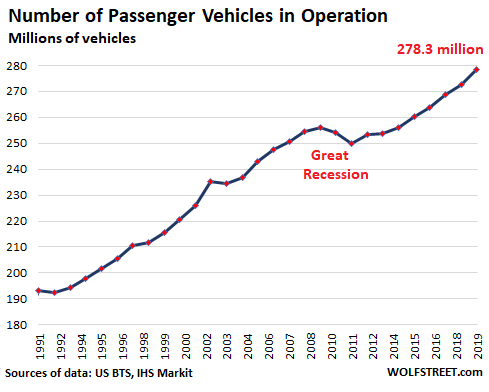
If economic growth is defined simply in terms of tons of refined resources pulled out of the ground, then yes, of course economic growth has a limit. Trivially so.
If economic growth is defined as providing people things they want, a definition that normally makes economics make much more sense, it becomes much fuzzier. What is the "economic value" of an SD card loaded down with the entire run of the Simpsons and Friends? What is the "economic value" of an MP3? What is the "economic value" of knowing how to run a boarding school successfully? There's no obvious upper limit to how many desires could be satiated, especially once you get away from brute material concerns like food and water. If you're willing to go sci-fi, and let machines and perhaps simulated humans have desires that the economy could satisfy it becomes even harder (and as we already let "companies" have such desires it's not really that far a journey from where we are), and it was already pretty hard.
(Note I'm not saying there are "no" limits in that case, I'm saying they become a lot harder to define, and much, much harder to defend. If there are limits, but we can't reach them by the end of a the longest lifetime a baby born today will live for, it's not particularly clear that our opinion has any meaning or force. The economy of 2132 will still have physical constraints but I wouldn't care to guess a whole lot about its nature and how "large" we would consider it to be versus today's economy. For that matter, how "large" is the 2022 economy versus 1822? It's a lot harder a question than meets the eye.)