I am generally very pro-psychadelic - they seem like they can offer unique aid to people and they are not very prone to abuse. The only "downside" is that, because outcomes vary widely (though are generally not negative, simply unhelpful), it's hard to call them "medicine" in the way that, say, asprin is medicine. However, with the proper understanding, I'm hopeful they can be a really helpful tool for some people.
This is rationalizing rhetoric. Full-on psychedelic drugs are very different from any other psychiatric medicine. Users should know this difference and be prepared to mitigate the risks.
With psych drugs, the most common experience is that user takes them for a few weeks, and reports or doesn’t report some subtle change in their psyche. A bad experience is mostly limited to “didn’t work”. If the drug “doesn’t work” they stop using it and try something else.
With psychedelic drugs, the effect is 100% going to be felt within less than an hour, the effect will be very strong and is guaranteed to be one of the most memorable experiences of the user’s life. A bad experience could easily consist of being rapidly confronted with some deep truths about the user’s self and ego. There is a reason psychedelics have been linked to schizophrenia: https://jamanetwork.com/journals/jamapsychiatry/article-abst...
No kidding! Might help, but won't cause harm, and you probably won't have to take it forever, matbe even just once? I know LSD has been attributed some harmful effects, does psilocybin have no chance of psychotic breaks or ???
Everything I've learned about therapeutic psilocybin treatment is that the doses involved are actually quite a bit higher than I've ever done on a trip at home.
For example for psychedelic therapy with psilocybin, you would see a therapist a few times with no psilocybin, then you would have a session where you take something like the equivalent of 1 gram of dried mushrooms, and go through that session with the therapist. Then come back 1-2 weeks later and take something like a "heroic" dose or about 5 grams dried mushroom equivalent and go through that session with the therapist. Then you come back again two weeks later and have a sober session again to talk about all of it.
My understanding is that this is generally how the well respected research studies have gone. The most I have ever done myself is 2 grams dried mushroom equivalent, and I usually stay under 1.
I've done a heroic dose without help, and it is very hard to describe. However, I'll describe one part:
I went to the church of engineering and saw the manifest glory of all levels of abstraction that I understand and leverage to build _all_ at ONCE. I saw what I have been building in a new light ( https://www.adama-platform.com/ ). The absolute beauty of mathematics made me cry.
Ever since this event, I have been... ultra level. I'm just at peace. It's a wonderful experience. The whole "holy shit, I'm dying part..." was kind of rough.
Yeah the experience I have with heroic doses of psilocybin and LSD have been both the most challenging and the most transformative. People are scared by the idea of a bad (scary/unpleasant) trip, but it's important to remember that the drugs will wear off, and you can often take some deep learnings about yourself from that unpleasantness.
> Everything I've learned about therapeutic psilocybin treatment is that the doses involved are actually quite a bit higher than I've ever done on a trip at home
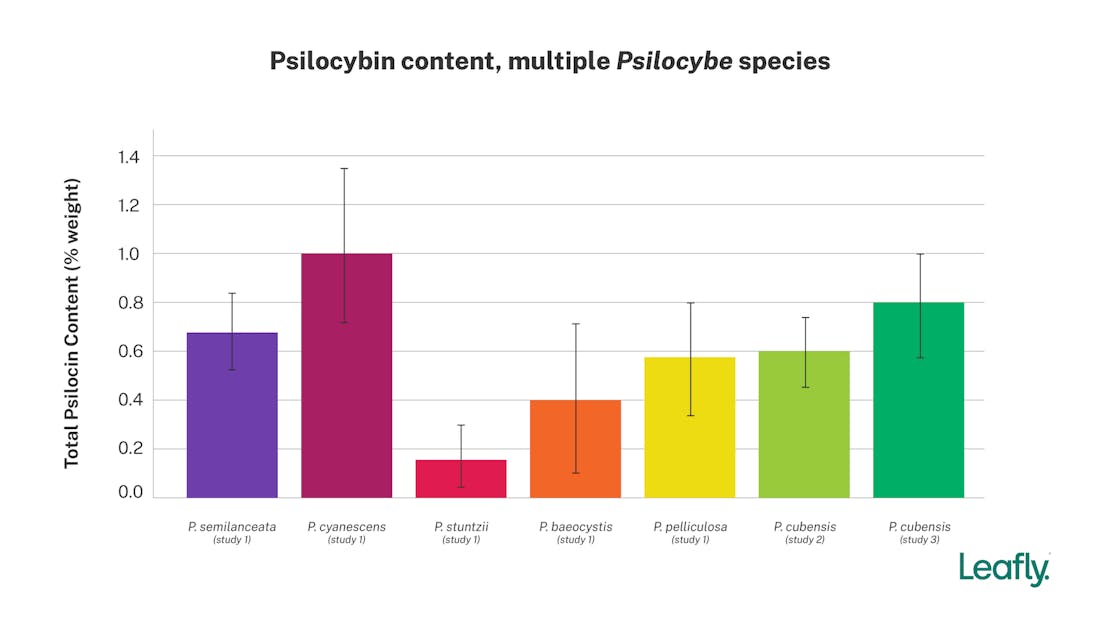
Where are you getting this info? All the good data I've seen is definitely not 5 grams dried. 20-25mg seems to be the sweet spot[1][2][3][4] which is around 2 grams[5].
Fuzzy memory from what I learned a few years ago. I guess i was really responding to the person who said “you’re not tripping balls in a therapeutic setting” - personally even 2 grams is “tripping balls” by my standards, but like I said 2 grams is the most I’ve ever done.
5 grams? Most people would absolutely lose their shit on that. Even an eighth of good mushrooms is enough to obliterate most people. Like complete ego death.
How long do these sessions last? What are the logistics? I’m very curious.
5 grams is the idiotic recommendation from Terence McKenna that people blindly follow because he was a good writer and had an almost psychedelic stand up routine with public speaking. He was basically a type of cult leader.
It is absolutely terrible advice. The advice should be "less is more" not this McKenna "heroic dose" bullshit like some kind of dosage sport.
> The advice should be "less is more" not this McKenna "heroic dose" bullshit like some kind of dosage sport.
The research backed advice is that set and setting are what really influences the experience.
The dose varies by person, tolerance, genetics of the fungi, and how deep one wants to go in the experience.
Taking 5 grams is not something to do in a whim, for pride or ego, or to keep up with anyone else. Better to ease into a bigger dose over time and not rush the experience.
Yes my understanding was a that ego death is the goal, and this is done in a controlled setting with a trusted therapist.
I have no experience with these dosage levels but what I have heard is that some people don’t experience the full ego death at 3.5 grams but most people do at 5 grams, and I have also heard that there isn’t much additional effect from higher doses. So the thinking is to make sure to get everyone over that edge.
However there are other forms of treatment and I’m only talking about what I learned a few years ago, I’ve not studied the latest work and I am not a medical professional at all.
I did a quick google search to find more info for you and it seems there’s a lot of new work being done. I didn’t find any convenient link with the answer to your question though.
> An eighth won’t give you ego death. 5 grams is about where you start getting kaleidoscopic visuals and good hallucinations
This is completely dependent on the strain[1] and potency of that batch. It also will depend on the person. To make any definitive statements on what people will experience on x grams is not an informed opinion.
Leafley is great but, I’ve babysat enough people to tell you that an eighth (3.5g) isn’t going to put anyone on a shroom trip. They’ll definitely get stoned and have some euphoria on the downslope
Update: p. Cubensis is what I’m most familiar with
it's interesting because someone replied to another comment of mine saying 2g is tripping balls for them haha. I think it greatly varies from person to person - I for instance seem to have a greater tolerance for psychedelics than most people I know. I guess it would also depend on what you consider a "trip".
I had to do four grams the first time. If you are on antidepressants or anti anxiety drugs you'll need more of it. Four grams was the lower therapeutic dose for me, after that I did six grams, but was able to get by for the remainder of the seven weeks on just two grams a day.
So in a clinical setting they actually give 20-30mg of psilocybin directly. This works out to approximately 3-5g of dried cubensis depending on their potency.
From my limited understanding, when a trip is used in a therapy session, it allows a patient to observe past trauma from an (emotional) distance, allowing them to process it. I can see how that would work. If trauma is so severe that you can’t even think of it, you’d push it away to the back of your mind where it would fester.
A therapeutic MDMA dose is basically equivalent to a recreational dose from the literature I've read. Not sure about psilocybin. Ketamine dosage definitely leads to tripping balls.
Not at all actually. I underwent 11 weeks of ketamine therapy. No hallucinations whatsoever, and I checked with others because I thought I was missing out! I felt physically drunk, but mentally absolutely clear. You may be thinking of a higher dose taken recreationally.
It's a fair question - but I would say yes? I know lots of people who have taken antidepressants and psychedelics and while both have been helpful the antidepressants have much more consistent effects (both person to person and dose to dose).
There is already a proper understanding of them - they are pharmacologicaly super safe. Beyond that, they should be available for anyone to try, whether you "need" them or not, in non hero dose amounts, in therapy settings.
Not arguing that caution shouldn’t be applied but I think it’s a bit more subtle than that. MDMA is prone to abuse in the recreational use sense, but it’s not really habit forming in the same way other drugs are. Sure, you can always find edge cases but compared to many other drugs (including alcohol) you’re unlikely to meet many daily users.
I somewhat agree. Daily use doesn't produce the high being sought, but it is very habit forming.
I know from personal experience and that of many people around me that doing molly every weekend quickly becomes a dependency and will mess you up very quickly.
In a therapy setting I'm sure risks are low, but I wouldn't make such black and white comparisons against alcohol or say, cocaine.
The reality of addiction is more than a function of frequency or tolerance and often comparing drugs directly is misleading.
I’d refer you to the extensive research on the topic by David Nutt, Professor of Pharmacology at Imperial College and former government drugs adviser. It’s possible to compare the ‘relative harm’ of substances, and they will, partly by the nature of the different ways they interact with our reward systems have different risk profiles. Again, not dismissing the risk, but sane drugs policy does require an evidence based assessment of how each substance impacts society and individuals.
I'm broadly pro harm reduction & happy about psych legalisarion, but the details of the Nutt studies are, aha, pretty Nutty. The most cited one just involved taking some doctors and asking them to yolo out some qualitative harm estimates. Not ideal evidence-based medicine.
(I would provide a close cite but I only recall from his book "drugs without the hot air" & am on mobile)
Yes I did, because 'drug abuse' isn't a useful or clearly defined term. Eg. if I search for a definition, in the first few hits I get:
"The use of illegal drugs or the use of prescription or over-the-counter drugs for purposes other than those for which they are meant to be used, or in excessive amounts."
"Substance abuse, also known as drug abuse, is a patterned use of a drug in which the user consumes the substance in amounts or with methods which are harmful to themselves or others, and is a form of substance related disorder. "
The first definition will vary based on your local laws, which as we have seen, are also subject to change. So if that's the meaning of the term 'drug abuse' it's not particularly useful to discuss since it's a technicality.
The common factor between the two definitions (excessive, harmful consumption) might be more useful to discuss. Which was why I chose to talk about that (rate of consumption, risk of addiction) specifically.
Um. No.
Outcomes don’t “vary widely” Studies of Psilocybin treatments for depression show remarkable success rates. In some cases a single dose paired with one session of talk therapy provides relief for 3 months. Compared to the next most viable treatment SSRIs that take 3 weeks to start working and come with danger of opposite effects if the treatment is stopped. Studies using MDMA to treat PTSD work surprisingly well.
The few studies done on using those two drugs in psychiatric settings show phenomenally positive results. I don’t know where you’re getting your information from but it’s not by reading the scientific studies.
We hope to be able to try it some day, since we have DID and heard that psychedelics can actually help a lot. It's a shame that we'll probably have to wait years, though...
Because they claim to have DID, and thus are saying that at that particular time, they are "fronting" with a persona they call Emily.
FWIW, a large amount of the psychiatric establishment believes DID to not be real, per se. Instead they think it can be caused by an especially suggestible patient responding to a therapist or other psychiatric professional's coaching. Essentially playing a role in the therapy (for genuine underlying problems!) that they believe they are expected to play.
DID in particular is sampled at about 1%. I’ve included an excerpt from the previous link that states this. That paper seems to align with clinical perspective, as it’s the same number that McLean Hospital uses in their public communication. McLean is a psychiatric teaching hospital as part of Harvard Medical. It is one of the few organizations in the country that specializes in treating severe trauma disorders.
“Random samples of the general population in Canada and Turkey (female sample, 50% of whom were illiterate) found a life-time prevalence of DD of 12.2% and 18.3% respectively. A general population study in New York State found a 1-year prevalence of 9.1% for the DD.2,32,39 In Canada and New York, prevalence of DID was 1.3% and 1.5% of the population. In Turkey, the lifetime prevalence of DID was 1.1%”
We're not just personas, but other than that, that is a fairly accurate description. I am indeed "fronting" right now. Logan (the holder of this account, and the username "LoganDark") is currently dormant for mental health reasons, so he's basically unconscious.
The claim is indeed just a claim at the moment, sadly, because we're not professionally diagnosed, though we are working towards a diagnosis. (Right now we're waiting for a call back from what is presumably the world's most overbooked mental health center. Only possible explanation for them taking this long.)
> FWIW, a large amount of the psychiatric establishment believes DID to not be real, per se. Instead they think it can be caused by an especially suggestible patient responding to a therapist or other psychiatric professional's coaching. Essentially playing a role in the therapy (for genuine underlying problems!) that they believe they are expected to play.
Believing DID isn't "real" (as in, is not caused by actual brain structure changes) is different than believing that it can be achieved through other means.
There are two main definitions of "DID", and it's important not to get them mixed up in cases like these: "DID the canonical disorder" (which we may or may not have), a direct consequence of certain types of structural dissociation[0], and "DID the set of symptoms" (which we definitely do have) as established in the DSM-5[1], which can apply regardless of root cause.
Some believe that "DID the canonical disorder" does not exist, and that it is akin to subconscious pretending (as you describe). Some believe that "DID the set of symptoms" can be achieved through different means than through structural dissociation in childhood. These beliefs are largely independent, although it would be weird to believe the first but not the second.
(I should add that believing you can willingly create certain specific symptoms of DID (such as plurality) is different from believing that you can create DID itself willingly. The development of DID itself must necessarily be non-willing due to its diagnosis as a disorder, but certain symptoms (such as plurality) can be developed through practice[2] without having any dissociative disorder.)
---
A lot of GPs don't even know DID exists. I once brought it up to our doctor and he had no idea what I was talking about. (I later found out that he had slipped "dissociative disorder" into our medical record. Sneaky~)
The "realness" of "DID the canonical disorder" is incredibly debatable. There is the theory of structural dissociation[0] but that only explains how it forms in the first place and not how it develops or functions over time.
Before learning of "plural" terminology[3] in the first place, for around 4 years, we simply knew ourselves as "multi-personality". We didn't appropriate anything because we had no access to that information.
But I do know for a fact that, since finding out about "plurality" and becoming much more public about it (including socializing in "plural" spaces), we have subconsciously appropriated many mechanisms as they were described to us, mainly when they were a better method of serving some function that we had to perform anyway, but also sometimes for other reasons. We've never been in therapy or even professionally diagnosed, so the development of plurality itself couldn't have been informed by medical professionals.
It was developed and strengthened through roleplay, though, as far as we know. The exact details of this are probably too anecdotal to recount in full detail, but in summary: we were allowed to express individually on a website with individual character profiles, and this is likely how we developed into our own people, or at least what prompted us to develop in this way. We didn't happen completely spontaneously, but we also didn't happen because we were shown or guided to act this way. Our brain had some sort of propensity to plurality already, before we ever knew anything about it.
I started signing my comments after I began posting to DID subreddits about a month ago. It's because I write differently than Logan does and also don't necessarily remember everything he does anymore (and vice versa), so it can be useful for people to know who they're talking to.
It's also useful for us to keep track of who wrote each one of our comments, personally, so if Logan sees something he doesn't remember for example, he'll know who's responsible.
It's not that fantastic. Australia has draconian driving laws. Any drugs found in your system is a fine and 3 month licensed suspension. Permanent loss on secondary offense.
So while we are getting medical access to psychedelics we can't actually use them if we also need to drive a car.


I am generally very pro-psychadelic - they seem like they can offer unique aid to people and they are not very prone to abuse. The only "downside" is that, because outcomes vary widely (though are generally not negative, simply unhelpful), it's hard to call them "medicine" in the way that, say, asprin is medicine. However, with the proper understanding, I'm hopeful they can be a really helpful tool for some people.