Sounds like the early two color process in Hollywood… they got red (for skin tones) and a sort of teal blue green that could sorta do plants and sorta do sky, but wasn’t real convincing at either.
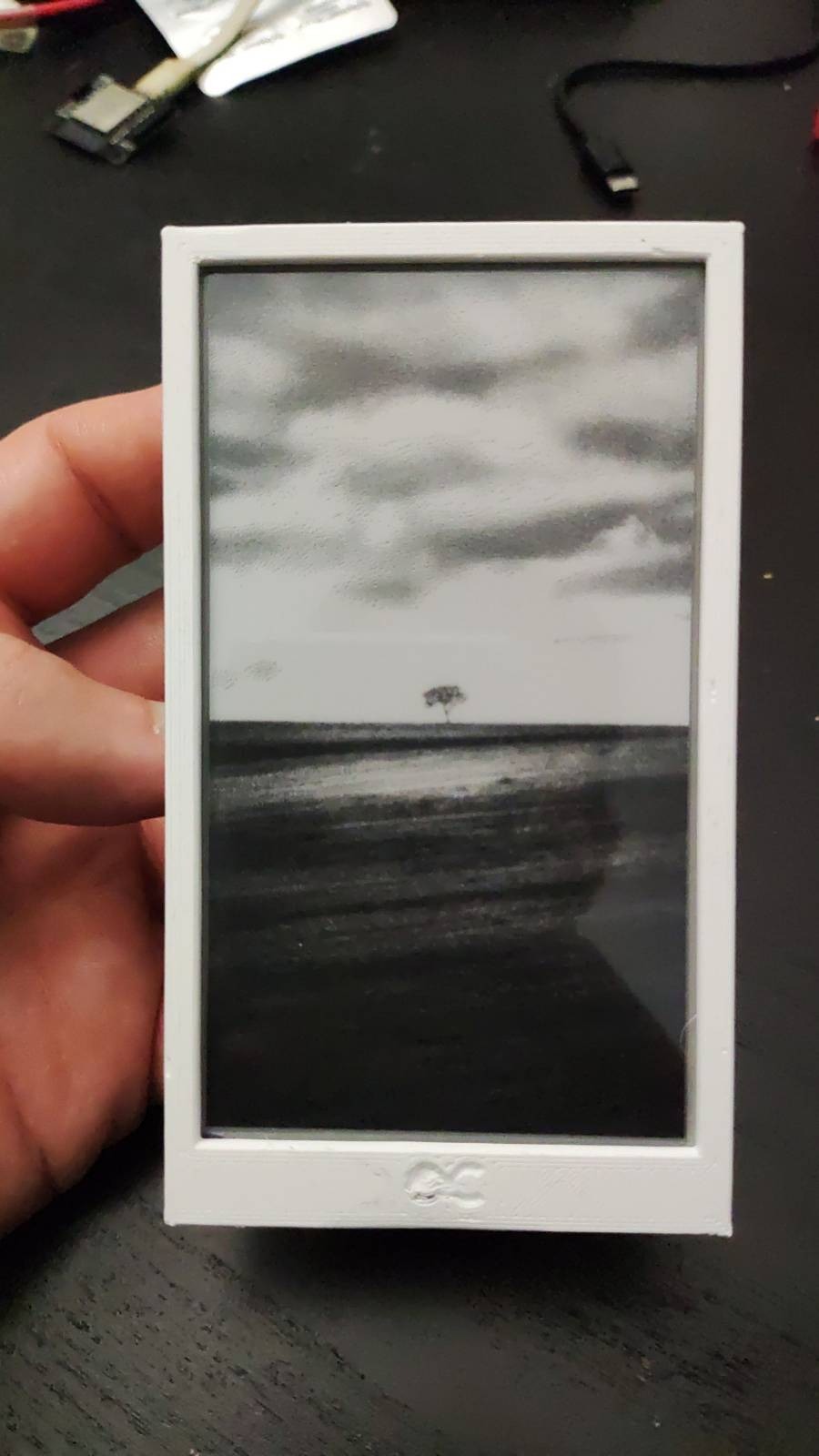
When testing it out, I tried to show a grayscale image, because the display supports four tones, but it came out horrible. Then I displayed a dithered two-tone image (black and white) and it was much, much better:
I wonder if there are any arbitrary-palette dithering algorithms that I could try, it would be great to be able to use the other two tones and still dither.


It only has 64kb of flash onboard, so [Aaron] devised a clever compression technique that enabled him to store complex images on the displays.
Note that an EPD itself is a "write only" memory with no minimum clock rate, so images can be streamed directly over the network to it.