FWIW "Net Zero" is using carbon offsets to have "net output" of zero carbon emissions, but you can still emit as much carbon as you can buy credits for. Credits have been widely regarded as ineffectual and even worsening carbon emissions, deforestation etc.
Some utilities now have programs where you can pay them extra money "to get a portion of your power from a clean energy source". This money is used effectively to buy carbon credits. So they're asking customers to subsidize them in not needing to eliminate carbon emissions.
Actually not emitting carbon is what some utilities now call "real zero". But their commitments to "real zero" are a long ways away, and they're just corporate goals & in no way binding.
Technically the difference between "net zero" and "carbon neutral" is supposed to be that "net zero" first eliminates all but "residual" emissions, and only then depends on offsets, whereas "carbon neutral" is more like what you describe (no required emissions cuts; possible to just buy — often dubious — offsets).
Science Based Targets Initiative for example requires companies signing up to their scheme to have credible plans to cut emissions by ~50% by 2030 and 90% by 2050 to claim that they're aiming for "net zero" [1] (SBTI itself was recently in the news because employees felt that recent policy changes leaned too heavily on offsetting; I don't really know what the current situation there is).
In practice usage of these terms my not be well regulated, so it's always worth checking out exactly whose definitions are being used.
This is made worse by the sheer, but actual, complexity that surrounds all this. Especially the "scopes¹".
So someone buying and selling, say, diesel in solar-powered-fuel stations, can still have "net zero" because they themselves don't emit, but both the people buying it, and the companies producing it, still emit immense amounts of carbon.
Which is then a very easy way to "greenwash" your business. To have marketing, that's not even a lie, but still being very misleading.
(I used to build accounting software for carbon emission accounting, it's way, way more complex that this diesel-example)
Net zero would make sense if there were some sort of legal backing to it.
I’ll happily pay $100 for a ton of carbon if it comes with a video of it being captured from the atmosphere (or reasonable chain of custody documentation) and it’s delivered to me in the form of biologically inert bricks.
In fact, we have some trees we haven’t cut down this year in the back yard. I’d happily sell you some bullshit carbon capture credits in exchange for not cutting them down next year if I could then convert that money into atmospheric carbon capture bricks. (It’d be more tax efficient for you to buy the brick directly though…)
When we tried to install solar panels, one of the MANY roadblocks our coop put in the way was that we had to opt out of additional charges for carbon credits before they would begin processing the solar installation.
So because we applied for a solar inspection to have solar installed, we were automatically enrolled in a program that costs us more money, for their carbon offsets. And they were selling it to us as if that's just the same as us installing solar panels.
Garbage. And that was just one of about a dozen different blocks they have as part of their process.
If I lived somewhere with other utility providers, I would tell them to fuck right off.
> to have any hope of achieving this goal would require the addition, every year, of 630 gigawatts of solar photovoltaics and 390 GW of wind starting no later than 2030—figures that are around four times as great as than any annual tally so far.
But according to Bloomberg:
> developers deployed 444 GW of new PV capacity throughout the world in 2023.
So rather than 25% towards the 2030 goal we are 66% there on PV.
Bloomberg continues:
> It says new installations could reach 574 GW this year, 627 GW in 2025, and 880 GW in 2030.
So hitting the target 5 years ahead of schedule by this estimate.
Bloomberg seems to be talking about capacity (does not take into account capacity factor, only max output when it's sunny), maybe the article is talking of average actual production? (which is between three and four times lower as far as I know)
With the advent of solar and HVDC, is there a potential future where AC stops being the backbone of the grid, letting us drop the whole notion of grid-scale frequency? It sure sounds simpler not to have do the delicate phase matching dance, among other things.
This is unlikely. While transmission lines may go DC, all of the distribution, the lines that goes from a substation to peoples houses, in the US is AC. Although it’s possible to wire a house for DC, and people have done that, many of the appliances we use, use AC power.
Although AC phase matching is a delicate technical problem, it’s one we’ve solved for over a hundred years. DC presents other engineering challenges that are non-trivial. For example, circuit breakers for AC power are designed to “break” when the AC curve hits zero volts. This eliminates the chance of arcing and makes breakers smaller and cheaper to manufacture. A DC breaker has a chance of arcing and it may be necessary to make them larger, or use exotic gasses with high dielectric values to prevent this from occurring. Either of these increase costs for homeowners.
Transmission has a bunch of problems with DC as well. Transformers are fundamentally AC devices; if you want to use them in a DC circuit, you need an inverter anyway to convert the DC to AC and back again. There are ways to step up DC voltage, but none are as cheap or reliable at utility scale as a transformer is. If you don't step up the voltage, you'll lose basically all your power to transmission losses, since delivering high power at low voltage requires high current, and power loss increases with the square of the current.
High-voltage DC is also extremely dangerous, as it's prone to arcing and electrocution.
> A DC breaker has a chance of arcing and it may be necessary to make them larger, or use exotic gasses with high dielectric values to prevent this from occurring.
That's a problem for mechanical switches (were conductors move to make contact or disconnect).
If you use semiconductors to do the switching, it becomes a problem of how fast they switch, how much energy is dissipated during the switch, and how much energy those semiconductors can absorb momentarily (thermal mass).
For small equipment, this is a solved problem. Fast switching FETs are cheap & robust.
For utility-scale, semiconductors are an entirely different ballgame. Big advances have been made over the last decades.
So a HVDC grid might in theory be possible. But in practice, it'll be an engineering tradeoff between HVDC+semiconductors almost everywhere vs. HVAC+more traditional gear like transformers.
And even if a HVDC grid were practical with modern tech, in most places there's existing AC-based grid & power plants. I suspect the "sync AC phases" is an easier problem to solve than "re-do the grid to use HVDC".
But for 'simple' point-to-point connections like an offshore windpark or long international lines, HVDC is sometimes practical (and used, if so).
I think a DC grid is likely. But it's still 100 years away.
Over time, more and more components will be built DC (DC long distance cables are already popular, due to being slightly cheaper. DC for electronics is popular due to AC being poorly suited to microprocessors/logic. DC sees wide use in cars. USB-C brings computer peripherals into the DC world).
Eventually, whenever two DC bits of power infrastructure are touching oneanother, someone will notice that removing the DC->AC->DC conversion steps saves money and increases efficiency.
Eventually enough bits of the grid will be DC that AC 'islanding' can occur - whenever every link from A to B is DC, there is nothing to keep the phase locked between place A and place B. Initially that will be solved with software locking means.
But finally maintaining that anti-islanding tech will be too costly, and all remaining bits of the AC grid will be removed.
But it's gonna take 100 years because grid tech changes slowly, and infrastructure like buried cables can be 70+ years years old.
The problem is that the DC from the grid is going to be way higher voltage than the voltage to the house. There are lots of AC-AC transformers that would need to be replaced to use DC for distribution and hard to switch incrementally without a dual converter in every house. Also, AC is better for medium distance transmission, DC can boosted to super high voltage for long distance but that isn't practical inside a city.
Then, the house DC voltage is going to be higher than the electronics DC. So you'll need to have a box at every single outlet to convert DC-DC. The appliances are going to need the higher voltage house DC. And the house DC voltage is going to be more dangerous than AC. Also, there are no standards or even proposals for DC electrical system: no voltage and no outlets.
The problem is that replacing DC-AC-DC with DC-DC-DC and there isn't much savings from all those conversions. Would you replace all of your appliances for 1% savings in electrical cost?
And those reasons are why it'll take 100+ years...
However, the AC-AC transformers currently use a lot of Steel+copper. That's expensive. New developments will be pushed towards solid state alternatives which are theoretically cheaper (and exist today, but aren't widely used).
Outlets in your house I suspect will get replaced with super-USB-C. Ie. something which is 5 volts and then negotiates a higher voltage as needed. A future version I bet will support 3 kilowatts for hair dryers, etc. That will be safer. It'll also be pushed by device makers who currently hate the headache of making different versions of electrical devices for every country with different plugs. Fancy houses already have USB outlets in every socket. Cheapo devices like flashlights already use USB power input for worldwide universality.
I could imagine rules might push people to super-USB-C too. Laying AC lines requires highly qualified labour, but plugging in super-USB-C cables into a super-USB-hub can be done by anyone - the safety is in the design, rather than requiring careful installation.
When every outlet in your house is super-USB-C, it won't take much for newly built houses to instead use DC everywhere (maybe even negotiated voltages too - ie. your house only receives 5 volts until any device needs more power, and then it'll ramp up).
It is impossible for super-USB-C to carry that much power. The new 240V is at the limit of what USB-C can do and you are talking about order of magnitude difference.
First, the wire thickness needs to be like regular wires to carry enough current. Changing the wiring in the walls is the hardest thing. Second, the voltage needs to be like regular service to carry enough power over regular sized wires. Higher voltages, like 500V, are better since DC loses more energy over distance than AC. Third, the plug needs to be similar size to power plugs to not arc, and DC arcs worse than AC.
Is replacing everything worth the effort to increase efficiency by a little bit? You are optimizing for low-power DC devices at the expense of high-power AC appliances. The only way I can see DC power happening is in isolated community like the Moon or Mars.
> It is impossible for super-USB-C to carry that much power.
5 amps, 2000 volts. 10 kilowatts. Made safe by milliamp precision leakage detection (you won't manage to kill anything with a milliamp of current, and more than a milliamp of current will trigger the protection).
2000 volt insulation made of PVC needs to only be 0.1mm thick (say 0.5mm for a 5x safety factor). That can easily fit in plugs and sockets of the existing size. The leakage detection would also detect current leaked between the power conductors, so dielectric breakdown can be protected against.
The cable would be designed to deliberately cause dielectric breakdown when heated before catching fire, so that in cases of a fatigued conductor or wire draped across a stovetop, a fire is impossible.
This design is only safe if implemented correctly, so each end of the connection will frequently test the other end of the connection to ensure it is adhering to the spec. It would do this by sending an encrypted message saying "In 37 seconds I am about to cause what looks to you like a baby chewing through the insulation". Then, in 37 seconds, that happens, the power gets turned off, and a few microseconds later the encryption key is send over proving that it was a test and the power is turned back on again. Both sides would have capacitors so the user wouldn't notice the power going off for a few microseconds per minute.
> However, the AC-AC transformers currently use a lot of Steel+copper. That's expensive. New developments will be pushed towards solid state alternatives which are theoretically cheaper (and exist today, but aren't widely used).
In what world is steel and copper more expensive than semiconductors?
There may be a potential for more localized grids that are interconnected by HVDC transmission lines. I'm not sure what the impetus for that would be, however. I agree that it would be unlikely.
Interestingly, HVDC actually becomes a more efficient method of transmission over longer distances. Perhaps it's feasible to generate electricity half a continent away. Maybe tile the Sahara with solar panels and power all of Africa with it.
You're assuming that, in the future, we'll still have huge, centralized plants. With solar, it's very possible that we'll have small stations in each town or area, and only need to balance between them infrequently, greatly reducing the amount of energy we need to carry across large distances.
I think municipality-sized microgrids are a big part of the future, but they still don't remove the requirement for a grid, simply because of weather. Most renewables are very dependent on local weather conditions: you don't get solar when it's cloudy, and you don't get wind when it's calm. The grid needs to equalize power generation and consumption, and it's probably more economical to have a few transmission lines running between cities and to remote power generation facilities than it is add the utility-scale batteries needed to power through a week of cloudy weather.
I could however see a future where cities refuse to subsidize rural homeowners and communities, disconnect from the country-level grids that exist today, let them de-energize and fall into disrepair, and then maintain only a few transmission links over major transportation corridors to connect with other major cities.
That's not true, and stems from mistakenly thinking of electricity as a fluid instead of working through the math of the laws of electrodynamics themselves.
With AC, there is no net current anyway - nothing physical is being transmitted any substantive difference. The actual electrons travel on the order of 0.2 microns per 60Hz cycle, and then move back the other way. [1]
In reality, in the absence of fundamental electric components like resistors/capacitors/transformers, all points of a circuit have the same voltage and same current. The transmission lines are just connecting different cities into the same circuit, there's nothing flowing between them. This allows your solar array in the Mojave Desert to power your data center on the Columbia River, but there aren't fewer electrons traveling between them just because you also have a hydro power plant on the Dalles. The load from all devices on the grid is shared across all generation sources.
> and only need to balance between them infrequently
I think it's exactly the opposite. There will frequently be a need to balance them.
With wind and solar in the mix, generation will fluctuate with the weather. In a given area, it could be cloudy one day and sunny the next. Or windy one day but not the next. And consumption won't be correlated with that, so that creates an extra source of mismatches between demand and consumption within each area.
Transmission is one way to solve that. You could also solve it with storage (within every area), but that's probably less efficient and/or more expensive.
It's a trade off. More transmission lines means less overbuilding and less storage. Really it's an optimization problem that will be solved on a case by case basis given geography and so on.
For infrastructure it’s the opposite. You have to buy a food truck big enough to feed everyone on the worst day of the year. And at that point you may as well use it every day because you already paid for it.
Inertia will keep the status quo for a very very very long time. Combine that with heterogeneity (i.e. not everyone will be using local solar plants) and that the distribution concerns noted still apply to local plants outside your house and it doesn’t seem like it’ll go away without some kind of central planning forcing the issue.
You're oversimplifying. US residential power is currently supplied by a pair of 120 V wires, but most of the stuff in your house only uses one leg of that pair. That's alright because it's AC, and the ground wire doesn't actually need to carry any significant current. Power just returns time-lagged through the same wire when the voltage changes.
If you switch to DC, that doesn't work any more. Every amp in requires an amp out. The wiring in your house just got a lot more complicated, not to mention the wiring in the local grid.
Also, running your neighborhood on 85 V (the DC equivalent to 120 V) isn't exactly efficient. Even large ground-mounted transformers only provide power to 10-15 houses at most, and pole-mounted transformers may only service one house. The main power to your neighborhood is 7.2 kV because it's more efficient to to send power at high voltage and low current.
It's not impossible for a residential solar setup to output thousands of volts, but it's not easy and it's pretty constraining for designs. There's also a world of difference between that voltage at the street and that voltage in the house. Things go wrong in the house.
> You're oversimplifying. US residential power is currently supplied by a pair of 120 V wires, but most of the stuff in your house only uses one leg of that pair. That's alright because it's AC, and the ground wire doesn't actually need to carry any significant current. Power just returns time-lagged through the same wire when the voltage changes.
Maybe my model of how AC works is wrong, but my understanding is that neutral wires exist and are necessary in addition to safety earth, even though neutral and ground are eventually tied.
The arcing is no joke. In my building they have a new assembly of three coupled water pumps and an electrical box that is waiting to be installed that has a scary warning about how the electrical box could create a dangerous arc.
Probably not. Spinning inertia and grid frequency are a core component of running a stable grid. Gives you a large store of energy that can absorb sudden spikes in demand or drops in supply, so systems have time to react before really bad things happen.
The grid frequency is an incredibly useful communication tool that allows any piece of equipment to easily and accurately measure the current health the overall grid, and automatically make adjustments to help balance and improve the health the of the grid (either by increasing or decreasing load/supply). Because the frequency is set by physically large spinning turbines it means it’s also a direct and inseparable measure of total grid health, not something that’s dependent on another system to monitor and communicate grid health.
It’s hard to overstate how much of our electricity grids depend on grid frequency, and one having thousands of systems monitoring and adapting to grid frequency, to remain as robust and stable as they are. In a DC world you don’t get that anymore, and keeping a grid balanced becomes substantially more complex requiring potentially unreliable side-channel communication to allow equipment on the grid to coordinate themselves. Its really hard to beat a system where one of it core fundamental attributes (frequency) needed for power transmission, is also the perfect attribute for distributed coordination of load and supply.
> Gives you a large store of energy that can absorb sudden spikes in demand or drops in supply, so systems have time to react before really bad things happen.
Capacitors do the same for DC. They are also more efficient and reliable.
The thing about a communication channel is true. But it will become true for AC after almost all of the generation becomes free of rotational inertia too (PV, modern wind, and batteries). And you need side-channel communication to decide what generator will take over what load right now.
Don't look too close at spinning wheels failure modes.
The fact is that for most applications, there isn't enough technical difference to justify either of the options. It's all path dependency based on random choices made ages ago.
> Don't look too close at spinning wheels failure modes.
It's a sealed turbine, not a "spinning wheel." It's failure modes, while internally destructive, are often limited to the device itself, and trips are much easier to install and utilize in this path.
Dead short DC failures have a tendency to destroy nearby equipment and start fires as well. You're also going to need a bank of capacitors, so you've multiplied your failure rate for each capacitor required.
> there isn't enough technical difference to justify either of the options
There's a massive amount of difference and AC is obviously justified.
> based on random choices made ages ago.
You don't seem to be aware of the history of the power grid and how we've arrived at the technology we have.
Well this is what the article covers, Grid Forming Inverters, I.e. inverters that have the ability to behave like they’ve got inertia, and where the feedback loop between frequency and power output is tight enough they will naturally migrate to a stable grid frequency, rather than just bouncing around all over the place like normal Grid Following Inverts do if there isn’t enough spinning inertia in the system.
So even in world where all power sources are coupled to the grid via inverters, it’s still possible to use the grid frequency as communication channel.
Side channels that exist physically outside the grid will never be reliable and ubiquitous enough to replace grid frequency, for grid stability you need a feedback loop measured in nanoseconds to avoid scary oscillations in load and supply, that feedback loop needs to be faster than a microcontroller can manage, hence the reason why Grid Forming Inverters are more complex than normal Grid Following Inverters. After all the system you’re trying to monitor and keep stable naturally communicates at the speed of light, so it really isn’t possible to use digital systems to keep it stable. You need some sort of analog inertia (whether that’s spinning rotors, or clever analogue electronics doesn’t really matter) to handle the high frequency changes, and damp them enough for digital electronics to deal with the longer term drift.
Also it’s not just suppliers that coordinate via frequency, it’s also loads. Anyone out there running a large semi-continuous, but interruptible loads (e.g. water pumps, large arc furnaces, heating systems, bulk EV charging etc) can usually get a discount on their energy prices, in exchange for voluntarily disconnecting their load if the grid frequency drops too far, allowing the grid to shed the least sensitive loads first, before it’s starts forcefully disconnecting more sensitive loads.
> Capacitors do the same for DC. They are also more efficient and reliable.
I don’t know who told you that, but capacitors aren’t even vaguely close to reliable compared to a spinning turbine. Not once you consider how many capacitors you would need to store an equivalent amount of energy as a spinning turbine.
Super capacitors top out at about 4 Wh/kg, and can get up to 10 Wh/kg if you’re using hybrid capacitors (which basically a mix of a battery and capacitor). A flywheel energy storage systems are around 100Wh/kg. So at least one order of magnitude more energy per kg. So you need a lot of capacitors to replace the energy storage of a turbine. Once you’ve got that many very expensive capacitors linked up with the needed control electronics, I doubt it’s anywhere near as reliable (or cost effective) as a big spinning chunk of steel.
The grid needs to run at multiple voltages - transmission, distribution, industrial/commercial/residential service - which is complex on a DC grid. Synchronizing the phases is an easier problem.
Synchronization is a one time event. Once the networks are coupled the physics itself keeps it in sync.
The problem is that physics also dictates that the interconnection links need to be big enough to handle the power imbalance between the different parts of the networks. So grid management is mostly about balancing production and demand as a whole and in sub-grids.
Vermont is considering installing Tesla Powerwalls for every home in the state to create distributed storage of power which they can then control to optimize the grid. Theoretically those Powerwalls could be fed with DC instead of AC and use their inverters to power each home with no need for grid synchronization. Each home would have its own AC frequency. One issue might be devices which use the grid frequency to run clocks. If the frequency in each home is different or drifts then clocks across the state might not tell the same time or get out of sync. I'm not sure how common grid synced clocks are any more, most clocks these days use a quartz crystal as a time reference instead of the grid. Industry will have to remain on the AC grid and they probably do use grid frequency for a variety of things, but there aren't inverters and batteries big enough to power the largest industries anyway. So perhaps a hybrid grid will develop, legacy AC for industry and DC for homes to remove one stage of conversion inefficiencies (both to the home and in feeding power back to the grid from the batteries). Seems like it would be easy to test this on a small scale to start with on a small group of homes.
For some reason HVDC (specifically HVDC, not just DC, most DC devices use low voltages, far below the voltages that would be efficient for transmission), is apparently more power efficient than AC. I’m not sure why, though.
> there is no need to support three phases and there is no skin effect. AC systems use a higher peak voltage for the same power, increasing insulator costs
> This is because direct current transfers only active power and thus causes lower losses than alternating current, which transfers both active and reactive power.
> Nevertheless, for a long AC overhead transmission line, the current flowing just to charge the line capacitance can be significant, and this reduces the capability of the line to carry useful current to the load at the remote end. Another factor that reduces the useful current-carrying ability of AC lines is the skin effect, which causes a nonuniform distribution of current over the cross-sectional area of the conductor. Transmission line conductors operating with direct current suffer from neither constraint. Therefore, for the same conductor losses (or heating effect), a given conductor can carry more power to the load when operating with HVDC than AC
Basically, while heat losses are the same, the AC system requires extra power to constantly be switching the electron flow whereas in a DC system there’s only active power to move the electrons and the only loss is heat loss. Additionally, for a given conductor, HVDC can be transferring at the peak rated voltage for the wire whereas AC can only transfer that voltage at the peak which means it’s 71% less power (although that’s more a cost savings thing).
In a DC circuit, a capacitor looks like an open circuit because after it fills up it just sits still.
In an AC circuit, a capacitor looks like a resistor, it takes work to fill and empty it every cycle.
Transmission lines over the earth behave not just like wires, but also like capacitors. Higher voltage reduces resistive losses, but in AC they’re penalized by these “fill and empty a capacitor” ones, that DC doesn’t.
At certain power levels, reactive effects take over. Takes more energy to charge up the transmission lines 50 or 60 times a second, than it actually can transmit. Also, no skin effect.
It's a really interesting article. It does not really talk about Net zero much, but it talks more about reliability of grids that are fed by renewables and do not have classical generators.
It seems the correlation between the article title ("Getting the Grid to Net Zero") and the subject that is actually discussed (maintaining a power grid stability in presence of inverters) is very weak.
Don't get me wrong: the article is very interesting. I really learnt something: I discovered "system inertia", I was not aware of stability issues linked to inverters, and did not know about grid-forming & grid-following inverters, and the research about finding the minimal amount of grid-forming to keep a power-grid stable in case of an issue in a given power plant. All of these topics are very interesting.
But making a connection between inverters and ecology through the "net zero" terms seems either off topic, misleading or irrelevant. First because this "net zero" term is heavily criticized as it means carbon are still emitted but companies are paying for carbon credits (that are not compensating at all the carbon emitted for many reasons [1]). Here building solar panels, wind turbines & batteries emits CO2, and their lifespan is relatively short (at most 10 years for batteries, ~25 years for wind turbines & solar panels, compared to hundreds of years for a dam[7]). Second because climate change is not the only concern about ecology, there are concerning questions about mineral resource extraction, like lithium[2] that is heavily used in batteries, but more generally, we are already extracting the whole Mendeleev periodic table[3]: we don't have alternative mineral resources for batteries or other technologies, the only solution is to extract, produce & consume less. Third, if your only goal is to reduce carbon dioxide equivalent (eqCO2), you should advertise nuclear power plant as the solution. Depending on studies, they produce the same amount or less eqCO2 compared to a wind turbine without batteries[4]. Of course, often eqCO2 is not the only important subject here (being renewable/sustainable is also important, and uranium is a limited resource). And finally, the fact we use renewable energy more and more did not lead to a worlwide energy transition, but an addition. Having a transition will require way more than technologies[5], something that is also not discussed here.
Speaking about solutions to pack a higher percentage of Intermittent renewable energy sources (IRES)[6] in a power-grid through the help of batteries and inverters would have been more accurate in my opinion. Maybe "Why we were not able to achieve 100% renewable energy before?" if you want to be catchy, and it's not perfect, as you are still hiding that you rely on lot of batteries, that are far from being renewable.
As a conclusion, I would say it would be great to be careful when engineers (here IEEE) discuss specific technologies (here power-grid inverters) to not draw conclusion too quickly (having a positive environmental impact), as it's far from being obvious. I know they want to be read, I know that the title must be catchy to attract readers, but it's not an excuse as illustrated above.
First, there is no proof that "LFP grid scale batteries" last longer than regular batteries today as your question may imply.
It seems the first "grid scale batteries" were derived from EV batteries, and are planned for 1 or 2 decades[1].
Basically, we are discussing battery ageing here, which is a complex problem[2].
According to the different studies on the topic I found, mentioning specifically "large-scale" installation like the ones discussed here, the answer is definitely and deceptively the same: between 10 and 20 years[3][5]. More precisely.
From [3]:
> To address the global effort to decrease carbon emissions, many consumers, corporations, and energy providers are adopting the use of electric vehicles and stationary energy storage systems paired with renewable electricity generation. These systems often utilize large-format lithium-ion batteries [...]. Real-world battery lifetime is evaluated by simulating residential energy storage and commercial frequency containment reserve systems in several U.S. climate regions. Predicted lifetime across cell types varies from 7 years to 20+ years, though all cells are predicted to have at least 10 year life in certain conditions.
From [5]:
> In the 2020 report, calendar life for both LFP and NMC Li-ion systems was stated as 10 years. The 2022
report takes additional information from long-term laboratory work (Saft, 2021) and product data into
account (Baxter, 2021b) to establish new calendar lives of 16 years for LFP and 13 years for NMC. The
calendar life is unchanged for 2030.
I also claim that battery are not renewable. One might argue that, if we can recycle batteries like we recycle regular glass, it could be considered as renewable. However, today there are 2 industrialized processes that are not satisfying (pyrometallurgical and hydrometallurgical processing) which "require high energy, and/or complex wet-chemistry steps"[4]. Some explored processes called "direct recycling"[4], which also has severe drawbacks but at least is more promising.
Which makes me think: we are, at least, making huge bets on the future here, as we risk 1) having huge amount of aged batteries in 1 or 2 decades, 2) no more mineral resources to extract.
Thanks! It seems that after your own research that your statement of "at most 10 years for batteries" should really be "at most 20(+?) years"? To be conservative, perhaps 16 years, but still, that's a 60% delta. Also, interesting that in [5], it says estimated LFP battery life went from 10 years in a 2020 analysis to 16 years in the 2022 report.
> Reaching net-zero-carbon emissions by 2050, as many international organizations now insist is necessary to stave off dire climate consequences, will require a rapid and massive shift in electricity-generating infrastructures.
The tl;dr is that net zero by 2050 would require all major economies to spend 15-20% of GDP for the next 26 years uninterrupted. For reference, the entire US federal budget was around 23.7% of GDP in 2023.
It simply is not going to happen, and pretending it will greatly undermines the pragmatic conversations we should be having about adaptation.
I think there's a strong optimistic case that the private sector can get us there by 2100 or so - lots of fundamental advancements can happen in that timeframe - but hamfisted government policy in the EU and America that blunts economic growth will mean there's less money to spend on solving these problems in the future.
While a good read, I'm not sure how anyone can take this seriously. He says " Efficiency gains from the electrification of industrial processes would vary widely, and not all of them could be electrified. And there will be negligible gains for space heating , with 100% efficiency for electric resistance heating compared to as much as 93-99% for modern gas furnaces (Lennox 2023)."
Heat pumps have a COP of 1.5 - 4, which are eventually going to replace all heating/cooling. He does not consider efficiency from heat pumps at all.
IEA has historically been bad at forecasting renewables.
The GDP numbers you mention are very far from the studies I've seen over the years.
I've been following debates about renewables for probably 15 years. Most common objections are: It's too expensive, it's impossible, it's not worth doing anything about, we should wait until later to do anything about it.
The truth is that the transition is happening, we have most of the things in place we need, and the rest we'll develop as we go along - they are mostly not developed much because their big market opportunity hasn't happened yet.
Emphatic agreement. Now it's a choice between faster (more Bidenomics) or slower (rear-guard obstruction by the loyal opposition).
> the rest we'll develop as we go along
Yes and:
Per Saul Griffith and others, we have the tools today to achieve net zero. The primary hurdles are legal, capacity, and financing. Not technology.
For example, there's a huge backlog of renewable energy just waiting to join the power grid. But the utilities remain loyal to natural gas, refuse to upgrade or expand.
IIRC, the 4 major categories of (human) CO2 pollution are transportation, manufacturing, buildings, and agriculture.
We now have the tech to achieve net zero for all but agricultural.
Successor legislation (BBB/IRA 2, 3, 4, etc) must address agricultural. And the stubbornly carbon-based industry segments, like "fast fashion", which alone accounts for > 2% of CO2 pollution (and growing).
> The primary hurdles are legal, capacity, and financing.
Incredibly hand-wavy. Finance is a way to allocate scarce resources - you can't claim the "technology" is solved if you haven't figured out a way to do it cost-effectively at scale.
No such cost-effective technology yet exists for nitrogen fixation and steelmaking at scale, regardless of what small pilot projects might have been attempted thus far.
"We solved the equations, now it's up to the eggheads to figure out how to finance it" is something only an incredibly naive engineer could possibly think.
> Primary energy demand is going to shrink, not grow.
What? Absolutely nobody is predicting a shrinking primary energy demand. You can hand-wave and say "yeah but electrification", but nobody is predicting a decline in global demand before 2050, if at all this century. I'd argue that demand will more than make up for the efficiency gains as we've seen in the past - look at the growth in deployment of electricity-hungry GPUs as one example of robust demand growth.
It also doesn't matter if US demand shrinks if China and India more than make up the difference. The planet doesn't care what country CO2 emissions come from.
> The truth is that the transition is happening
Who said otherwise? Nobody is arguing that renewables aren't growing.
Vaclav Smil's argument is that historical evidence strongly suggests that primary energy transitions take a lot longer than people want to think, and even as the renewable share of energy is growing the absolute demand for fossil fuels is still increasing. Again, the planet doesn't care about relative share.
People who believe the future will somehow be different from the past (like you) need to provide extraordinary evidence for why they believe this will be the case, and there is none. Installing solar panels, or wind turbines, or upgrading distribution lines, or selling electric vehicles all do not follow any kind of Moores law-like curve, so what factors would drive future results to be different?
Maybe robots will install solar panels faster than humans? Like what's the thesis here?
You can live in a fantasy world and cling to wishful thinking, but it will be a great recipe for mass disillusionment when activists are selling a vision of the future that is at odds with reality.
> I think there's a strong optimistic case that the private sector can get us there by 2100 or so
So, never. The private sector has been dragged kicking and screaming to where we are now; Oil CEOs today are still resisting calls to decarbonize (https://www.reuters.com/business/energy/ceraweek-big-oil-exe...) like it's the 1990s. Trillions in corporate sharedholder value are diametrically opposed to transitioning. They have vested interests, and a massive sunk cost with the current fossil fuel economy. We are so utterly screwed.
> that blunts economic growth
While economies have somewhat decoupled carbon from economic growth, putting economic growth as a master priority above all others is exactly what got us here and looking increasingly like a bad move.
What would motivate the private sector to solve the problem?
What economic incentive does a specific company have to make decisions that may negatively impact its short term earnings to address a global issue that will manifest slowly over the course of a century?
What if the "economically sustainable" path to net zero by 2100 results in existential issues for large parts of the human population, food supply, etc? There is an economic cost to allowing the climate to continue on its current path and actually net zero doesn't necessarily reverse that change, it just prevents its continued acceleration. If the "economically sustainable" path results in the destruction of the economy, then it's no longer sustainable.
> What would motivate the private sector to solve the problem?
Money.
Cost of grid-solar is somewhere between 50% - 70% of coal and the trend is decreasing renewable cost. [1] If you are a utility, what is the next plant you are going to install? If you can get solar for a fraction of the cost of a coal plant, it's a pretty easy decision. Plus, you can probably keep the rates the same and pass on that savings to your shareholders.
Every time I visit family in Oklahoma I see more and more wind farms. Texas is has one of the highest level of renewable energy. These are states that have a knee-jerk opposition to "the liberal agenda", and yet Texas the largest producer of renewable energy (solar + wind handily beats California), and the most "anti-liberal" red states are generating the most renewable energy: Oklahoma (42%), Kansas (47%), Iowa (60%), S. Dakota (57%).
Sure, but please also recognize that the only reason we've gotten to renewables being cheaper is through massive subsidies. Solar has gotten there from economies of scale and technological innovation, which has been driven by government R&D, grants, and also massive subsidies.
But also keep in mind that money as the sole motivator for the market is a sword that cuts both ways. If two competitors A and B are in the same market or are producing the same product, and company A uses any one of a number of environmental cheats, like fossil-fuels, then company A is going to out-compete B, make more profit, and eventually crowd out B.
The private sector will go for maximum profit and socialize the losses wherever it can. The role of the rest of society is to hold the line and not ruin the planet so that company A can make 5 extra cents a share.
I'm not saying anything one way or the other what we "should" do, just answering the question "what would make private parties adopt renewable energy". My answer ("money"), in fact, agrees with you: whether it is artificially cheaper or naturally cheaper doesn't matter.
However, I think renewables would be cheaper even without government subsidies. Texas had large wind farms over even 15 years ago. I don't have any information about subsidies on solar panels, but given that the cost trend is halving the price every <n years>, that's pretty powerful. I think you could remove the subsidy and solar panels would still be competitive, and even if not now, than in one more halving period.
It’s also hard to detangle the effects of local subsidies vs those in say China which are also driving down costs of solar.
Really in context my question was “What would motivate the private sector in the absence of government intervention”. The comment I was replying to was clearly setting up a contrast between letting the “private sector” solve it instead of “hamfisted government policy.”
Really those two aren’t separate. The government even when it “overreaches” in the eyes of some rarely tackles large projects on its own. Most of what it does is regulate, tax, and inventive the private sector to attempt to achieve some desired outcome.
I'm beginning to believe that the continued existence of humanity (let alone human civilization) requires net zero by way sooner than 2050. Kurt Vonnegut may be proved right after all that we'll go extinct because of economics.
I'll save you all a click. Vaclav Smil doesn't do any analysis around costings. He pulls the figure from a Mckinsey report[1] (now 2 years old) and multiplies it by 2. To have a meaningful discussion about this, you would have to read the Mckinsey report and understand the input assumptions. In particular, what are the assumptions around cost curves?
> hamfisted government policy in the EU and America that blunts economic growth will mean there's less money to spend on solving these problems in the future.
Disasters brought on by climate change that blunt economic growth will also mean there's less money to spend on solving these problems in the future.
Yes, private industry is famously very good at solving existential threats to the species when solving those problems also results in a loss in the quarterly earnings.
Nonsense. And also I find it rather amusing that technologists so passionately predict exponential innovation in all areas of science except for sustainability. If you want to find the truth, it's best to discount propaganda from banks like JPMorgan Chase. Blaming the government for slowing economic growth instead of corporations, in this age of unrestrained late stage crony capitalism and neoliberalism, is not a great look either.
What I see coming is that the powers that be will crash the global economy and ignite more proxy wars in the next 6 months before the US presidential election to throw it and cement minority rule for as many more years as possible. That looks like sewing suspicion around such basic American values as democracy. Because we're all struggling so hard just to survive that we turn on each other instead of the owner class which funds most tech companies and even HN itself.
I can't really blame them, as they have the power. This is all just a big game to them, as they dip into our money supply to ratchet up their fortunes at perhaps 1% per day whenever they need money, through stock market algorithmic trading which we don't have access to.
So it makes little sense to talk about societal investment when over 50% of Americans no longer have any disposable income to speak of. Regulatory capture has sunk what was once our retirement and social safety net into a $30+ trillion national debt paid as treasury yield to the same wealthy financiers who are buying up over 40% of US homes through private equity groups to convert us to a renter society.
It would cost next to nothing to convert to a solar grid-tie infrastructure amortized over a decade, with positive dividends paid back to all of us after that. But they won't even give us nothing to spend, they just keep us perpetually in debt so we can't improve our situation at even the most basic level.
These discussions are starting to worry me. There isn't much point to talking about the climate until we can start looking at this issue as a matter of "how do we increase human flourishing," which should be a universal goal for all of us.
But instead, we focus on the far less feasible "how can we stop people from using so much post-industrial technology?" People aren't going to use less energy, especially since radical consumption cutbacks of the sort that Europe sometimes attempts do seem to reduce the quality of human life, sometimes pretty radically. It seems like most people think the priority that matters is "doing what's good for the planet" while essentially disregarding the effect it has on human beings and their ability to survive and thrive.
Unless you want people to die every winter and summer, the goal when talking about climate and energy should not be ""save the planet, humans are a plague, the planet would be better without us!"", it should be to maximize human flourishing. If we can't agree that human flourishing is a worthy goal, we have to step back, waaay back, and reevaluate why we're even having this discussion to begin with.
If we really do think "humans are a plague and the planet would be better without us," things might get pretty terrifying pretty quickly. Who does that benefit? What is the end goal of that mindset?
We can't abide by anti-humanist ways of "solving" problems. If we focus on human flourishing, everyone will get closer to what they want.
Unless, of course, what they want is to decrease human flourishing.
Also, any alternative energy discussion that doesn't include nuclear isn't serious about solving the problem, just kneecapping current trends in energy production. The case against nuclear is mostly ill-informed in my experience. Nuclear, the latest version of which is far safer and more feasible, will be the future, it's just a matter of who in the world will get to it first.
> But instead, we focus on the far less feasible "how can we stop people from using so much post-industrial technology?"
That's a strawman. I assume you're taking about degrowth loons on social media. Why would you do that?
In the real world, policymakers and center-left political parties (and center-right parties outside of the US) do not want people to stop using technology.
What policymakers are trying to do is shift from one technology (oil and gas) to another technology (firmed renewables or nuclear).
The reason for this is to maximize human flourishing by preventing wet bulb temperatures near the equator from becoming too large relative to the 31-35 degree survivability limit, among other consequences which you can read about elsewhere.
There are a lot of assumptions taken for granted in there. But sure, less technology is not the real goal, that's not a good way to phrase it, good point.
I suppose the better way to say it would be that the goal is less energy use and lower quality of life. But the important part is that nobody who is pushing that sort of cutback from a position of power actually buys what they're selling. They just want the lesser people below them to buy it. As for why they want that, I'm not sure.
> These discussions are starting to worry me. There isn't much point to talking about the climate until we can start looking at this issue as a matter of "how do we increase human flourishing," which should be a universal goal for all of us.
Whatever you do, do not mention that the US Military & MIC is the #1 producer of CO2. And do not suggest that we reduce the CO2 emissions of the US military & MIC. It will make the people here angry. We can tolerate a little bit of talk about private jets flying into Davos. With each per capita attendee using the CO2 of >1000 people * years. So they can talk about "saving the planet". But not too much.
Rules for thee but not for me. Own nothing & be happy. Do not forget that.
Precisely. The people who tell you that you must radically cut back "for the planet" do not believe what they are selling, but they do think it would be very good for them if you believed it (and it would be).
Solar panels are also largely recyclable, especially since most of the panel is metal and glass (which we've been recycling for millennia): https://www.epa.gov/hw/solar-panel-recycling. I don't know as much about recycling the actual useful part of the panel, and I'm sure it depends on the type, but there are companies doing this as well: https://www.solarcycle.us/.
However efficient the recycling is, it can't possibly be worse than what we do with used oil, gas, and coal (set it on fire immediately and then pretend it magically disappeared).
Is it as efficient as recycling plastic bottles? Effectively in the landfill & ocean.
Theory & marketing science fiction are all well & good...But let's have some success with existing recycling programs before assuming that everything is going to work perfectly according to someone's vision.
If you are actually serious about reducing CO2 emissions, let's start with the biggest producer of CO2. The US Military & MIC. Cause I don't see any solar powered military vehicles, munitions, or ordinances anytime in the next 100 years.
How ironic when it's time for the US Military. With it's gas guzzling transports. To be used to enforce environmental statutes. Against the rural/suburban peasants who demand their own grid.
If you stack spent fuel bad things occur. And no, I don't agree. The volume and mass of PV panels in the world is already negligible and making the waste stream smaller is not important or relevant to anyone. Even in an extreme case nobody would pursue, it doesn't take any space. In a sane case it is a high quality silicon feedstock.
Yeah that plan works great for things like tires. It's not like there are multiple large tire dumps in the world with fires that are always burning in them.
many interesting responses which I'll read in depth better later. My comment wasn't against solar panels and batteries and in favour of oil etc. as some assumed. Just interested, because recycling seems a pretty big deal to become really sustainable in all economic matters. In my mind, which might be wrong about many things, until we get a rate of recycling >= that of waste there's a problem, maybe showing up later than today, but eventually it will surface again. Repeating myself, this is my mind model and of course subject to error.
Battery recycling is already spinning up and becoming profitable. It also means we won't have to rely as much on imports of rare earth materials because we can use already mined materials over time!
There are recycling pilot projects out there, but yeah it's a problem.
Do you also wonder how we'll get rid of used coal power plants, massive piles of toxic fly ash, and tons of pollutants from natural gas plants? Because so far the answer is not good.
Nobody challenges it, but when someone says "I wonder how we'll get rid of the byproducts of solar", it obviously frames the discussion differently than "I wonder how much less impact the byproducts of solar have on the environment than those of coal".
How do we get rid of a fast reactor's spent parts?
(Yeah, it should be possible to design a reactor so it consumes more long-lived waste than it creates. But I don't think anybody ever bothered to do that.)
This will take expenditure that utility shareholders won't tolerate. Most of the electrical grid in the US gets used until it just can't work safely anymore, and the determinant of whether it can work safely is whether it has already caused a very hazardous condition that simply can't be ignored by the public-at-large.
They're not going to suddenly say, "Oh, sure, we can make a decent gain in efficiency by updating the grid, let's build those projects out."
> Normally, such a sudden loss would spell disaster for a small, islanded grid. But the Kauai grid has a feature that many larger grids lack: a technology called grid-forming inverters. An inverter converts direct-current electricity to grid-compatible alternating current. The island’s grid-forming inverters are connected to those battery systems, and they are a special type—in fact, they had been installed with just such a contingency in mind.
> At the time of this writing, at least eight major grid-forming projects are either under construction or in operation in Australia, along with others in Asia, Europe, North America, and the Middle East.
Utilities are low margin businesses. Why wouldn't they jump at any opportunity to improve efficiencies?
The parent companies that own the utilities can (and do) gain marketshare, and/or profits. They're diversified so they can get profit from other places. There's lots of tricks to use to create profits; get government grants, try to replace old expensive inefficient infrastructure with newer more efficient cheaper stuff, create more infrastructure to service the growing power needs of new power-hungry industries, supply more power to new or growing cities, build out electric vehicle charging, try out new technologies like hydrogen, etc. They are quite expansive operations with a lot of fingers in a lot of pies.
None of that is particularly relevant to the claim that a small efficiency improvement is automatically worth the capital cost when there's no competitors.
My understanding is that utilities keep a percentage of the cost of capital improvements they make. This is because the utilities’ original arrangement from way back when was designed to incentivize the rollout of electricity as fast as possible. To that extent their incentive is actually to undertake the largest and most expensive development projects possible. The issue with distribution infrastructure as I understand it is not a lack of will or incentives on the utilities side but simply the difficulty in acquiring right of way and permitting.
Most of the stuff that could be replaced exists in an easement. I don't have to agree to let my local utility upgrade my infrastructure.
Also, any time something "just works" and a business can charge someone to use it, they'll do that instead of actively working to improve the product, particularly if that product is a commodity and they have a monopoly on it. They've also leveraged regulatory capture to make sure that the public utility boards don't put a lot of pressure on them to make needed changes.
I think the type of improvement you’re talking about falls under the category of ‘reconductoring’, or capacity improvements to existing deployments. That can help, but interconnection and new distribution is, I think, a much bigger piece of what’s needed, and for that, we need to get all over the place.
The article says we can build grid forming inverters, which can solve the reliability issues of highly renewable grids, and used Hawaii as an example of how to do this. These inverters are expensive. As a utility I can finance grid upgrades through corporate bonds or, or as you said, with investor money. Bonds need to be paid back in a defined time period, investors expect a ~10%/yr ROE, or else they do flee. As a utility, investments I make are financed through ratepayer funds. The problem has shifted from engineering, to financial, to political. I need to ask my states utility commission for a raise in rates. This hits on affordability issues, poverty etc. Who pays for it? Who benefits? This is determined by state elections.


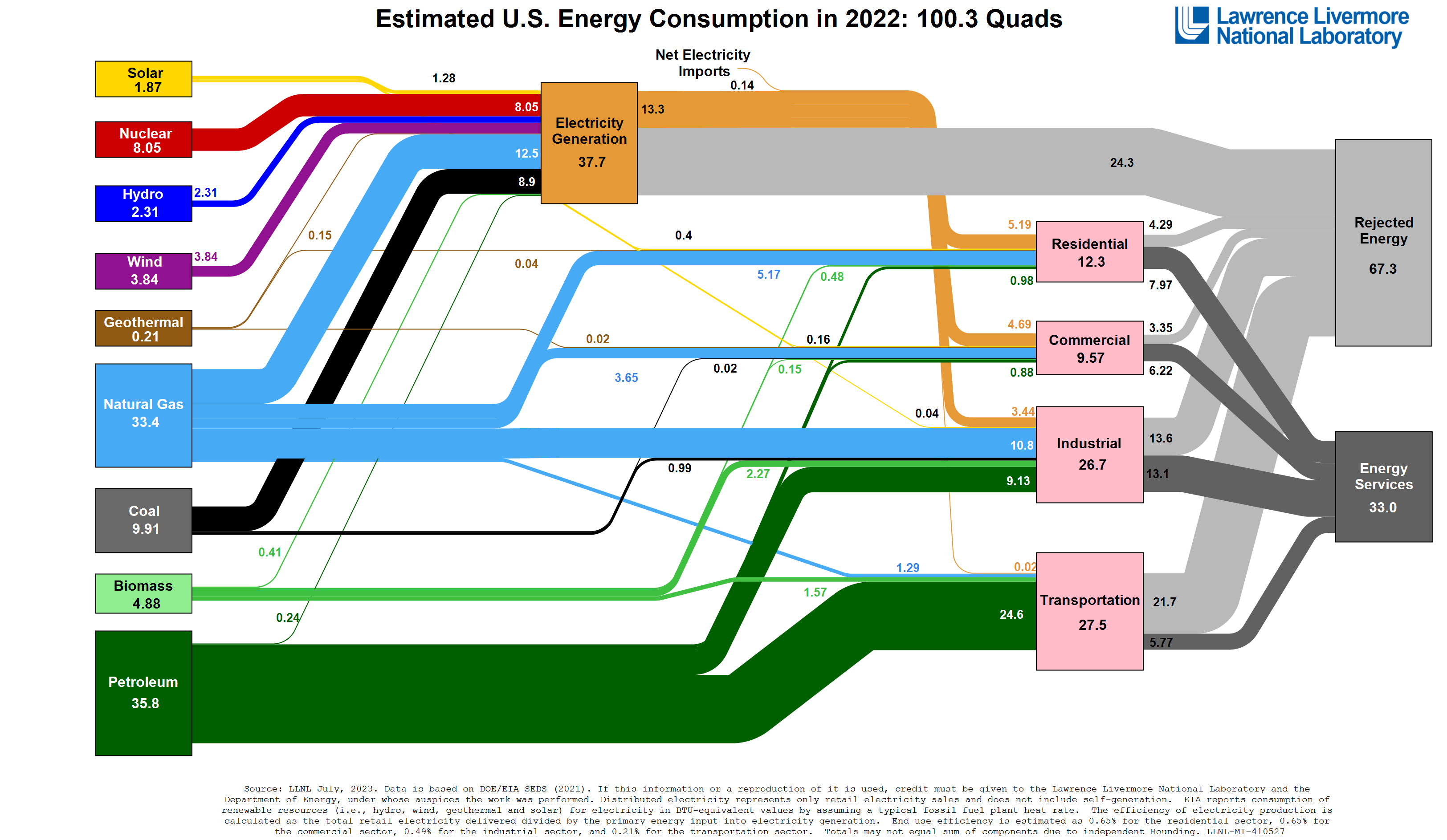
Some utilities now have programs where you can pay them extra money "to get a portion of your power from a clean energy source". This money is used effectively to buy carbon credits. So they're asking customers to subsidize them in not needing to eliminate carbon emissions.
Actually not emitting carbon is what some utilities now call "real zero". But their commitments to "real zero" are a long ways away, and they're just corporate goals & in no way binding.