In the Sri Lankan context filters are more important than ever, but I think activated carbon ones? Water is (heavily, I think!) chlorinated but pollution is pretty bad.
This sound like Ghara https://en.wikipedia.org/wiki/Ghara which is very common in rural areas in subcontinent. It keeps water cool in summer. It gives water a very nice earthy taste. Ghara is usually paired with a clay bowl to drink water.
If you can buy a clay bowl or glass, get it and keep water in it on your side and drink from. It will be cool and will have a very nice earthy flavour. But not all clay pots are same quality. Some are not very porous and won't cool the water or give you different taste.
Correct, it does not. It is to keep water cool using similar (or may be same) principle. We also now have similar water tanks with taps (we call them coolers) made of clay. They don't filter but are made with similar stuff as a ghara only shaped like a tank with a tap like those Brazillan ones in parent's link.
Yes it does. But it might be worth it if you have more water than cooling capacity, or if you have an otherwise very dry house that you'd want a little but more humidified.
Grandparents used to have this. The outer surface of the pot is detectably moist, but not by much, the water level wasnt noticeably lower by the end of the day, I'd say much less than a single cup. Their climate was very dry, crack-your-skin-dry, I don't think it would work as well in a humid environment.
Being poor sucks but at the same time being poor also makes you find alternative solutions to the incredibly expensive solutions first world countries use today. I really wish Brazil can invest heavily into renewables and free itself from oil and electrify even more of everything we do.
Homes on districts that use 127v also have a second phase for 220v, mainly for shower heads, electric ovens, etc. Commercial property always have 220v.
Hmm just shared this with someone who works in this space in India, they got angry.
> It doesn’t work for 3rd world contaminants.
> White people have been making these for years. Doesn’t work
> We need hard TDS removal also
And the ceramic ones apparently are also bad:
> we had one of these for many years while growing up. the ceramic candles got fungus on them
Viruses are the bigger threat I think and just a filter like this will not stop them HepC and the like would be easily transmittable. Not really “safe”, maybe at best “better than nothing”
She is leading some orgs in rural India, targeting empowering and helping women and has seen countless examples of Europeans / Americans coming over with noble ideas, making a mess, leaving, and sometimes things getting worse not better in response.
Took her a lot of empathy and understanding on what the situation is like on the ground really, second / third order effects, etc - to get to solutions that _actually_ help people there.
For example how do you do fair lending to people (rural Indian women) who have no bank account, no credit history, almost no financial history at all, and they want to star an enterprise? How do you “bootstrap financial trust?” And with proper and inventive organising she managed to lend to women and proved with data that they are 5x better borrowers than the equivalent male population, but were starved of accessible credit cause banks would not lend to them.
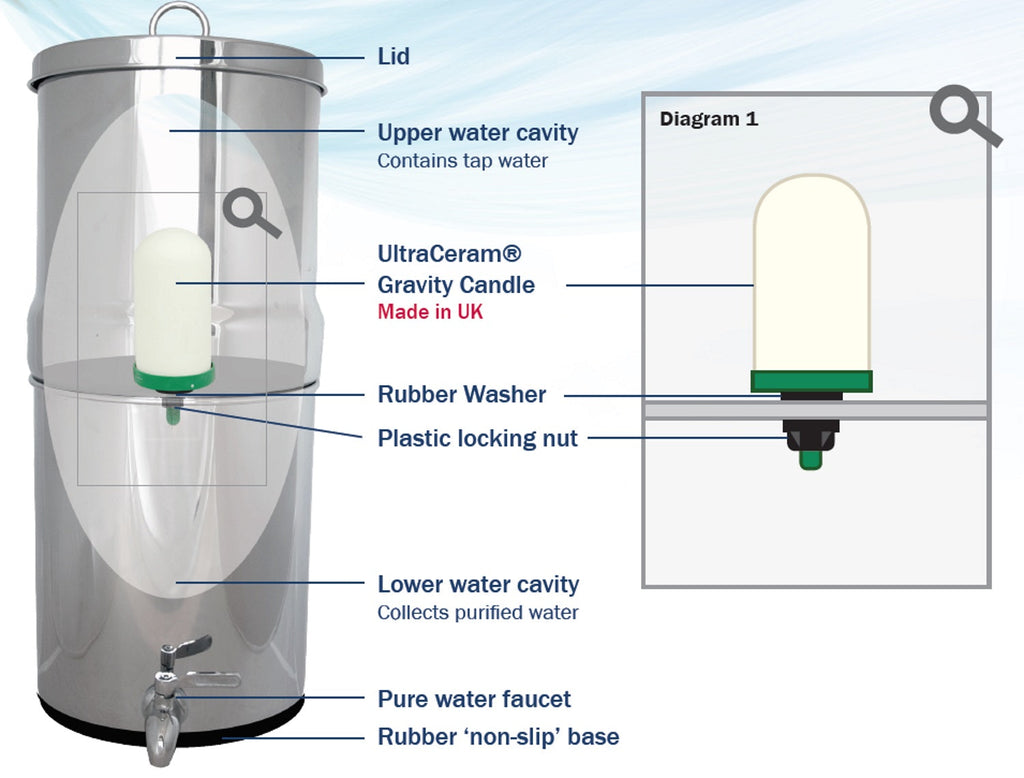
That ad claims it removes microplastics. I was led to believe there are few easy ways to accomplish such a thing. Is this a, "Well technically, we started at 100ug/mL and ended at 99.8ug/mL => reduction!" or is this a meaningful improvement in water quality? The pot looks to just be clay + charcoal + silver - which is not significantly different from other home water filtration systems.
Filtering out microplastics is not particularly difficult. I just checked the first water filter brand that came to mind, and their independent test results [0] reported no detectable microplastics after filtration [1].
Having said that, the linked website above does not inspire much confidence. They have independent lab testing, which is good. However, that testing appears to only cover bacteria; and even their, only two types. Their lab testing also does not indicate any sort of methodology, and it is not clear if the lab was even attempting to test the filter, or if they were just testing the filtered water.
[0] Funded by them, and reported on their website
[1] Their sample had a known quantity of microplastics, of which they had a 75% detection rate for their control sample.
“The pot looks to just be clay + charcoal + silver - which is not significantly different from other home water filtration systems.”
Ah, the at home water filtration systems that encapsulated in plastics! Though the benefit of clean water likely makes any potential plastic contamination from the filters moot
Are microplastic produced predominantly by plastic leaching out of objects, or is it coming from garbage that got mechanically pulverized, UVized, and contaminating water sources ?
Does the water end up including some of the colloidal silver? As it happens, there is someone living in my area who has taken colloidal silver in some fashion for ages, with the side effect of turning the skin a ghastly grey hue. I can't say how they're doing for infections and related illness, other than that they probably also have fewer in-person interactions with other people.
Well the difference is that most home water filtration systems (e.g. Brita et al) are made out of plastic, so even if their filters do reduce microplastic levels, making that claim to consumers ("our plastic filters help reduce plastic in your water") might be a hard sell.
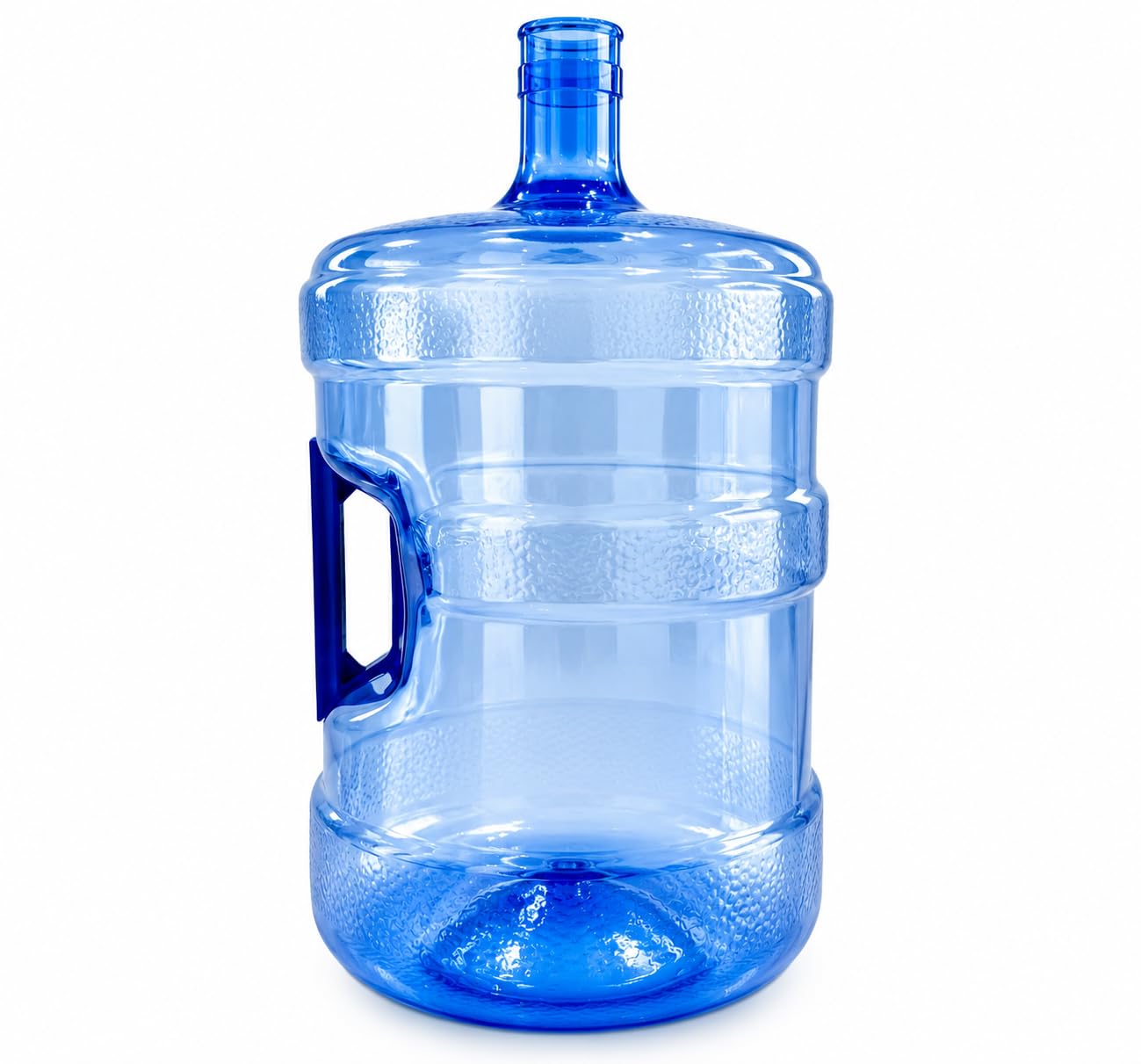
Those are plastic gallons. Plastic gallons are similar to treetalker gallons and ssl-3 gallons, in that all of these units share the property of being different compared to US gallons.
(The ssl-3 gallon is particularly strange: It isn't even a measure of volume at all.)
It's not really a unit of measurement but rather just what you'd call the container[1], which in turn is 5 gallon / 19L. But nobody says "My 19L water jug", they they just say "My water gallon".
Since most people in Indonesia get their drinking water from these jugs, stating this filter's output in "gallon" terms is just the easiest way to communicate potential savings etc (since people pay per jug, so they think in jug terms, not in any other unit of measure).
I may have had an early version of this at home in Indonesia as a kid. Given how close we were to both sea level and the equator, the fact that the water was cool, even when site power failed for days, was bliss!
I'm in Antigua, Guatemala where the embedded video is from. As the video says, it may be "low tech", but it's not like something you can do very easily for yourself. Ecofiltro is everywhere here. But, it is more expensive then I would have thought - maybe $30 for a clay pot and $50 for it's container.
I wonder if you could achieve the same effect more easily/consistently using cement. It's basically how aquifers "filter" water. Limestone is naturally permeable unlike fired clay.. were you need to control the porosity. I'd imagine cement mixtures are much easier to handle and you can make arbitrary shapes (higher surface area and higher hydraulic pressure to increase the flow rate)
Cement is not easy to make permeable. With the clay the trick is to put combustible material in the mix which gets burned off and leaves micropores behind.
61 factories in 39 countries is impressive. But I'm always curious about the real world failure rate. How many of these filters get installed and then crack, or clog, or just get used as flower pots?


https://g1.globo.com/saude/noticia/2026/03/14/filtro-de-barr...