Took just under 14 minutes to generate, and at 65927 output tokens cost me a hefty $3.30!
Excerpts from the reasoning trace:
> Adding pedal shapes near both feet, with the far foot on the second leg partially visible behind the frame. I'm considering whether to add a small scarf or cap for extra character, but leaning toward keeping it simple to avoid clutter.
> Now I'm debating a bicycle helmet on the head versus the pelican's signature crest—the beak and pouch already read clearly as "pelican," so a helmet could reinforce the bicycle theme without losing identity, though it might compete with the crest for visual space.
> I realize the beak at (484,84) would overlap with the dome helmet, so I need to shrink the helmet so it only covers the top of the head, adjusting its arc endpoints to sit higher and narrower so the beak can attach cleanly at the front without collision. [...]
> I'm adding a darker tip region to represent the primary feathers, then reconsidering the trailing edge to include scalloped feather curves instead of one smooth line for a more natural look. [...]
> Now I'm checking the vent line placements on the helmet, making sure they sit far enough inside the helmet's edge given the stroke width and rounded caps, and confirming each vent stays within the helmet's circular boundary. [...]
> I decide skipping a handlebar bell and tire highlights since they're unnecessary additions. Now I'm reconsidering the front fork's curve — the current control point pulls the shape backward when it should bow forward for a proper rake, so I need to shift the control point rightward to fix the fork's lean.
This is a notable result because most of the recent Claude models have been pretty bad at drawing pelicans, at least when compared to models in the Gemini or GLM series.
First time this benchmark impressed me - 10/10 I would believe a human spent hours making this. There are details a human would have done better (beak attaching to the head) but still impressive.
Let me know when AI patches this bug in the wheels on all the vehicles on the highway, AND my box fan when it's next to the light with the bad PWM dimming. Then we can resume our existential doom.
I find it interesting that you put the instruction ("animate this") in the system prompt, while the prompt just had the existing SVG and no actual instructions on what to do with it. Anthropic's consumer-facing tools generally don't let you do this, unless maybe you're particularly clever with Claude Code command line flags (you can start Claude Code with a custom system prompt).
Do you think this had a substantial effect on the output?
Sorry, yes, that's what I meant by being "clever with Claude Code command line flags", I guess it's not really that clever. But in general if you just launch Claude Code normally and use it via the interactive CLI, you can't change the system prompt, so most users probably never do it.
I couldn't help myself. Here is the game, one-shot on claude.ai, Opus 5 Extra. There could certainly be play-ability improvements made with 1 or 2 prompts, but neato for one-shot.
"Create a fun and cool game from this" - and pasted the code from above.
Not to be "that" person but it's not solved. The feet are reversed and isn't accurate bird anatomy. In real life, what people think of as bird's feet is actually their toes, and their "knee" is actually their tarsal (ankle bone), and their actual knee is almost hidden in their feathers.
The problem is it's kind of a question without a well defined answer. If it was just drawing a picture of a pelican, we can compare against real pelicans for accuracy. But what exactly is a pelican riding a bike supposed to look like? It's impossible, so liberties have to be taken somewhere.
I agree. Other reasoning traces simonw quoted in his blog post showed that the model made changes to consider realistic fork rake. I think this may also be the first case where the chain went inside the seat stays. The overall bike geometry is still comical but these bits show improvement in this model over prior ones.
On the other hand, given the absurdity of the original prompt, I should not necessarily expect realistic bike geometry.
how about trying to draw an airbus a320 in 3d space using only one brush tool that can be moved to specific x,y,z coordinates (and its color, size & hardness can be changed). i think fable 5.1 did quite a good job (reasoning high, cost $0,261): https://files.catbox.moe/umx102.png
Maybe you could show a side-by-side comparison of pelican images. One image doesn't really make the improvement clear for someone like me. That would be a great help.
Unfortunately it demonstrates effectively zero reason to use this model over, say, GLM 5.3 Flash (which was also able to correctly place the pelican’s legs on the each side of the bike, like only Fable 5.1 xhigh was able to do here)
@simonw Can you please share the tooling for autosaving summarized reasoning traces from Claude Code? I tried `github.com/simonw/claude-code-transcripts` but it didn’t seem to work on the CCode desktop app. Thanks!
Then it’s not a benchmark. I think his thesis is solid: if neither pelicans nor bicycles stick out, it follows that there isn’t special attention being given to them by the labs


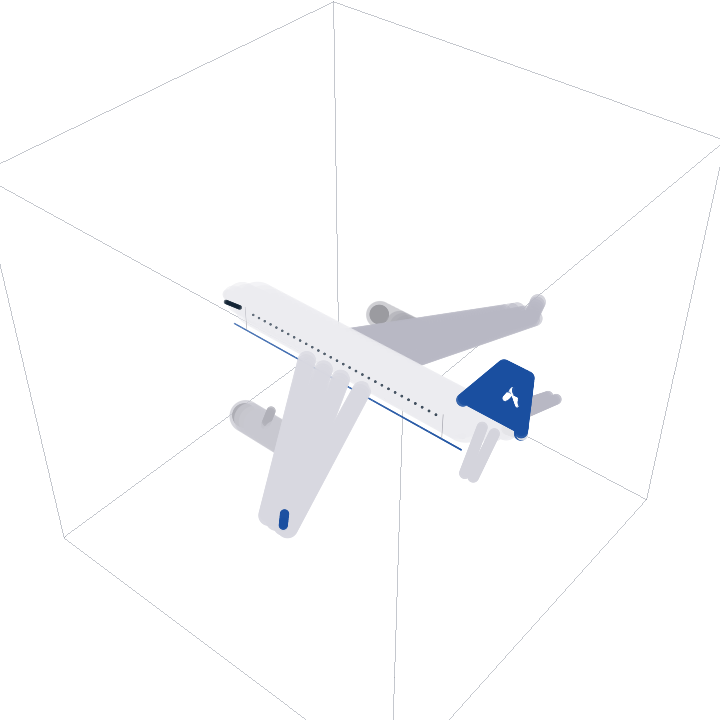
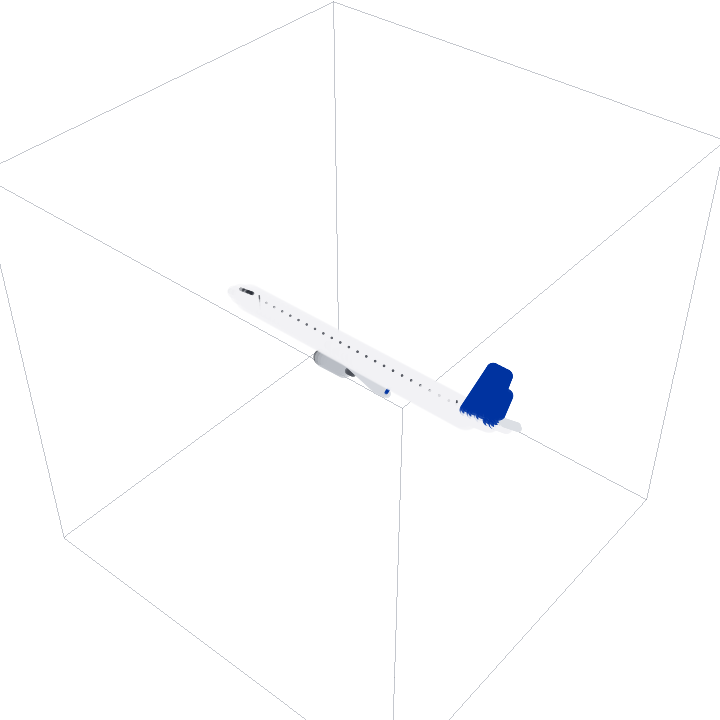


I'm still waiting for effort max to finish.
EDIT: I fixed a bug in my tooling so it now records summarized reasoning traces - here's that max pelican, which is a significant improvement: https://tools.simonwillison.net/markdown-svg-renderer#url=ht...
Took just under 14 minutes to generate, and at 65927 output tokens cost me a hefty $3.30!
Excerpts from the reasoning trace:
> Adding pedal shapes near both feet, with the far foot on the second leg partially visible behind the frame. I'm considering whether to add a small scarf or cap for extra character, but leaning toward keeping it simple to avoid clutter.
> Now I'm debating a bicycle helmet on the head versus the pelican's signature crest—the beak and pouch already read clearly as "pelican," so a helmet could reinforce the bicycle theme without losing identity, though it might compete with the crest for visual space.
> I realize the beak at (484,84) would overlap with the dome helmet, so I need to shrink the helmet so it only covers the top of the head, adjusting its arc endpoints to sit higher and narrower so the beak can attach cleanly at the front without collision. [...]
> I'm adding a darker tip region to represent the primary feathers, then reconsidering the trailing edge to include scalloped feather curves instead of one smooth line for a more natural look. [...]
> Now I'm checking the vent line placements on the helmet, making sure they sit far enough inside the helmet's edge given the stroke width and rounded caps, and confirming each vent stays within the helmet's circular boundary. [...]
> I decide skipping a handlebar bell and tire highlights since they're unnecessary additions. Now I'm reconsidering the front fork's curve — the current control point pulls the shape backward when it should bow forward for a proper rake, so I need to shift the control point rightward to fix the fork's lean.
This is a notable result because most of the recent Claude models have been pretty bad at drawing pelicans, at least when compared to models in the Gemini or GLM series.