The Amazon Picking Challenge, to do that job with a robotic arm, is underway. Finals, with live robot demos, are on May 26-28, 2015, in Seattle. That's the next step, and it's not far away. In a year or two, robots will probably be handling everything rectangular, like boxes and books. There may still be a few people around for odd sizes and shapes. Not many.
As for "there will be jobs building and repairing the robots", Amazon has about 30,000 pickers during peak season. Kiva Systems has about 600 employees. Because all those little mobile robots are interchangeable, there's not much need for on-site maintenance. There's someone on site to replace wheels and batteries and do basic diagnostics, but seriously broken ones are just shipped back to the factory.
The Kiva system requires little installation, which is why it's being deployed so fast. Previous systems required conveyors, stacker cranes running on tracks, and lots of specialized, custom machinery. Kiva just needs a flat floor, markers on the floor, and WiFi.
Here's what US employment looks like, by sector: http://www.bls.gov/emp/ep_table_201.htm
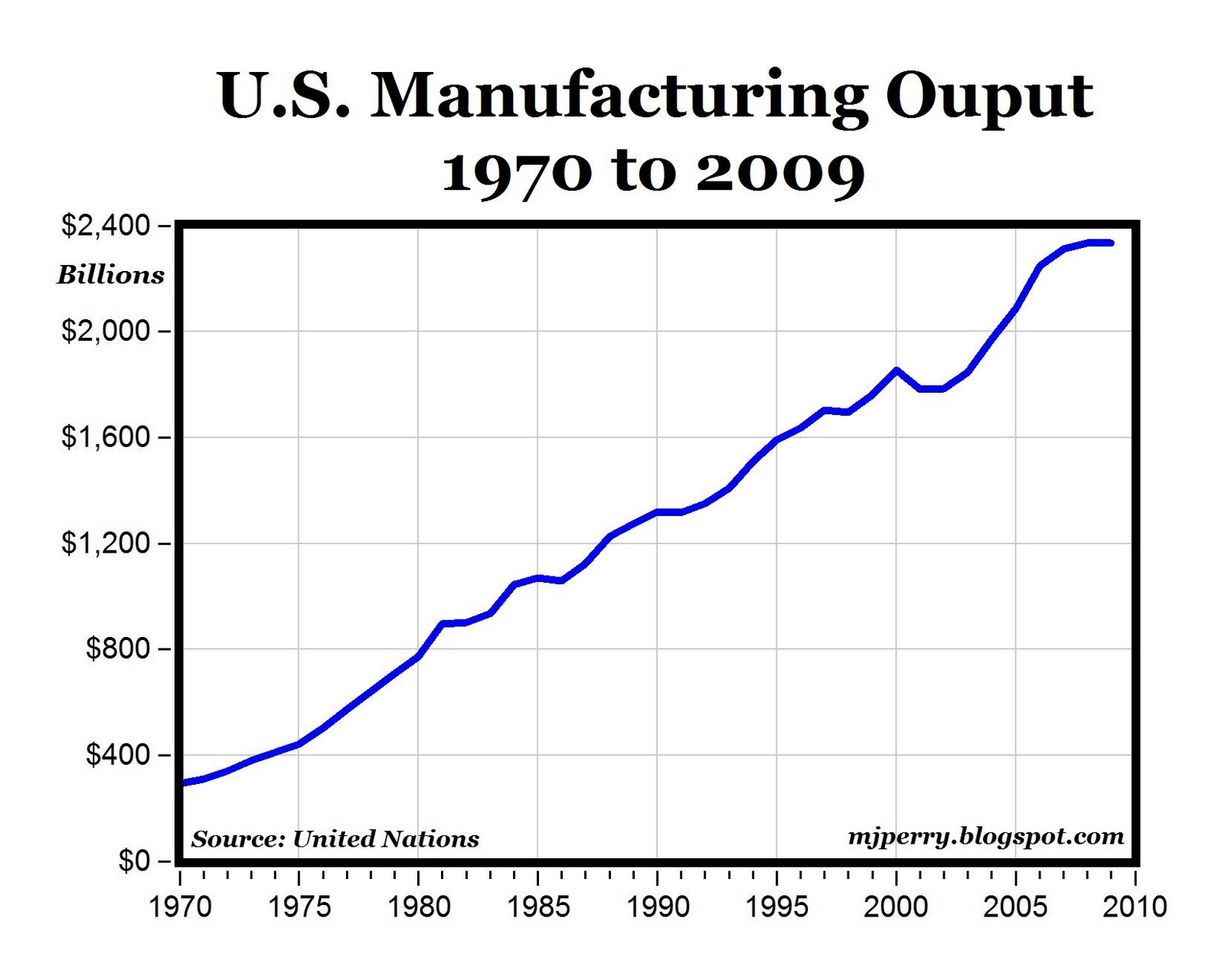
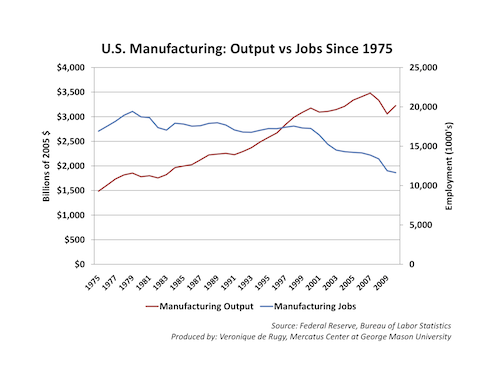
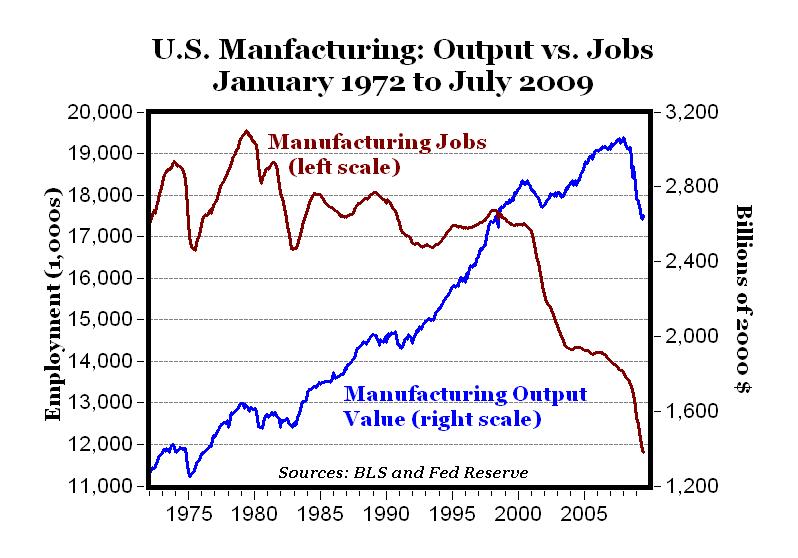
Manufacturing is only 8% of the labor force, yet the US makes more stuff than ever. US
manufacturing is doing great. The drop in output after 2008 has been completely recovered. Manufacturing just doesn't need many people. The jobs lost never came back.
In 2012, retail employed 10% of the US labor force. Remember malls? (See deadmalls.com) No new indoor mall has been built in the US in 10 years. (OK, American Dream Meadowlands in New Jersey is still under construction, after 12 years, three bankruptcies, and a roof collapse, but that's a political boondoggle, part of a stadium complex.) Online ordering doesn't need many people. The Bureau of Labor Statistics estimates show a small decline over the next 10 years, but those numbers predate Amazon's recent growth and are probably optimistic. The BLS shows employment growth in transportation and warehousing. Probably not going to happen.
I agree with your overall point. Just want to correct one thing.
It's true that we haven't been building indoor malls. That's not because of online ordering. We're still building malls. But now they are outdoors and called "lifestyle centers."
The difference between them and a strip mall is mostly connotation. Lifestyle centers tend to target upscale retailers and feature better landscaping (some grass and benches between the store and the parking lot). Many stores that used to open in malls are flocking to lifestyle centers because indoor malls are going out of fashion. And unlike malls, lifestyle centers don't have large common areas to keep up, so the rent is cheaper.
2 large lifestyle centers are being built in my town (Northern NJ, the land of malls). And we already have a large lifestyle center and an indoor mall nearby.
E-commerce certainly took business away from brick and mortar stores. But those stores reacted by changing their offerings. They aren't totally suffering, as shown by these articles:
> No new indoor mall has been built in the US in 10 years.
This does not imply that malls are dying. Existing malls may be expanding, e.g. the largest in NY started another round of expansion in 2007 and shops are still opening up in the new space: http://en.wikipedia.org/wiki/Destiny_USA
Online ordering is never going to put clothes & accessories or fragrance shops out of business, until you have very high resolution displays and tactile output, or figure out one-hour-or-less drone delivery for free.
In the aforementioned mall a large proportion of the shops are exactly this type, along with restaurants and entertainment (video games, bowling and the like). It's hard to deny that the expansion of online ordering has forced malls to adapt or die, but it's simply incorrect to pronounce the death of the concept.
>Manufacturing is only 8% of the labor force, yet the US makes more stuff than ever. US manufacturing is doing great. The drop in output after 2008 has been completely recovered. Manufacturing just doesn't need many people. The jobs lost never came back.
The US doesn't make more stuff than ever as can be verified by:
* Taking one look at the gaping US trade deficit.
* Taking a look at all of the manufactured items in your home. How many say made in America?
I'm not even sure what you're claiming as a problem with the IP index here; it measures actual production, while there are entirely separate indices for Capacity (and Capacity Utilization). See http://www.federalreserve.gov/releases/g17/CapNotes.htm
* Transfer pricing
Again:
> (1) output measured in physical units
The people who put these indices together are, surprisingly enough, professionals who have thought about these issues.



As for "there will be jobs building and repairing the robots", Amazon has about 30,000 pickers during peak season. Kiva Systems has about 600 employees. Because all those little mobile robots are interchangeable, there's not much need for on-site maintenance. There's someone on site to replace wheels and batteries and do basic diagnostics, but seriously broken ones are just shipped back to the factory.
The Kiva system requires little installation, which is why it's being deployed so fast. Previous systems required conveyors, stacker cranes running on tracks, and lots of specialized, custom machinery. Kiva just needs a flat floor, markers on the floor, and WiFi.
Here's what US employment looks like, by sector: http://www.bls.gov/emp/ep_table_201.htm Manufacturing is only 8% of the labor force, yet the US makes more stuff than ever. US manufacturing is doing great. The drop in output after 2008 has been completely recovered. Manufacturing just doesn't need many people. The jobs lost never came back.
In 2012, retail employed 10% of the US labor force. Remember malls? (See deadmalls.com) No new indoor mall has been built in the US in 10 years. (OK, American Dream Meadowlands in New Jersey is still under construction, after 12 years, three bankruptcies, and a roof collapse, but that's a political boondoggle, part of a stadium complex.) Online ordering doesn't need many people. The Bureau of Labor Statistics estimates show a small decline over the next 10 years, but those numbers predate Amazon's recent growth and are probably optimistic. The BLS shows employment growth in transportation and warehousing. Probably not going to happen.
This is the future, and the future is now.