I know that its hard for someone to understand who doesn't work with farm chemicals on a regular basis but Roundup is on the low side in terms of toxicity.
Here's a copy of a Material Safety Data Sheet that all those who handle herbicides need to maintain for employee access:
Almost anything is toxic, even salt, if the dose is high enough. The question that must be answered is if there is a realistic chance that people in contact with the herbicide can receive a high enough dose to raise the chance of cancer. Or that the average person either living in the country or consuming the food has an increased risk.
It's becoming increasingly common for states to take blood tests at the beginning and ending of the season of commercial pesticide applicators to monitor them.
If anyone was to have an increased level of ill health this group, because of the sheer volume of material that they handle, would be the first to show it.
We are not talking about toxicity, but about carcinogen products. Very different.
Carbon monoxide is toxic. If I breath it while walking a previously fired forest, I feel bad today. If I breath too much I die. But if I get out alive tomorrow my body will be fine.
Carcinogen work in totally different ways. If I contact or breath it I will feel fine today but I will have created damage to some of my cells DNA. This damage will create other damages when 5 years from no my cells transcribe some genes in a chain reaction, or will accumulate errors over time.
Five years from now one of the damaged cells will start replicating itself without control, and I will get cancer.
We get cancer by indirect ways, and delayed in time, on people that are not isolated so it is hard to get the cause effect relationship.
I worked in a Hospital for some time. On oncology got people that smoke 3-4 cigarettes packages a day that got pulmonary cancer, but they were seriously convinced that smoking had nothing to do with it.
It took decades to establish a relationship between smoking and cancer, and that was with half of the population smoking. With smaller populations it becomes harder and harder.
Most people cook with oil at too high a temperature, causing it to smoke and develop carcinogenic compounds, regularly, over decades. There are many examples of this in our lives (ultravilot sunlight, cosmic radiation on intercontinental flights, radon rich basement bedrooms, etc), the point being that carcinogens and cancer are more complex than you suggest. Yes smoking 4 packs of cigarettes a day for decades increases one's risk for cancer, but so does just living to an old age as a non-smoker.
I remember reading a study of cadavers that found everyone has microscopic cancers throughout their bodies, throughout their lives. It seems there's a dance between evironments that drive the proliferation of micro-cancers and our body's ability to repair this damage.
To make things even more complex, with ultra-violet for sure but possibly involving other forms of radiation as well, it is possible that small amounts of exposure actually produce a preventative effect in regards to cancer. With UV, that mechanism is the production of vitamin D in the body, a lack of which causes a wide variety of health issues and may have a link to the development of cancer.
This panel by the Mars Society actually had a very interesting discussion of this area of human health that deserves much more study. https://youtu.be/sFHQlobJbwY
There is evidence for and debate surrouding hormesis, a positive biological response to a little bit of something deadly at higher doses e.g. low-dose radiation. [1] [2]
>With UV, that mechanism is the production of vitamin D in the body, a lack of which causes a wide variety of health issues and may have a link to the development of cancer.
I imagine that vitamin D production and DNA damage are separate events. Presumably, both can occur at the same time.
So would someone who took vitamin D supplements but didn't get sun exposure be slightly less likely to develop cancer than someone who got just enough sunlight for their body to produce enough vitamin D?
If that's the case, it's not really a general rule that small exposures to carcinogens prevent cancer.
I've just recently seen work that's exploring vitamin D suplimation vs. sunlight derived vitamin D and they're finding the sunlight provides more benefit than no sunlight exposure and Vitamin D suplimation.
I can't edit my post above, but here is the International Agency for Research on Cancer list of "known" carcinogens (group 1, including "solar radiation") and "probable" carcinogens (group 2A, including glyphosate).
Difficult to test. What if some workers are chronicly sleep deprived and that contribution was the tipping point for some of them, but not all sleep deprived workers? What if some workers are chronicly anxious, causing sustained elevated stress hormones that combined with other factors put them over the tipping point? So many possible confounding variables
Er, why? The choice isn't between sunlight and no glyphosphate and glyphosphate and no sunshine, so there is no real reason to compare them except to make irrelevant propaganda points.
> Almost anything is toxic, even salt, if the dose is high enough.
That is tremendously misleading. You body needs salt to function. Your body does not need, and has no use for glyphosate. There is no beneficial dose. If it's harmful, an incredibly minute amount can be materially harmful.
Moreover there are at least two ways to get a significant number of people developing diagnosed cancers from chemical exposure: A small population (ag workers) and a large dose, or a small dose and a large population - the rest of us.
Whats your point? That the WHO are scare-mongering? That Monsanto shouldn't be held accountable for knowingly marketing a poisonous, carcinogenic substance and profiting from it in the billions?
The acetaminophen in Tylenol ( a common over the counter pain and fever medication used by millions of children and adults every day ) is carcinogenic and hepatotoxic.
" There are, however, published data giving clear evidence that paracetamol causes chromosomal damage in vitro in mammalian cells at high concentrations and indicating that similar effects occur in vivo at high dosages. Available data point to three possible mechanisms of paracetamol-induced genotoxicity: (1) inhibition of ribonucleotide reductase; (2) increase in cytosolic and intranuclear Ca2+ levels; (3) DNA damage caused by NAPQI after glutathione depletion. "
"Paracetamol induced sister chromatid exchange in human cells in vivo, and it was aneugenic and induced chromosomal aberrations but not micronuclei in mammalian cells in vivo. It induced DNA single-strand breaks in mice treated in vivo. Paracetamol induced sister chromatid exchange and chromosomal aberrations in human cells in vitro. It weakly induced cell transformation in a mouse cell line. It induced chromosomal aberrations, micronuclei and sister chromatid exchange in mammalian cells in vitro. It did not induce gene mutation, and the results of tests in mammalian cells in vitro for unscheduled DNA synthesis and DNA damage were inconclusive. Overall, paracetamol was genotoxic in mammalian cells in vivo and in vitro. It was not mutagenic to insects but was clastogenic in plant cells."
And here is an entry from the NIH TOXNET database about liver and bladder cancers induced by tylenol.
This is such a stupid, misleading and criminal way to put things up. The world is toxic. You can die by crossing the path of a car. You can die by drowning. You can die by ingesting meat until you choke.
But why would you do that? There is a name to it. It's called suicide.
Accepting to use and eat toxic products when other possibilities exist is a form of suicide - even if it's collective.
Not a very good example. There's a pretty good argument Tylenol is too dangerous to be an OTC drug. There are no Tylenol cancer cases because they all died of liver failure.
Oh, well then, no need to worry about this at all .. everything is toxic in the right numbers, so there's no wrong-doing here in the slightest and we shouldn't stop big companies from polluting the planet, because .. after all .. its already all polluted.
This was obviously not the stated position, and you are being deliberately disingenuous by portraying it as such.
"It's the dose that makes the poison" - that's a fairly accurate statement. Every industry uses chemicals that are potentially harmful, and we accept that as a trade-off for the benefits they offer.
The same applies to RoundUp. Is the benefit it offers to agriculture worth the risk? Can exposure be controlled in such a way that the risk is ameliorated? There's a cost-benefit analysis to be performed there.
Point is, stating that RoundUp is possibly carcinogenic is useful information – but it doesn't mean its better to immediately stop use of it. It also doesn't mean that Monsanto "knowingly market[ed] a poisonous, carcinogenic substance", as you stated. It does mean that use of the substance may potentially need to be re-evaluated, but preposterous jumping to conclusion of the sort you exhibited is what's killing political debate worldwide.
I'm not sure that was the point. The word "carcinogenic" has lost some of its impact when we learned over time that nearly everything is carcinogenic. We need to know a degree and likelihood and manner of action to really know what that means. You can be cynical about big companies, but this sort of health research is full of inaccuracies as well.
Exactly. Especially since it's apples and oranges.
Water is not optional. Without it you die. Roundup is optional. Without it the world can still grow crops (we SOMEHOW have for thousands of generations). Dumping many many tons off chemicals designed to kill (however small the organism) all over our food and planet, let alone planting homogeneous, patented, and GM'd "basic" plants, is a recipe that likely isn't good for the planet over time.
>Without it the world can still grow crops (we SOMEHOW have for thousands of generations).
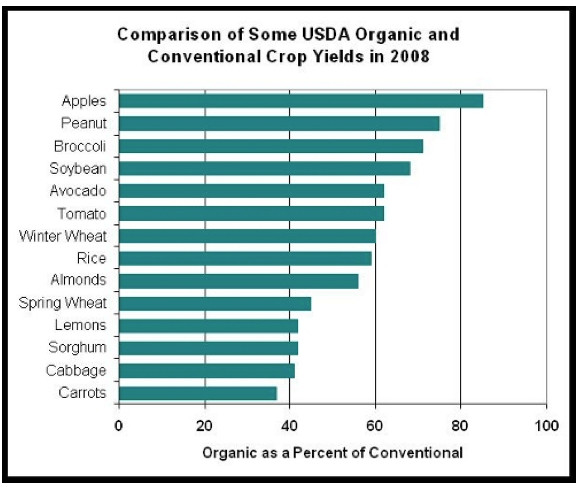
Historical yields were tiny compared to what we get from contemporary farms. I don't know if we need Roundup in particular, but if we went back to traditional farming methods half the world would starve.
Actually there is no evidence of this, a good proportion of of the food produced is actually used to feed animals which is the most inefficient way to produce food.
Just by eating less meat (which makes sense because we are not supposed to eat so much meat), suddenly we don't need to product so much. The actual price of the food is so low currently that what you pay in a supermarket is mostly the externalities. Switching to cleaner methods would not lead to starvation providing that we would eat differently.
Most americans would happily choose cancer over vegetarianism. That part isn't Monsanto's fault. Source: I am a vegetarian who talks to omnivores and near-carnivores.
Yeah, that's the main problem I guess, the system is providing people what they want but not what they need. It works like any other market, the consumers want cheap meat so the industry is providing cheap meat. The whole industry is then shaped to solve the wrong problem. They don't even need to fully switch to vegetarianism for it to work but they need to understand that eating meat once in a while is healthier and more reasonable than having a diet based on eating meat every day.
More like "just because it's done by someone you don't like, doesn't mean it's wrong". Blame Monsanto for the evil things they do (there's plenty), but not everything else.
Your argument is almost literally "Stalin believed 2+2=4, therefore 2+2 is 5".
I'm trying to provide a background because I have twenty plus years in the fertilizer business. I'm old enough that I remember when it was introduced.
I don't know WHO's agenda but I've seen enough cycles on both pesticides and GMO's when someone makes a provocative statement based on early research and are usually proven wrong.
That "usually proven wrong" argument works both sides. The point is this: there is evidence that glyphosates' are carcinogenic, and the WHO - whose job it is to report these things - is reporting it, based on a scientific and impartial process.
What's your point in attempting to refute this position, from the perspective of PR of Monsanto - who has a history of covering up its failed science in order to reap profits - with anecdotes and "good ol' boy farmer"-style arguments?
The ad-hominem attacks aren't necessary. I think this boils down to:
- has Monsanto been knowingly misleading about the toxicity of their products? If not, then this is a non-story.
- is this any worse than anything already sprayed on our food (or is it actually less toxic than the cocktail of herbicides used before Roundup?)
If you knew half the things sprayed on your crops you'd be appalled - but there are 7 billion people to feed and at least 300m of them expect their food to be exceedingly inexpensive (and look to the FDA to help define just how much toxic crap they can stomach before the trade-off is no longer worth it).
Side question. If I wanted to explain with studies to someone that GMO hate is unfounded, do you have a recommendation on a place to gather facts or recent studies on it?
I wrote a blog post defending GMOs awhile back, with examples of non-Monsanto GMOs that have saved papayas in Hawaii, promise to deliver food to Africa, and improve nutrition. The thing many people don't realize is that all food is GMO. There are no such things as tomatoes, peaches, apples, or corn in nature. These are all products of just a few thousand years of selective breeding. With GMOs, we are also constantly performing a massive ongoing experiment involving over 100 billion livestock animals, and livestock farmers have seen no deleterious effects in the health of their products:
That's misleading definition of GMO. Genetically Modified Organisms is not the same as Gene Modified organisms. Gene modified organisms are made through selective breeding. Genetically Modified Organisms are made by splicing genes from other creatures.
The former means application of genetics, while second implies selective breeding.
I've honestly got nothing against GMO, and I know that GMO carries a stigma, but honestly, so do vaccines. I've got loads of problem with Monsanto, their business practices and Round-up but not too many problems with GMO as GMO.
Not necessarily other creatures, GMO technology is often used by selecting genes from same species.
The so-called "traditional" method of crop development, on the other hand, takes genes not just from other creatures but from totally random mutations, often induced by carcinogens and radiation, and then selected.
With GMOs we know much more about what has happened to the genome of the species.
By creatures I mean anything living. Bacteria, plant, animal, etc.
I think even regular GMO technology probably still is affected by radiation (cosmic radiation and sun) and breeding - I doubt every single grain of corn is genetically manufactured once you can just let it naturally breed.
Not to mention radiation is a great and cheap way to rid of some pests really fast, but tell that to any organic food lover and they'll get defensive.
There was a Forbes article[1] last year that linked to a number of studies. If you're looking for a less "journalistic" take and want to poke around with the data/studies yourself check out GENERA[2] (a database of peer reviewed GMO studies).
Well, why not? There are first to know the good arguments for their solutions. You can start there and then go look for independent analysis and verification of the claims.
While we're at it, let's have BP teach us all why their oil spills and dumping of even more toxic chemicals into the ocean to cover those spills up are really no big deal.
What people are generally discussing is whether or not Monsanto is poisoning humans, and meta-issues like whether or not the article does a good job of helping us understand whether or not Monsanto is poisoning humans.
Although some (currently-absent) HN commenters probably feel otherwise, I don't see a single comment in this thread trying to downplay culpability (although not that many people are playing it up, either). And you're the only one talking about poisoning the earth (which is definitely an important subject, but not really relevant to the linked article, which is about the impact on human health). So why are YOU trying to change the topic?
(Note, btw, that all of your comments in this thread-subtree have all been downvoted to hell. It appears to me that these same comments are sarcastic and nasty, and very poorly argued. On the other hand, your comment that begins with "The reason this is important to discuss is that..." is mostly pretty reasonable, and hasn't been smashed by downvotes. I think that's not a coincidence.)
> (Note, btw, that all of your comments in this thread-subtree have all been downvoted to hell. It appears to me that these same comments are sarcastic and nasty, and very poorly argued. On the other hand, your comment that begins with "The reason this is important to discuss is that..." is mostly pretty reasonable, and hasn't been smashed by downvotes. I think that's not a coincidence.)
Indeed. I disagree with fit2rule all around the comment threads for this article and I upvoted that one - because it's reasonable and thoughtful.
I was calling into question the veracity by which some were willing to defend Monsanto, no matter the cost. I agree that the tone of responses can be moderated higher, but I also think that the reaction of the pro-Monsanto crowd has its own insidious nature, which must be dealt with - its a company well known for its own online PR tricks and campaigns, in an effort to manage its image. And it is not without its evil side, as a corporation.
So I'll consider your feedback for the next time we have to discuss Monsanto's efforts to control the worlds food.
In general I don't think Monsanto has a very strong support group here - most of the discussions about that company I read here was pointing out various evil things they're doing. I myself I'm not a fan of the company - but I believe in what I call 'high-resolution discourse' - i.e. focusing precisely on the actual problem. In case of Monsanto, most of the problems with them is about their business practices, not about the GMO technology - so it's fair to blame them for acting like assholes, but it's not fair to automatically assume the tech is bad (or to extend it to the entire field, e.g. "GMOs are bad because Monsanto is evil").
If the hypothetical pro- and anti-Monsanto crowd is willing to engage in a constructive, high-resolution discourse then I think it's only for the better - everyone can learn something new from it.
From the actual study, rather than speculation and red-herrings: "One study in community residents reported increases in blood markers of chromosomal damage (micronuclei) after glyphosate formulations were sprayed nearby." [1]
And who has written this data sheet? This data sheet is based on whose data?
Look back a few decades on the data sheets of Asbestos or Thalidomide. Or at the research about how smoking is safe.
I believe a WHO panel of independent researchers more than your sponsored data sheet.



Here's a copy of a Material Safety Data Sheet that all those who handle herbicides need to maintain for employee access:
http://greenhouse.ucdavis.edu/pest/pmsds/Roundup.PDF
Almost anything is toxic, even salt, if the dose is high enough. The question that must be answered is if there is a realistic chance that people in contact with the herbicide can receive a high enough dose to raise the chance of cancer. Or that the average person either living in the country or consuming the food has an increased risk.
It's becoming increasingly common for states to take blood tests at the beginning and ending of the season of commercial pesticide applicators to monitor them.
If anyone was to have an increased level of ill health this group, because of the sheer volume of material that they handle, would be the first to show it.