The OP claims to be an entrepreneur . And then I read this in the blog:
I had such a long waiting period, that all my energy and momentum was drained. A man with no face, trapped, with no freedom to move or express, waiting for a (seemingly at the time) life-scale type of decision to be made for him.
Really? As an entrepreneur, one shouldn't be so disheartened by the outcome of a process that is totally outside your control. Entrepreneurship is about taking risks, suffering setbacks, and getting up quickly after these setbacks. Not getting a visa isn't something I would consider a huge setback; in this day and age, it is possible to start Internet-based companies almost anywhere. And Europe isn't some backwaters area.
I don't want to sound mean, but to the OP: getting your visa denied isn't a big deal. Just start your company there, and when it becomes big, open an office in the US and stroll in like a boss.
While internet means international network, the internet industry isn't really international. The sooner one realizes that the sooner he/she can get in the right path to success.
While there are always exceptions that prove the rule, there is the rule. And the rule says that the internet industry lies in the SF Bay area.
Examine it under any metric you wish, quantitative or qualitative and you will end up in the same conclusion.
That's rubbish, and if you think that is true then you have been watching The Social Network movie a few too many times and brainwashed by Hollywood.
And the way the USA is acting right now trying to pass draconian laws and police the internet for everyone, every sane company will/should be moving their operations to a progressive thinking nation.
I also don't understand why you are so upset. Just because someone else got the visa is no guarantee you would. You know that saying, "don't count your chickens before they've hatched"...
I have entrepreneurial friends in Sweden. Sweden is very progressive in terms of adopting technologies and you have a very strong set of techies and designers to boot. See Spotify, Klarna, etc.
What's the major drawback? Taxes. So, start your company in Sweden, progress it slowly, and then move it somewhere else (SF for example) if you really want to expand quickly.
With all other things being equal I wouldn't recommend Stockholm as a startup city. While taxes are high, the big issues are cost of living and quality of life. Berlin seems like a better choice and there are a number of swedish (founded) startups there like soundcloud, readmill and researchgate.
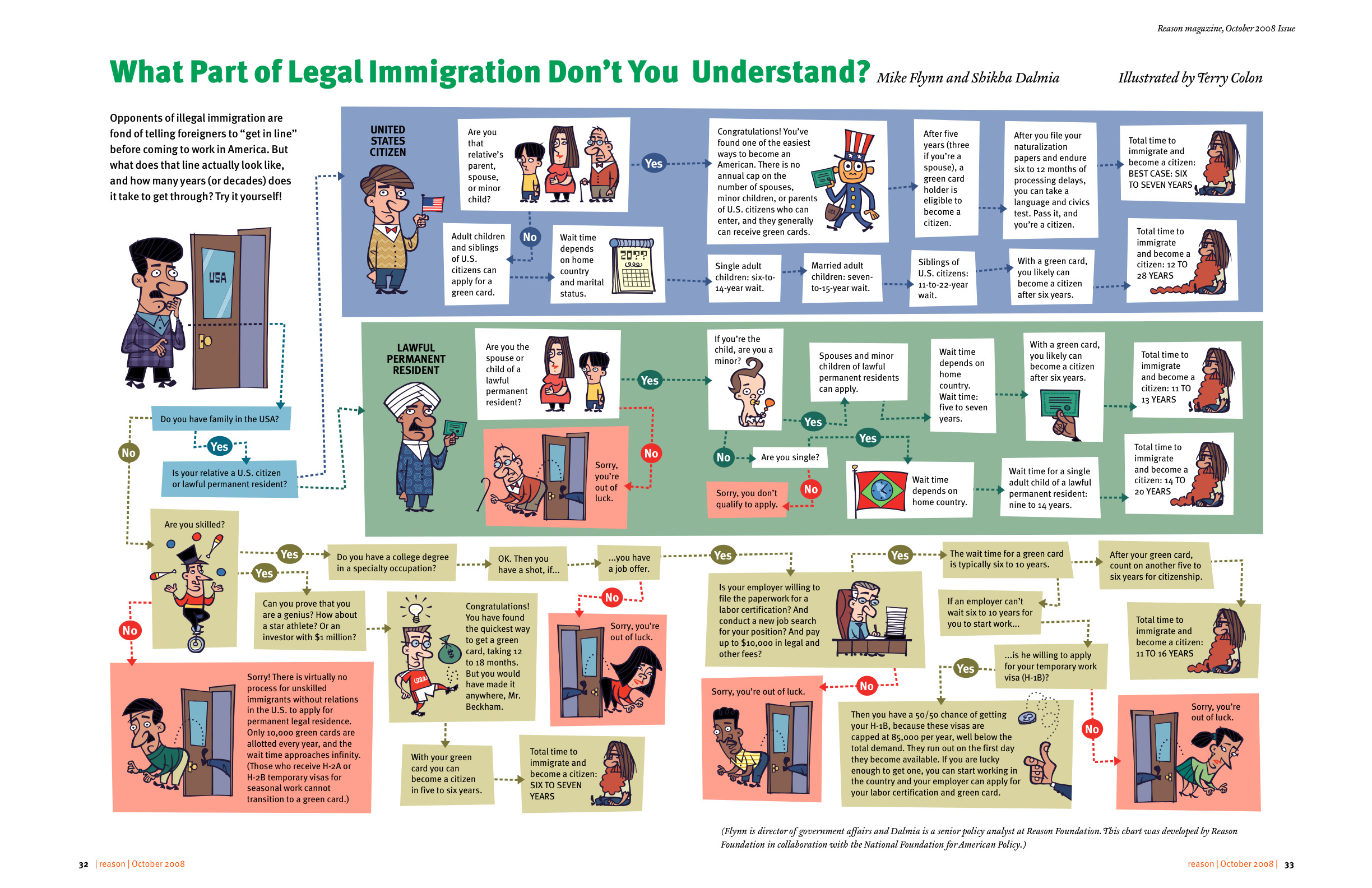
This is crazy. IMHO, The main draw back is that you can only go thru one lane. Either family, skills or money. Canada has a system that allows you accumulate points in several categories. It is in the best interest of the US to have a system that works.
There's a lot of complexity and nuance around why the US immigration laws are the way they are. There are a lot of people that want to get into the US. A lot. I cannot emphasize that enough. The process has a lot of issues, but you have to understand why it got that way. The US's goal is to ensure that anybody who garners entry to live and work in the US is a contributing member of society. The three ways it does that is that (a) you have family here that are presumably productive members of society, (b) you have a set of skills that makes you a valuable asset to the US, or (c) you have a ton of money and can create jobs in the US. If you have only some money and average skills, you're not nearly as valuable as if you have either (b) or (c). Since the US has an incredible number of applicants, it only selects the best they can.
You wouldn't find it insane if colleges or employers made the same decisions. The decision of his visa isn't made in a vacuum--it's made with regard to everybody else who applied for visas, too. And that's a lot of people.
The three ways it does that is that ... (b) you have a set of skills that makes you a valuable asset to the US ... You wouldn't find it insane if colleges or employers made the same decisions.
The problem is that there's a major disconnect with what the comfortable middle and upper-class people who make decisions about the immigration system think of as a "valuable asset to society" and the actual economic incentives for most people who want to immigrate to the United States. To use your corporate analogy, it's as if the hiring committee of a major corporation decided that there were so many applicants for jobs that everyone the company would hire should have the same skills and credentials that the people on the hiring committee have -- master's degrees and continuing education credits -- even though what the company needs to hire is janitors and security guards.
You don't think that people who come here illegally (or, best case scenario, who come here under agricultural visas that give them temporary residence and no stake in the country) to work in the fields or construction are contributing anything? Well, enjoy it when your food doubles in price, then. Or, more likely, enjoy your food staying the same price but the people who grew it don't have any labor protection laws or real roots in this country.
My point is not that we should just open the borders willy-nilly. But we need to have some kind of process for people who want to live here that doesn't result in decades of limbo, and doesn't cost tens of thousands of dollars to someone who's going to take up a minimum-wage agricultural job. And the process should help them become Americans. You know, like the process did for most of this country's history up until the 1930s or. That process did all right, as near as I can tell.
To clarify, I was stating the reasons the immigration policy in the US is the way it is. It's not insane. That doesn't mean it's devoid of unintended consequences, inefficiencies, and issues, though. Immigration is a very hard problem to solve for, especially given the heated emotional discourse about it on a political stage.
The process up until the 1930s didn't do all right--you're being naive in your nostalgia. It created an entire underclass, gave rise to ghettos, and forced people to give up their names in order to take more anglicized names. Moreover, there was a huge strain on infrastructure with the influx of poor Southeastern Europeans immigrating (mixed in with an incredible dose of racism and xenophobia). Wikipedia has a good summary of the laws and why they were passed [1].
There are a lot of problems with the immigration policy, and there are a lot of reasons that it's the way it is. My point is that this particular case of a guy being denied a visa could hardly be thought of as insane. Unfortunate for him, yes. Insane, no.
You do realise just how visceral the feelings are over "dirty foreigners taking our jobs"? This applies from very unskilled work right through high skilled engineers. Explaining to an unemployed American that it is okay to let another person into the country really isn't popular politically.
Going back decades, centuries or millennia, every American is an immigrant. It would just appear that it was good for you (in general), but not the newcomers.
Also not shown in the chart is just how second class green card holders are. You get a lot less due process for things. Also it expires after 10 years and you have to renew. Your renewal can be denied, they don't have to tell you why and you have no right of appeal.
Disclaimer: I am one of those dirty foreigners taking your jobs.
I think there are two factors causing friction for the US. The first one is complete dysfunction with housing. Expensive houses are a really bad thing. Having huge amounts of money in housing is a bad thing. This does not lead to prosperity, other than some random people winning a lottery ocassionally. It also makes it considerably harder for people to move which then makes it harder for labour to adjust to supply and demand of jobs. We'd all be far better off if houses were a dollar each. (Also fix the school system - tying it to your house is bizarre.)
On the business side there is a heck of a lot of uncertainty. How often will you be sued (intellectual "property", environmental, who knows what else)? How will your competitors screw you over other than good old fashioned competition? (Think regulatory capture and lobbying.) And what about employee overhead, especially medical costs, social security/retirement, hiring and firing etc?
I'd never heard of Stanhope before - been watching his youtube videos which are very entertaining - thanks!
Ok, I know you have your reasons but why the US ? Why don't you start your startup in your own country or in another European country ? Any good reason for not staying there ?
As an european I sadly see everyone from this side of the world trying desperately be part of the new startup gold rush in the US. Fund startup, get VC money, sell it, ???, profit.
Not very long time ago, I was like you too. I wanted so much to move to SF and build my startup or be part of one. But now, I don't care. Why ?
1 - I can incorporate my company in Delaware right from my living room.
2 - I can have hire good professionals from around the world to work with me (looking at 37signals as a role model)
3 - And quite frankly, the position of the US regarding european citizens that want to live and work in the US is too restrictive and amazingly elitist. Not even Mordor is that hard travel to.
I just wished other countries had the same mesures/restrictions as they do for US citizens that want to live and work abroad.
Europe (although lots of americans couldn't even put it on the map) isn't made of third world countries.
4 - Also, lots of good startups are operating in this side of the world.
So, why are you giving the US all the credits for your work ? If they don't want you, screw it. It's not the end of the world, and your can pretty much do the same thing here as you would over there.
As a developer and founder of a new born company, I feel like we need to show the world that europe is a good place to fund a startup, we might not have the YC or other popular investors, but if more and more startups got created here, maybe they would start looking for us.
Upvoted but I'm not so sure about your number 1. I always thought that you need to have a US bank account (hence US citizenship) to incorporate the company in Delaware. How would you achieve that as a non-US citizen?
You don't have to have a US bank account, it's not a requirement. It's always a plus to have one, specially if you want to use US payment gateways, but that's it.
Are there surveys of what are the most startup-friendly non-US countries?
I suppose that the things that matters are mostly monetary and boil down to "how much money do I need to pony up in the beginning stages?". On the other hand, if I had to move, I'd move only to a country where I know that I will not refused medical care for any reason and it is unlikely that I can end up in jail or being detained for wearing the wrong t-shirt. Oz?
PS: the website has a .com domain. Ah, irony of being refused a visa from the US while still being somehow under their legal reach.
Except maybe for funding, I don't get the obsession with wanting to base a startup in the US. If you have a good business model and great marketing skills, you should be able to create a successful business anywhere.
(12) Investment . An investment is the treaty investor's placing of capital, including funds and other assets (which have not been obtained, directly or indirectly, through criminal activity), at risk in the commercial sense with the objective of generating a profit. The treaty investor must be in possession of and have control over the capital invested or being invested. The capital must be subject to partial or total loss if investment fortunes reverse. Such investment capital must be the investor's unsecured personal business capital or capital secured by personal assets. Capital in the process of being invested or that has been invested must be irrevocably committed to the enterprise. The alien has the burden of establishing such irrevocable commitment. The alien may use any legal mechanism available, such as the placement of invested funds in escrow pending admission in, or approval of, E classification, that would not only irrevocably commit funds to the enterprise, but might also extend personal liability protection t o the treaty investor in the event the application for E classification is denied.
(13) Bona fide enterprise . The enterprise must be a real, active, and operating commercial or entrepreneurial undertaking which produces services or goods for profit. The enterprise must meet applicable legal requirements for doing business in the particular jurisdiction in the United States.
(14) Substantial amount of capital . A substantial amount of capital constitutes an amount which is:
(i) Substantial in relationship to the total cost of either purchasing an established enterprise or creating the type of enterprise under consideration;
(ii) Sufficient to ensure the treaty investor's financial commitment to the successful operation of the enterprise; and
(iii) Of a magnitude to support the likelihood that the treaty investor will successfully develop and direct the enterprise. Generally, the lower the cost of the enterprise, the higher, proportionately, the investment must be to be considered a substantial amount of capital.
(15) Marginal enterprise . For purposes of this section, an enterprise may not be marginal. A marginal enterprise is an enterprise that does not have the present or future capacity to generate more than enough income to provide a minimal living for the treaty investor and his or her family. An enterprise that does not have the capacity to generate such income, but that has a present or future capacity to make a significant economic contribution is not a marginal enterprise. The projected future income-generating capacity should gen erally be realizable within 5 years from the date the alien commences the normal business activity of the enterprise.
I can understand the desire for a start up visa (I would support one) but it doesn't currently exist. Just because you have a friend in France who slipped one by the USCIS doesn't mean that anyone else will be able to.
If you can get $1,000,000 together, check out the EB-5 visa. Another common tactic is to get a business started in your own country and then use an L to open a branch in the United States.
Actually, this is a box-checking exercise, and doesn't stand in the way of setting up a startup. I went through the same process in 1999, and have renewed ever since - and I did all my own paperwork (which is a huge pain), so I'm pretty familiar with how it works.
Initially, I talked to a lawyer about 'doing it right' - but concluded that I would have spent as much time describing it to the lawyer as writing the application myself.
One key point : You must be planning to create a company, not 'do a startup'. Have a business plan, with milestones. Quantify the investment, and project how it will pay back. Rent some office space, and have a contract. The embassy isn't in the business of understanding the Lean Startup experimentation process. They are interested in definite plans to grow a business (and employ Americans, too).
Of course, some of these points in the business plan may have a large 'error bar' on them. But you need to show to the Embassy that you're not crazy - and that they could not be labelled a 'soft touch' for granting the visa. There's no point trying to "slip one by the USCIS" : If that's the way you're thinking about it, that's the way it will appear.
To get the visa, you have to satisfy the regs. To satisfy the regs, you must have documentation that proves that each point, and subpoint, is satisfied. Each of these pieces of evidence needs at least 1 official piece of paper or a whole bunch of other justification.
It makes plenty of sense and it matches my experience. The UCSIS wants people that are going to come with substantial amount of money and set up a business.
They don't want someone coming in to go to San Francisco and network, pitch to investors, rapidly iterate till you find market fit, etc.
I think they should allow educated, motivated people to come into the country and give it a shot, but that's just not how the law is right now.
I agree that they should be more flexible (i.e. if someone can prove that they would earn more than the US average wage, it would be a net benefit to the US for them to be allowed in).
Further to the idea of coming over to SF and couch-surfing while iterating : The UCSIS wants to see 'CEOs' coming over. So that's what you need to give them. Your friends/fellow hackers may be surprised at the suit and distinguished haircut : But the picture you have to present at the Embassy (and through the documents) is one of business success being a forgone conclusion.
It goes beyond what you might do to impress a VC-like investor (who may also take a casual approach as some kind of signalling too). The UCSIS person is also getting 'invested' in your company. And they want to know that they're going to get their money back for sure. There's no equity upside for the UCSIS : They're much more like a debt investor/bank manager.
Apparently, recent changes hold that you can't go over on an L if you are a significant shareholder in either entity. Otherwise that would be a cheap loophole to get through the door.
Why would he get a visa that legally allows him to work and accurately reflects his intent to enter the US rather than work illegally on a tourist visa that, if discovered, is likely to have you deported and barred from reentry to the United States?
You are right to reject the tourist visa option: it might work for a few quick visits to network and meet people, but it is not the best way to go if you are serious. And I have seen that when I behave in a serious and business-like way, I get serious and business-like results. (Off-topic: when I started being rigorous about claiming business expenses only for real business expenses and stopped telling half-truths on my tax returns, then I started making a lot more money. Correlation, not causation? Maybe. I put it down to an attitude adjustment.)
Back on topic. Did you prepare the E-2 visa application yourself or did you hire a U.S. immigration lawyer to do the work for you? Immigration work is 80% technical knowledge, 80% procedural skills, and 80% immaculate paperwork. That's why getting someone with deep experience counts.
(Disclosure: I have a vested interest in selling the concept of "hire an extremely experienced professional").
(Disclosure: I am not an immigration lawyer; that stuff scares me.)
Think about the category "L" visa. Executive of foreign corporation transferred to work at the U.S. branch. Set up a Swedish corporation. Create a U.S. subsidiary corporation. Decide to assign yourself to the USA to work.
Devil. Details. Etc.
These visa applications can be completed in 6 weeks or so -- this is what my immigration lawyer friends tell me.
Of course i had an experienced lawyer that took my hand throughout all the process... And we also examined all available options...
L type visas are not as simple as you describe. The criteria that have to be met are not suitable for a startup company. The killing requirement is that you (the employee that will be assigned in the US subsidiary) has to work in the mother company for at least a year.
... And let's not get into what the requirements for the mother company are...
Good all around. It sounds like you did everything correctly. Consulate officials are known to operate in a non-uniform fashion in processing visa applications. That is all I will say in public. :-)
You may also want to check out VisaJourney.com, it's helped me immensely in my immigration to the US (and will continue to do so as I Remove Conditions). They focus mostly on family class and less on business class visas, but it is still an incredibly knowledgeable community surrounding US immigration. If I were you, I would post as much of my situation on the Work Visas forum as I was comfortable and see if they can help.
But if your lawyer was so experienced, shouldn't you have been forwarned that you had a marginal case?
Did the UCSIS outright deny the application (which is a problem for the future too) or just ask for further documentation (which could be death by a thousand cuts too)?
It is costly and only works a few times. Investors will also be (rightfully) nervous of any possibility that you may not be able to stay in the country.
No problem. The Tourist visa is B-1/B-2 I enter with B-1 that is for Business, I state clearly that my visit is for Business, and when they ask me in customs I always say the truth, that I have a SW dev company and I'm visiting clients and looking for more. Never had a problem with that.
I think that if you get too complicated with your stories that's when you can get into troubles in customs.
AFAIK, all US visa grants are at the discretion of the officer reviewing your case. Anything that strengthens your case in their eyes can only help. However, I doubt they'll stamp visas where the criteria aren't met (which, according to the OP, he did, so that sucks).
Yes, that's what they told me, you must meet certain requirements and also the officer has to be convinced that your visa will bring something good to the US.
So it's the requirements + strong proof that you will create jobs in the US or your are a great scientist, artist, etc... or you have a lot of money to invest.


I had such a long waiting period, that all my energy and momentum was drained. A man with no face, trapped, with no freedom to move or express, waiting for a (seemingly at the time) life-scale type of decision to be made for him.
Really? As an entrepreneur, one shouldn't be so disheartened by the outcome of a process that is totally outside your control. Entrepreneurship is about taking risks, suffering setbacks, and getting up quickly after these setbacks. Not getting a visa isn't something I would consider a huge setback; in this day and age, it is possible to start Internet-based companies almost anywhere. And Europe isn't some backwaters area.
I don't want to sound mean, but to the OP: getting your visa denied isn't a big deal. Just start your company there, and when it becomes big, open an office in the US and stroll in like a boss.