> Like it or not, the West generally is in a state of decline.
Europe is in a state of decline. The US is doing fine. The difference between the US and Europe is that we went up the value chain ( Microsoft, Apple, Google, Facebook, Netflix, Nvidia, etc ). Europe did not.
Consumer electronics is relatively low level tech. It was "gifted" to the japanese and then the koreans and eventually the chinese while we moved up the chain to the more valuable internet, social media and software development.
Where is europe's microsoft? Their apple? Their facebook? Their google? There is no "the West". No more than there is "the East".
Edit: Also, it isn't consumer electronics that's the issue. It's the future ( the next rung up the value chain ) - AI, big data, quantum computing, bio-tech, green energy tech, etc. Will europe even participate because currently it looks like it will be only the US and China competing.
This is just strange thinking to equate decline with some sort of technological leadership.
Counterpoints:
- The US is still at a trade deficit with Europe despite the strength in dominating Internet technologies.
- US society is much more polarized than Europe both in economic equality and political affiliation.
- Europe has some tech unicorns. Some like Spotify or Arm might ring a bell. But then again does it really matter where something is incorporated? Financial markets are very globalized anyway. So a European citizen can buy Apple stock and profit in the same way as an American one. Some holds the other way. The German car makers raking in billions each year are owned by international investors all over.
Last on Greentech: there are players such as Vestas and Siemens very much involved in renewables.
I look at a lot of articles from The Guardian and I'd say the UK seems to be in full on disaster mode, whether it is the government trying to criminalize dissent because everyone from labor unions to schoolchildren to right wing anti-immigrant folks are protesting. Inflation is really out of control, fresh veggies are missing from the supermarket, the "small boats" situation makes any concern people have about the border in the US seem like nothing.
Added to that, the country is literally shitting[1] itself. Its really weird living here at the moment, its like some kinda of cautionary fable about the monster that made everyone impose trade-sanctions on themselves, but none of the towns-people are allowed to to talk about it or discuss it.
The Guardian comes with a certain bias for disaster-mongering, especially (but not exclusively) at the expense of Tories; all of those things are real problems, but take it with a grain or two of salt.
Source: I live in the UK and still eat fresh veggies.
"The Guardian comes with a certain bias for disaster-mongering"
Perhaps so. But from my perspective of Australia the UK looks as if it's on the slide (I'm not smug when saying that as I reckon things here aren't much better, we've always been a mob of ostriches).
My family/cultural heritage is mostly UK so I have no pleasure in watching the decline. I've also relatives in the US and France and I've lived and worked in both Europe including the UK and the US so I view what's happening from a broad Western perspective and I'm very gloomy about what I see.
It's too complicated to give a quick summary of the problems but if forced to do so in a sentence then I'd say it's cultural. The West is being driven apart by widening ideological views, there's less cohesion, fewer common values and aspirations now than there once was.
On the other hand, the exact opposite is happening in Asia, people there know their time has come and that confidence and optimism drives cohesion and common values.
BTW, I've also worked in Asia for a short while so I've some feeling for what's happening there.
I read The Economist too which would like to like the Tories (say if they were still run by Thatcher) but they've got as little love for May, Johnson, or Liz Truss as they had for Disraeli back in the day.
The Economist avoids "shit news" as well as news about sports (What Six Nations?) and is not so negative as The Guardian but doesn't paint a picture too different about the general disorder or Brexit being a disaster.
> This is just strange thinking to equate decline with some sort of technological leadership.
Technology is one of the best indicators of power, progress, societal dynamism and hope for the future.
> - The US is still at a trade deficit with Europe despite the strength in dominating Internet technologies.
Who cares? The US has trade deficits with mexico too.
> - US society is much more polarized than Europe both in economic equality and political affiliation.
Last I checked, there isn't a war in the US and the US didn't lose a member like europe did with brexit.
> Some like Spotify or Arm might ring a bell.
Arm is owned by nvidia. Spotify?
> So a European citizen can buy Apple stock and profit in the same way as an American one.
Is that what we are talking about? Trading stocks internationally?
Man, there are quite a few people here really hoping europe stays weak and stagnant - especially technology-wise. Wonder why. I guess trading apple stock is the same thing as being able to create apple.
>Technology is one of the best indicators of power, progress, societal dynamism and hope for the future.
Do you think people in Europe don't get to use American technology, and vice versa? In a globalized world, it doesn't matter much where something is invented. Very few things are banned for export (mainly weapons and other military things).
>there isn't a war in the US and the US didn't lose a member like europe did with brexit.
Way to contradict yourself. First you imply that a country is in Europe if it's there geographically speaking, but the very next moment you imply that a country isn't part of Europe if it leaves the EU. Which one is it? Ukraine and Russia have never been in the EU, and the UK is still in Europe geographically.
>Is that what we are talking about? Trading stocks internationally?
What are you exactly talking about then? You seem to imply that American tech companies are only serving the interest of the US.
>Man, there are quite a few people here really hoping europe stays weak and stagnant - especially technology-wise. Wonder why.
Let me tell you why you might think that: Europe and the US are very different in many aspects. Sure, the collective wealth and might the US have is more than that of Europe, but the quality of life on average is arguably better in Europe. While nobody in Europe hopes that Europe "stays weak and stagnant", it is true that not many in Europe want to live in a country like the US, where legislation is pro-corporation at the expense of the people; the national budget is spent on military to protect the country's super power status while people don't have access to universal health care nor high quality public education; and where the government is in a constant grid lock due to radical polarization. It's a trade off most people are happy to make.
> Technology is one of the best indicators of power, progress, societal dynamism and hope for the future.
I for one am happy to be in Europe, where there is still at least some consideration going on about certain kinds of technology usage. We do not yet have a social credit system, at least that I know of, and some of us are trying to stay off the highway to dystopia surveillance state.
What exactly do you mean by the phrase I quoted? What usage of technology? Or the invention of it? The regulations about it? Just saying "technology" is quite vague.
It’s interesting how you added Ukraine and Russia to the conversation by mentioning the war. Indeed, they both are part of Europe. Did you really mean that?
>> This is just strange thinking to equate decline with some sort of technological leadership.
> Technology is one of the best indicators of power, progress, societal dynamism and hope for the future.
It certainly is, but there are many other variables to consider. European want at least some balance with other values which we consider important. Equality, privacy, healthcare. Just to name a few.
You mention the UK leaving the EU. They left because they felt restricted by the rules of the single market and wanted to unleash their capitalism more akin to the US. Look where it led them. To utter chaos and lack of tomatoes. European countries are too small to give birth to super tech champions at the same rate as the US and Europe historically has not enough VC capital, but we do have a strong SME segment. Companies which are world leaders in their segment.
Europe isn't in decline in the sense that it isn't a great place to life.
> Where is europe's microsoft? Their apple? Their facebook? Their google? There is no "the West". No more than there is "the East".
One place to start looking would be their local Apple, Meta and Google offices.
This is true, in a sense. Big tech giants are headquartered in the USA because the USA made a bunch of choices that make it easy to start a tech company there. But as they grow, they become multinational giants. There is a *ton* of FAANG revenue moving into and through Europe in all directions. Europe is just fine.
I mean, this is like asking why California fell so far behind Delaware in startup valuation. It's true, but not meaningful.
They have offices in Sillicon Valley to tap into the desire of the locals to work themselves to death by the age of 35, so that they can hopefully retire before they die in order to reclaim back the health they lost while trying to "make it." Nothing more.
And why are their headquarters in silicon valley except to exploit the local talent pool? With the exception of actual manufacturing, every site decision in a tech company is about labor availability.
So Europe gets value from tech in proportion to its concentration of talent, same as everyone else. Is Europe falling behind on tech talent? Clearly not. So it'll do just fine (where conversely the bay area is largely tapped out at this point, there's no place to put more talent even if it could find it).
Companies expand from where they are founded to reach new labor markets, but that's not the only consideration for where they begin. Startups are founded in SV (and other tech hubs both in and out of the US) because it's an intersection of high quality talent, permissive laws that make it easy to do business (although that doesn't appear to be the case in SV anymore), capital that's willing and able to fund startups, and network effects of being next to loads of other tech companies. Europe is missing pretty much all of that outside talent, and many would argue that even that is questionable because of the typical European work ethic.
"Founding" and "located in" are rather different though. I take this discussion to be about "Does Europe get a reasonable share of world tech revenue and activity?". And, duh, yes it does. It just doesn't have the Googleplex or Apple's weird circle thing.
An additional reason for the location could be that vcs/founders are located there.
I have seen a similar pattern, where a company has an office in an unusual place because one of the founders lives there, and does not want to relocate.
By the time you include corporation and employment taxes, I'd be surprised if the "total cost of employment" per employee was much different in Europe.
The FAANG companies are 25 years old at this point, they aren't that relevant to today's situation. Europe has had many large companies going, but most got acquired by their US competitors. In part because they could use offshore assets and also avoid taxes once acquired.
But that is also only partly relevant, because the same is true of the US. If the US is doing so well by that metric where are the next US FAANG companies? The reality is that neither Europe nor the US moved up the value chain but sideways to primarily offer services.
That isn't because of manufacturing. Many think so because they don't know much about manufacturing. It is because of the cost of living. Western economies can't support a knowledge based ecosystem. I can have things made in Europe, or China. It doesn't matter. Where can I go and develop a product for years, or work my way up in a product company, or eventually hire a hundred people to do it, all without suffering? The answer is nowhere because the market is dominated by service focused companies that require less start time and have a less variable success rate. In China, its almost in every decent city.
They're definitely relevant in that they (plus a few others such as Red Hat, Salesforce, LinkedIn, etc etc etc) are the highest canopies in the US tech forest, meaning it's harder to grow as tall as them without being acquired by one of them. Possibly OpenAI could be one if it keeps doing well, and isn't swallowed by Microsoft.
I would probably peg Japan as most likely to be left behind by EV, to the point where Toyota is spreading FUD in Japan about EVs being a dead-end in favor of hydrogen fuel cell cars.
"Left behind" is somewhat subjective; [0] discusses the reasons for Japan's national strategy being big on hydrogen.
And if Toyota manages to FUD(/evangelize) consumers to buy hydrogen fuel cell cars, then they lock in customers and infrastructure towards hydrogen and away from EV. In part energy climate strategy, in part protectionism? Certainly it makes Japan less dependent on energy imports.
> Resource-poor, Japan began research on hydrogen after the 1970s energy crunch. The 2011 Fukushima nuclear plant accident and public anti-nuclear sentiment accelerated interest in hydrogen and other clean energies.
> [In 2021], the government issued its carbon neutrality road map, doubling the share of renewables providing electricity, to as much as 38% by 2030, with nuclear supplying about a fifth; its hydrogen-ammonia fuel target was set at 1%.
> Japan's placing multiple bets on hydrogen. With great fanfare, last year Japan opened one of the world's biggest "green hydrogen" plants, near the site of the Fukushima nuclear accident.
> Japan's hydrogen dreams aren't driven just by resource scarcity and meeting climate goals, [climate lobbyist InfluenceMap's] Nagashima said.
> "Japan has lost its competitiveness to other countries in terms of production of solar panels or wind turbines, and hydrogen is seen as a sector where it could lead in the world," Nagashima said.
>[US expert Wipke] said hydrogen is better suited to sectors like heavy industry and trucks, for long duration energy storage.
Given that you need electricity to produce hydrogen, EVs vs hydrogen for energy imports is a bit of a wash.
The results of this industrial strategy speak for themselves:
> Most are there to protectively top off their tanks, another employee tells me. Japan has only about 160 hydrogen refueling stations, concentrated in the country's three major cities. By comparison, there are about 30,000 gas stations across the country. Once every three months or so, a motorist ends up stranded, their tank empty, and they have to get towed. In addition to there being only a few vehicle models to choose from, which all have high sticker prices, the paucity of refueling infrastructure has turned consumers off.
And this all after Toyota has had 30 years to make the technology pan out.
(Obviously both BEV and FCEV need electricity, but that can equally come from renewable. FC has lower wire-to-wire efficiency than Battery, so clearly optimal energy efficiency is not Japan's motivation. Hydrogen refuels faster and a full tank gets you much further, but the tank is very bulky.)
Wondering given it's Japan and they keep stressing "resource-poor", is hydrogen FCEV less susceptible to embargoing on metals by China than BEV?
I worry about ASML. It's interesting that ASML is mentioned here when talking about an ailing Philips as it's a spinoff of the latter.
My concern is that in the European environment it stands alone—it stands out amongst European manufacturers like a pimple. It's IP is already under attack from China and the chances of it hanging out indefinately over the long-term I reckon are pretty slim (but I truly hope I'm wrong).
The trouble is that being the only standout in its environment (Europe) it becomes fair game, especially so when the cultural ethos isn't strong or is missing (NL and other European governments/EU should be doing more to protect it).
Also, ASML isn't helping itself by objecting about being blocked from selling to China, short-term gain will likely be its long-term loss.
To survive long-term, ASML needs to be amongst other like firms in a culturally similar environment and that's not the current situation.
Electronics (consumer or otherwise) isn't "low level tech." This isn't a game where there's a definitive tech tree. Electronics design and manufacturing is not a solved problem and innovation is getting wild these days (esp in consumer devices, like wearables, XR, IOT, etc).
Something to keep in mind is that consumer electronics are at the leaves of the industrial tree - AI, big data, energy, quantum computing, etc - those are branches.
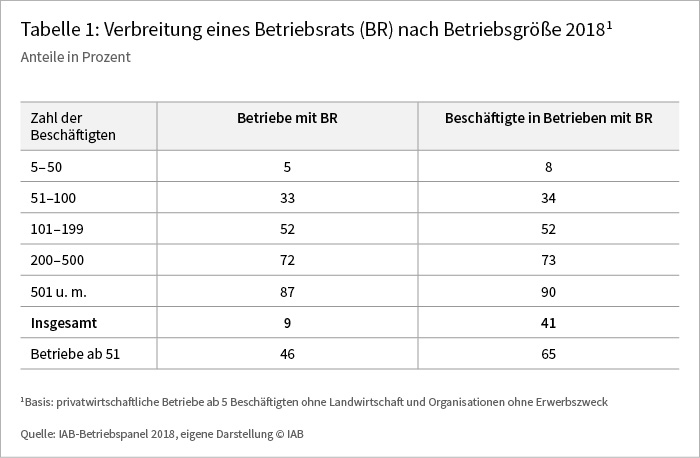
It's not the whole story but it isn't nonsense. You literally can't restructure a company in Germany without doing a year long song and dance with the worker's council. This is not agile enough for a startup.
You don't have that problem in Canada, and you have many of the same advantages but you don't have nearly the amount of startups and definitely almost no big ones.
The problem (and opportunity for US investors) is Canada has almost no VC, and the few they have are extremely risk averse.
One one side they held back economic and social growth of ~1/3rd of the population for more than a century through systemic racism and discrimination. On the other side, the government has created little incentives for capital owners to take more risks thanks to policies that artificially propped up real estate (enormous immigration quotas, lax laws on foreign money entering the country, no market correction post 2007 crash).
Why invest in hard to understand and uncertain tech when you can simply build luxury houses and sell them to wealthy foreigners?
> The problem (and opportunity for US investors) is Canada has almost no VC, and the few they have are extremely risk averse.
Based on all the stories we've heard over the past week from VCs and entrepreneurs about how SVB was the only bank willing to open accounts and extend credit to startups, I think many people underestimated that bank's importance in the Bay area economy. (I've also been startled by just how important SVB's UK, Canada, and even China branches seem to have been for their startups.)
While SVB wasn't present in most other areas of the US, there is an extensive network of regional banks (of which SVB was one), so the odds that one is going to offer a no-revenue tech startup in Nashville or Phoenix or Worcester the financial help it needs to get started aren't bad. Now compare that to Canada, which has the Big Five national banks, tiny credit unions, and almost nothing else; apparently this makes borrowing money much, much more expensive than in the US. I hear that Australia is the same way.
As of 2018, only 5% of German companies of 5 to 50 employees had a worker's council.[1] And even if a council exists it is just max. 3 members at this size.
I can imagine that in some cases the council makes necessary restructuring more difficult, but in the crises of the last decades, works councils and trade unions in Germany were much more willing to compromise than in many other European economies where this so-called "social partnership" is not so pronounced, for example in France. All in all, it seems that worker's councils in Germany are a quite successful institution to mitigate conflict between employees and management.
"...without doing a year long song and dance with the worker's council."
Germany is no exception, much of Europe and the UK are the same. One can argue over which European country is worst or best but it's small crumbs. Look at France and the current arguments over retirement age, it's all part of the same cultural problem I mentioned elsewhere.
Europe is an old society with old traditions, the US less so and its west coast even less so, so it's not an unexpected problem for Europe. The West's real problem is how to deal with it.
Asia, on the other hand, has even older cultures but having largely missed the old Industrial Revolution they've also missed the cultural baggage and artifacts it imposed on the West. This has allowed Asian countries to jump over these hurdles, that's why they are doing so well now.
I feel far from optimistic that the West can overcome this cultural baggage easy. But I hope I'm wrong.
The industry is a lot "closer" than people expect; it runs a lot more on handshakes and people going to the same parties than on cold numbers, so not only do startups have to be in the US they have to be specifically in SV.
Two decades ago at a UK chip design software startup, the founders started a US branch and migrated there for just this reason.
(The SVB bank run shows how strong the "being in the right whatsapp group message chat" is)
It's also the sheer amount of laws and regulations around opening and running a business that makes it really hard for small organizations to get started. There's a LOT of paperwork around the EU, and as soon as you want to sell to the neighboring countries it's a lot of additional paperwork, red tape and regulations (it's better than it was still).
A founder from Europe explained the 4th person to join the company as the 2nd employee (their first hire was an engineer) was a non-technical person whose job was mostly to fill out grant application forms. There are hundreds of different grants for companies with a long list of criterions. For example, they could have the countries government (so the taxpayer) foot the bill for a fraction of an employee's salary if he or she was a refugee from certain target countries. Of course, the local government had a similar scheme with a completely different application process and slightly different criterions.
None of the grants had anything to do with their tech or how viable the business was by the way.


Europe is in a state of decline. The US is doing fine. The difference between the US and Europe is that we went up the value chain ( Microsoft, Apple, Google, Facebook, Netflix, Nvidia, etc ). Europe did not.
Consumer electronics is relatively low level tech. It was "gifted" to the japanese and then the koreans and eventually the chinese while we moved up the chain to the more valuable internet, social media and software development.
Where is europe's microsoft? Their apple? Their facebook? Their google? There is no "the West". No more than there is "the East".
Edit: Also, it isn't consumer electronics that's the issue. It's the future ( the next rung up the value chain ) - AI, big data, quantum computing, bio-tech, green energy tech, etc. Will europe even participate because currently it looks like it will be only the US and China competing.